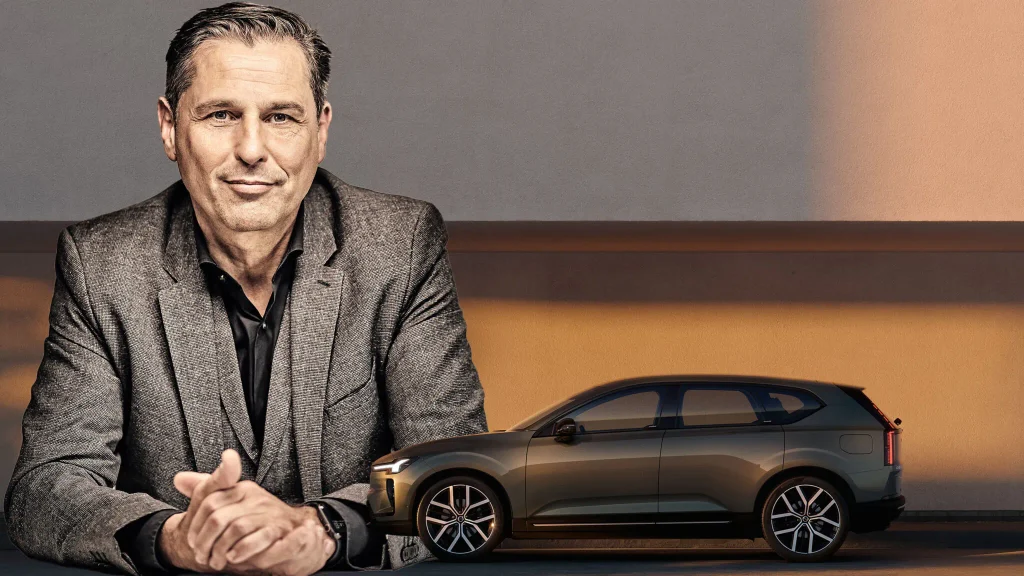
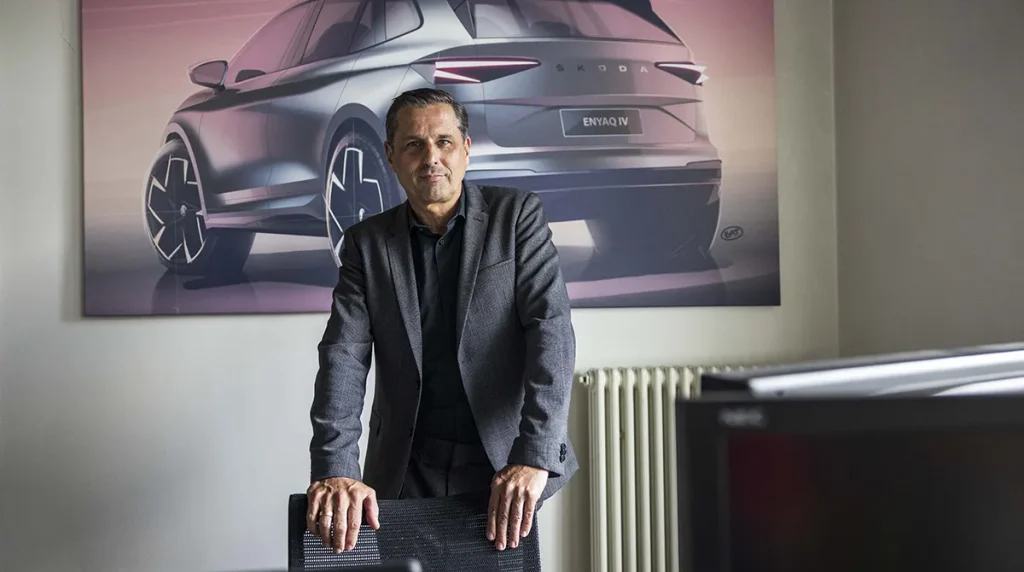
Zellmer arrives from Škoda, where he oversaw record EV deliveries in the first half of 2026.
Volvo Cars has a new CEO again. The board named Klaus Zellmer president and chief executive on September 20, 2026. He takes over from Håkan Samuelsson no later than October 1, 2027. Three leaders. Four years. That tells its own story.
The appointment is Volvo's third CEO change since 2022 — a churn rate that stands against the relative stability at rivals such as BMW, whose supervisory board confirmed Oliver Zipse for a third term in 2024, according to BMW AG's Annual Report, published March 2024. Volvo Cars confirmed the succession in a board statement dated September 20, 2026, citing Zellmer's record at Škoda Auto and his 28-year career across the Volkswagen Group.
From Škoda to Gothenburg: Zellmer's Route to the Top Job
Klaus Zellmer, 59, spent the last four years running Škoda Auto from Mladá Boleslav. Before that he sat on the board of Volkswagen Passenger Cars, covering marketing, sales, and after-sales. He also ran Porsche Deutschland and Porsche North America during a stretch of more than two decades inside the Porsche organisation. When the Volvo Cars board called, he accepted. The announcement landed on a Saturday morning. Volvo Cars gave no detail on why the search ended with Zellmer specifically, nor did it disclose how many candidates the board reviewed. What it did confirm: Samuelsson stays in post through the handover, working alongside the board until Zellmer formally assumes the chair. Nothing in day-to-day operations changes before then, according to Volvo Cars' September 20 statement. This is part of a broader wave of industry restructuring in 2026 as legacy OEMs reset their leadership ahead of accelerating product cycles.
The Numbers Behind a Three-CEO Decade
Count the leaders: Håkan Samuelsson ran Volvo Cars from 2012 to 2022 — ten years. Jim Rowan followed in 2022 and exited in early 2025, a tenure of roughly 30 months. Samuelsson then returned in April 2025, a second stint that will last no more than 30 months before Zellmer's October 2027 deadline. That places three separate appointments inside a 60-month window from 2022 to 2027. Volvo Cars announced 13 new or heavily updated models targeting delivery by 2030 — seven for Western markets and six built specifically for China. Funding that rollout across four fiscal years (2027–2030) while sustaining positive margins is the arithmetic Zellmer inherits. Škoda posted record financial results in 2025. In the first half of 2026, it recorded record electric vehicle deliveries, according to Volvo Cars' own announcement of Zellmer's appointment. The implied transfer: a cost manager at scale now faces a volume-and-mix problem at a smaller, lossmaking operation. 13 models ÷ 4 years = 3.25 launches per calendar year on average — a cadence Volvo Cars has not previously sustained.
Zellmer and Li Speak; the Gaps Are Louder
Zellmer's public statement at appointment read: "I am delighted to join Volvo Cars at such an important moment in the company's development." Seventeen words that committed him to nothing operational. Volvo Chairman Eric Li — the same Eric Li who chairs Zhejiang Geely Holding Group, Volvo Cars' controlling shareholder — described Zellmer's background as "an excellent fit" for the company, citing experience across both upper-volume and higher-margin tiers of the European market. Neither statement addressed the pace of the EV transition, the fate of Volvo's most aggressive all-electric targets (since quietly revised), nor any change to the executive team beyond the CEO chair. Volvo Cars did not respond to questions about whether any board composition changes accompany the appointment. The absence of operational detail in a succession announcement of this scale is itself a data point. Compare the Zeekr X's performance against the Volvo EX30 in Euro NCAP testing — Geely's willingness to let a sibling brand outperform Volvo in a safety benchmark is another signal of where priorities sit inside the holding group.
The Samuelsson Paradox: Retired Twice, Replaced Twice
Håkan Samuelsson retired from Volvo Cars in 2022. The board called him back in April 2025 after Jim Rowan's departure, framing the return as a stabilising bridge. Now, 17 months into that bridge, the board has found its permanent candidate — and Samuelsson will spend up to another 12 months on the job before stepping aside. That means Samuelsson will have served in the role for roughly 29 months across the second stint alone. If the board already had confidence in the direction Samuelsson re-established, the question is why a candidate of Zellmer's profile was needed at all, rather than a promotion from within. Volvo Cars has not confirmed whether Chief Financial Officer Marie Pasternak, who took the role in 2024, or any other member of the current executive team was considered. That question was put to Volvo Cars' press office in Gothenburg on September 22, 2026. No response was received before publication. Separately, Honda's product gap in North America through 2027 shows that leadership instability is not the only way an OEM can lose ground during a transition window — product timing matters equally.
What the Appointment Means for Volvo's EV Targets
Zellmer's record at Škoda is defined by margin discipline, not electrification speed. Škoda sits in a volume segment where hybrid options blunt the EV conversion pressure. Volvo Cars occupies a different band — its EX30, EX40, and EX90 compete on price points where ZEV mandate compliance directly affects fleet allocation decisions across the UK and EU. Volvo Cars has already publicly walked back its most aggressive timeline for an all-electric lineup, acknowledging it "went a bit too far into a single SUV market." Zellmer inherits that revised posture. His job is not to reverse course again but to fund the 13-model offensive — including the return of wagon body styles for the US market — while the regulatory clock in Brussels runs. The EU's fleet CO₂ targets tighten in 2025 and again in 2027, the year Zellmer formally takes the chair. His first full year as CEO and the next binding compliance checkpoint coincide exactly. That is not a coincidence the board will have missed.
Volvo Cars was acquired Holding Group in 2010 for approximately 1.5 billion US dollars — a figure that benchmarks just how far the valuation conversation has moved in 16 years. Geely floated Volvo Cars on the Nasdaq Stockholm exchange in October 2021. The stock has traded below its IPO price for the majority of its listed life. Zellmer starts with that number over him. The complete Volvo model history and specifications are catalogued in the Global Auto Index manufacturer database.
