The London-based firm already holds production agreements with Nissan and Stellantis, making Mercedes one of three competing OEMs on the same stack.
Mercedes-Benz signed a production agreement with Wayve on September 22, 2026. No model named. No market named. The deal commits to integrating Wayve's AI Driver software into future Mercedes vehicles within two years, covering city streets and motorways.
The agreement matters because it is the first time Mercedes has publicly committed to a production timeline for end-to-end learned driving software — distinct from its certified Level 3 Drive Pilot system, which launched in the United States in 2023. According to Wayve's Series D funding announcement, published earlier in 2026, both Nissan and Stellantis joined that round as automotive investors alongside Mercedes-Benz, placing three rival platforms on the same underlying AI architecture.
What the September 22 Agreement Actually Covers
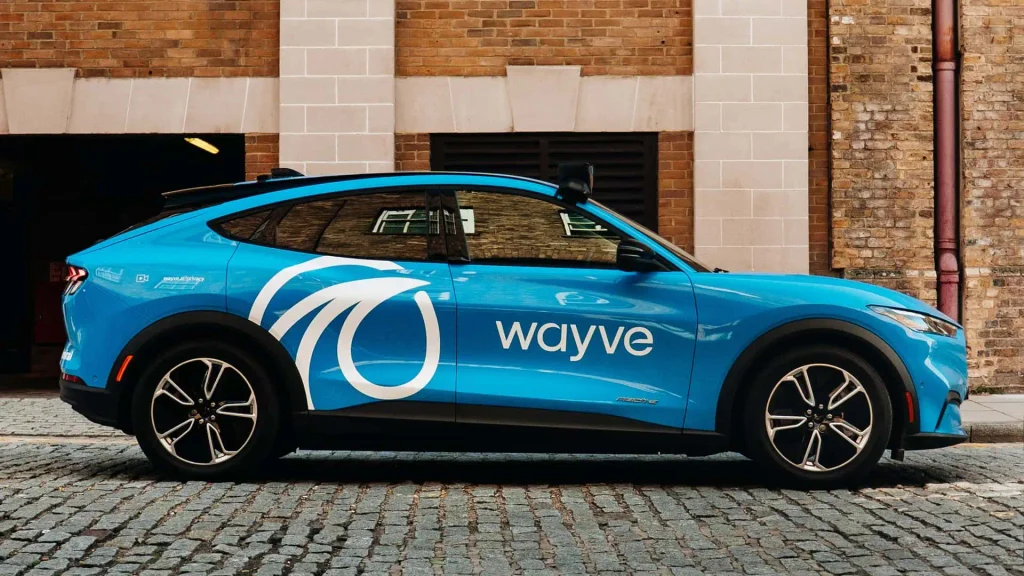
Mercedes-Benz and Wayve signed the production agreement in London on Monday, September 22, 2026. The deal extends a multi-year technical collaboration that predates Mercedes' entry into Wayve's Series D funding round. Wayve's AI Driver handles point-to-point driving on urban roads and motorways. It processes its surroundings in real time rather than consulting pre-built high-definition maps, which means the software can, in theory, operate in cities where no prior mapping effort exists. Mercedes contributed capital to Wayve's Series D alongside Nissan and Stellantis — corporate investors who also hold their own separate production agreements with Wayve. The September signing converts that financial relationship into a formal commitment to ship the software inside production vehicles. This coverage sits within the broader industry restructuring and OEM software deals of 2026, where tech-OEM partnerships are reordering traditional supplier chains across Europe.
Three OEMs, One Software Stack: The Numbers Behind the Bet
Wayve now holds production agreements with at least 3 separate automakers: Mercedes-Benz, Nissan, and Stellantis. Stellantis alone operates 14 brands globally, according to Stellantis' 2025 annual report. Nissan has publicly stated AI-assisted ProPILOT integration targeting 2027, meaning Wayve faces a sequencing question across at least 2 separate launch windows. Mercedes plans integration within 2 years of the September 2026 signing — placing a product target no later than Q3 2028. If Mercedes deploys across even 3 of its core model lines at that point, and Nissan ships in 2027, Wayve must support concurrent software versions for at least 2 OEM platforms simultaneously. That is a validation and certification load the company has not publicly quantified. The Series D round that brought in all 3 automotive partners has not disclosed a total figure in the Wayve press materials reviewed for this article, leaving the capitalisation behind that engineering commitment unconfirmed.
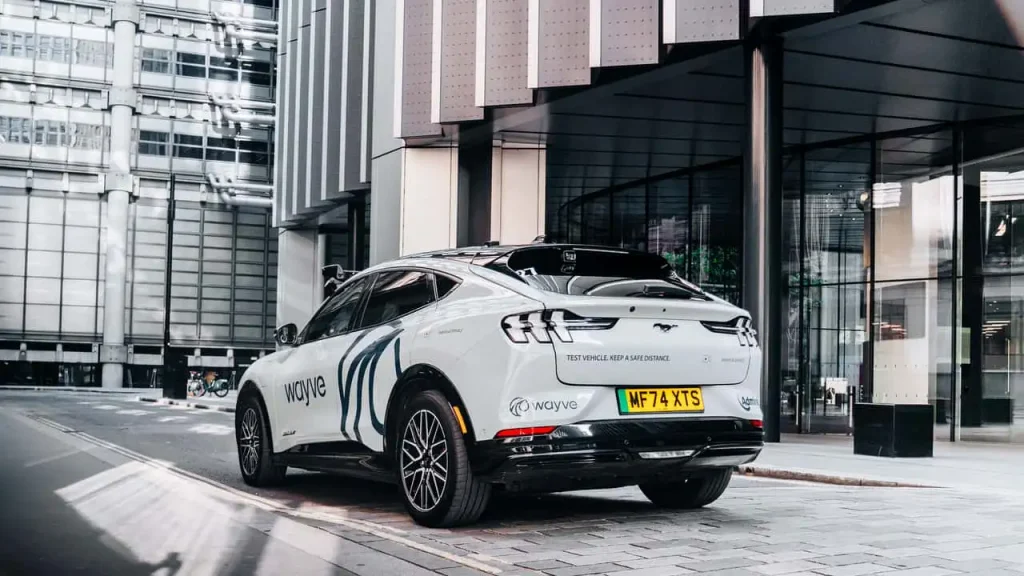
Drive Pilot Was First — AI Driver Is Something Different
Mercedes became the first automaker to sell a certified SAE Level 3 system in the United States when Drive Pilot went on sale in 2023. Level 3 means the driver can legally divert attention under defined conditions — a regulatory threshold no other production car had crossed in the US market at that point. The Wayve AI Driver sits in a different category. Point-to-point urban and motorway assistance, as described in the September 22 announcement, keeps the human driver legally responsible at all times. That is Level 2, or possibly Level 2+, territory — the same band occupied by Volkswagen's IQ.Drive suite, which is already active on production vehicles sold across Europe today. Mercedes is therefore running two distinct automation tracks in parallel: a certified hands-off system in Drive Pilot, and a learned assistance layer from Wayve that has not yet received a regulatory classification in any named market. The gap between those two tracks is not merely technical. It is jurisdictional. European type-approval under UN-ECE Regulation 157 governs Level 3; no equivalent framework yet covers end-to-end AI drivers operating below that threshold without defined operational design domains.
Three Things Mercedes Did Not Confirm
The September 22 announcement omits three specifics that would normally define a production commitment. First, no vehicle model is named. Mercedes builds passenger cars, vans, and trucks across multiple legal entities; which product line receives the Wayve software first is unknown. Second, no launch market is identified. European type-approval, US Federal Motor Vehicle Safety Standards, and Chinese GB standards each impose different certification paths for driver assistance software trained on end-to-end neural networks. Without a named market, no regulatory clock has started. Third, no SAE or UN-ECE automation level is assigned to the AI Driver as it will appear in Mercedes vehicles. Mercedes demonstrated MB.Drive Assist Pro — a point-to-point assistance system built on Nvidia hardware — in 2025. That system has not launched. The Wayve agreement arrives against that backdrop, raising a question the announcement does not answer: whether AI Driver replaces MB.Drive Assist Pro, runs alongside it, or the Nvidia-based project was quietly shelved. Mercedes has not addressed the relationship between the two programmes. That gap is the most concrete thing missing from the deal as publicly structured. Separately, Waymo's rider-limit enforcement problems in the United States demonstrate that commercial autonomous deployments generate operational edge cases no pre-launch announcement can anticipate.
What the Deal Means for European Type-Approval
If Mercedes targets a European launch within the two-year window — meaning before Q3 2028 — the AI Driver will need to pass type-approval under the current UNECE framework or under whichever revision the European Commission adopts before that date. The EU's General Safety Regulation 2019/2144, which came into full effect for new type-approvals in July 2024, mandates driver drowsiness warning, emergency stop, and event data recording as standard. An end-to-end AI system trained on fleet data rather than hand-coded rules creates a new documentation burden: regulators require explainability evidence that conventional ADAS suppliers do not typically face at this depth. The UK, post-Brexit, operates its own Automated Vehicles Act 2024, which received Royal Assent in May 2024 and establishes a separate authorisation regime for self-driving features. Wayve is headquartered in London. Whether Mercedes targets the UK market within the two-year window — where Wayve's regulatory relationships are strongest — or focuses on continental Europe first will determine which approval body sets the pace. Neither company has said. The EU Industrial Accelerator Act's provisions on UK manufacturing access add a further layer of cross-border complexity for any OEM deploying software developed in Britain across EU type-approved vehicles.
Wayve was founded in Cambridge in 2017 and Alex Kendall, both former University of Cambridge researchers. The company logged test miles across London streets before expanding to other European cities. Mercedes-Benz's Distronic radar cruise control debuted on the S-Class W220 in 1999 — meaning the marque's driver-assistance lineage now spans 27 years. The complete Mercedes-Benz model history and specifications are catalogued in the Global Auto Index manufacturer database.
