


Cumulative sales reached fewer than 71,000 units before Musk announced the production exit on X.
Elon Musk confirmed it on X. No press release, no product roadmap briefing — a social media post. Tesla's Cybertruck will stop rolling off the Gigafactory Texas line around mid-2027. That's fewer than four years in customer production. The capacity goes to the Cybercab.
The announcement forces a reckoning with how badly the Cybertruck missed its own targets. Tesla once projected 250,000 annual units; according to Kelley Blue Book estimates cited in reporting published November 2025, the truck moved 11,586 units across the United States in the first nine months of 2026 — down 28 percent year-on-year. No rival electric pickup suffered a comparable volume collapse in the same window.
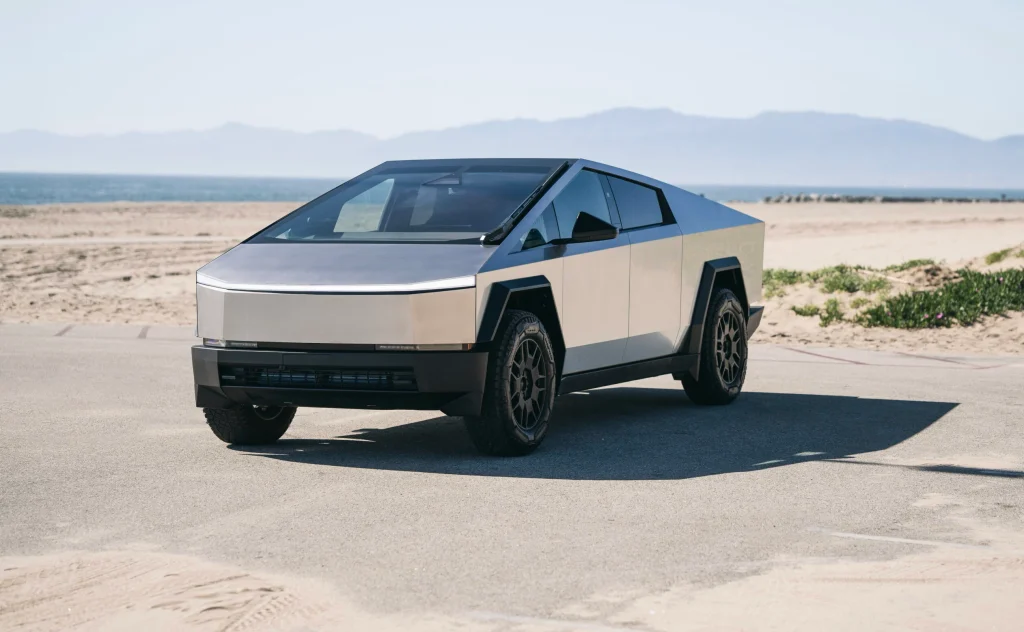
A Production Run the Numbers Cannot Defend
Start with the original ask: $39,900. That was the entry price Musk floated at the November 2019 reveal. When customer deliveries opened in November 2023, no such configuration existed. The cheapest available trim came in materially higher, and subsequent price restructuring pushed certain variants further still. Then the volume gap. Tesla's internal target was 250,000 units per year. Kelley Blue Book placed 2026 year-to-date U.S. sales at 11,586 through September — nine months of trading. Annualised, that projects to roughly 15,448 units for the full calendar year. Set against the 250,000 target: 15,448 ÷ 250,000 = 6.2 percent attainment. Cumulative deliveries since launch stand below 71,000, according to Car and Driver data published in November 2025. At the annualised 2026 rate, Tesla would need a further 16 years to reach one year's worth of originally projected output. The arithmetic does the talking. For context on how Tesla's broader EV portfolio restructuring compares with rival manufacturers' capacity decisions in 2025 and 2026, the figures above sit at the severe end of the spectrum.
From Texas Floor to Robotaxi Bay
Gigafactory Texas, located outside Austin, opened for Model Y production in April 2022. The Cybertruck line followed, with the first customer units handed over at a November 2023 ceremony on the same site. Musk staged the event with the theatrics the truck's five-year development had promised. Now that same floor space gets reassigned. Tesla intends to scale Cybercab output — the two-seat autonomous vehicle that dispenses with both a steering wheel and pedals. Musk posted the wind-down timeline without naming an alternative Cybertruck facility. Tesla's communications team had not issued a clarifying statement as of the date this article was filed. The absence of a relocation announcement is itself informative: prior Tesla manufacturing expansions — Gigafactory Nevada, Gigafactory Shanghai, Gigafactory Berlin-Brandenburg — came with formal infrastructure commitments well ahead of production shifts. None of that apparatus exists here.
The Recall Record That Preceded the Exit
Before the production wind-down landed as news, the Cybertruck had already compiled an unusual regulatory history for a vehicle in only its second full year of customer availability. Tesla issued multiple recalls covering a range of systems. Among them: a recall covering nearly every Cybertruck sold, attributed to wiper motor failures, documented in a National Highway Traffic Safety Administration filing. What does not appear in any Tesla communication is a formal post-mortem on why a vehicle that passed regulatory sign-off encountered repeat field failures at this rate. Nor has Tesla published revised demand modelling that would explain why a truck attracting genuine consumer interest — waitlists ran to hundreds of thousands of names during the pre-production period — converted so poorly once retail pricing clarified. The gap between reservation volume and purchase conversion remains unquantified in any Tesla disclosure reviewed for this article. That number, never released, may be the most telling figure in the entire Cybertruck story.
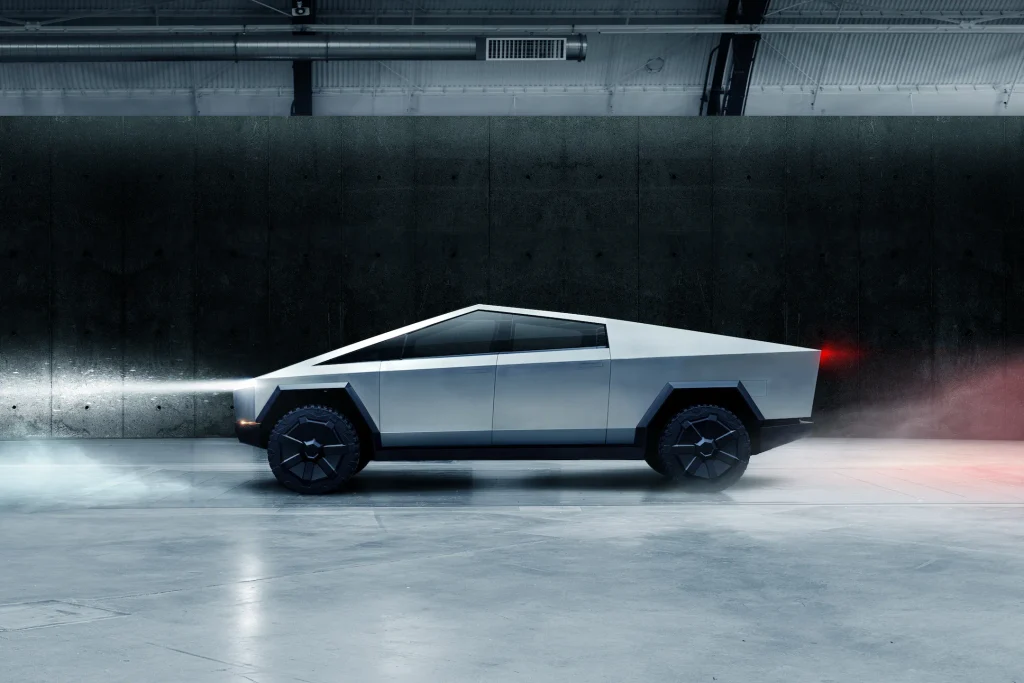
Cybercab vs Cybertruck: Tesla Bets the Floor Space
The Ford F-150 Lightning, the Cybertruck's most direct electric pickup rival, sold approximately 24,000 units in the United States across the first three quarters of 2025, according to Ford Motor Company's quarterly sales disclosures. The Rivian R1T, produced at Rivian's Normal, Illinois plant, cleared roughly 17,000 units in the same period per Rivian's own investor reporting. Neither figure represents a runaway commercial success in the context of the full-size truck segment — but both outpaced the Cybertruck's 11,586 for the equivalent 2026 window by a margin that is difficult to frame as marginal. The Cybercab, by contrast, carries no comparable volume precedent. No fully driverless robotaxi has yet reached mass production in the United States. Tesla is betting that the Cybercab's autonomous service model generates revenue density the Cybertruck could not achieve on sticker price alone. Whether the regulatory timeline for driverless operation matches Tesla's manufacturing ramp is a separate question — one that neither the November 2025 social media post nor any subsequent filing answers.
What the Exit Costs the Electric Pickup Segment
For dealers in markets where Tesla operates a direct-sales model, the wind-down removes one of the few electric trucks with an established, if shrinking, service network. Independent repair facilities that invested in Cybertruck-specific tooling — notably the 48-volt electrical architecture that departed from the 12-volt standard across most of the automotive sector — face an accelerated obsolescence clock on that equipment. Mike Colias, Detroit bureau chief at The Wall Street Journal, noted in reporting published October 2026 that Tesla's lineup contraction reflects a deliberate pivot away from physical product diversity toward software and autonomy revenue. That pivot has a concrete consequence for the stainless-steel supply chain Tesla assembled in Texas: the specialised alloy processing agreements tied to Cybertruck body panels have no obvious internal recipient once the line stops. Tesla has not disclosed the contractual position of those suppliers, nor whether the Cybercab requires comparable materials. The affected tier-one and tier-two metal processors have not issued public statements on the matter.
The Cybertruck was not Tesla's first early exit: the original Tesla Roadster, built on a Lotus Elise platform, ended production in January 2012 after 2,450 units across three model years — a run that lasted longer, proportionally, than the Cybertruck's projected span relative to its own stated targets. Tesla has never disclosed whether the Gigafactory Texas stainless-steel line requires structural modification before Cybercab tooling can be installed, or what that conversion costs. The complete Tesla model history and specifications are catalogued in the Global Auto Index manufacturer database.
