The Torcal SUV arrives with 876 hp and a 113-kWh battery, but a second Bentley EV won't follow until the 2030s.
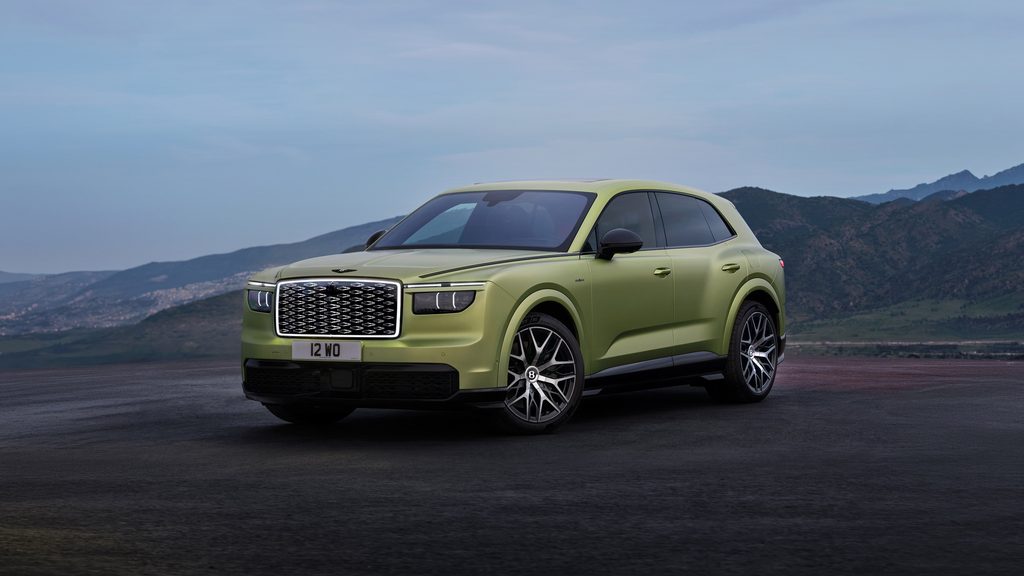
Bentley is done with 2030. CEO Frank-Steffan Walliser confirmed the brand's six-year-old all-electric deadline is gone. No replacement date was given. Combustion and plug-in hybrid models will continue production well past the decade's end, sharing lines with the Torcal — the brand's first battery-electric car, revealed in September 2026.
The reversal lands at a moment of acute pressure on luxury OEMs across the European Union. According to Autocar's reporting on Bentley's revised Beyond100+ plan, published September 2026, the new target is a fully electric portfolio by 2035 — five years later than announced in 2020. Rolls-Royce made a comparable retreat from its own 2030 EV-only pledge while continuing V12 production, suggesting the 2030 deadline was never as solid as it appeared across the sector.
Walliser: 'Predictable Planning Is Honestly Gone'
Bentley's CEO chose directness over diplomacy. "This predictable planning is honestly gone, and I do not think it will come back," Walliser told reporters at the Torcal's September 2026 reveal, citing shifting regulations and cooling demand for high-end battery cars as the twin drivers. He added: "With all the planning and things changing... my answer is maybe not what you expect — we will bring in more flexibility in our strategies." The remarks, first reported by Autocar, amount to the clearest admission yet from a Volkswagen Group luxury brand that the 2020-era EV commitments were built on forecasts that no longer hold. Bentley's Beyond100+ plan, updated this year, now describes a mixed powertrain production model in which EVs and plug-in hybrids run off the same assembly line, with output weighted toward whichever configuration customers actually order. No section of the revised plan, as described in Autocar's coverage of the September 2026 announcement, sets a fixed annual EV volume target. That absence is telling. For the broader EV regulation landscape in Europe through 2026, it signals that even brands with the margin to absorb transition costs are refusing to commit to hard numbers.
Torcal Specs vs the Gap to Bentley's Next EV
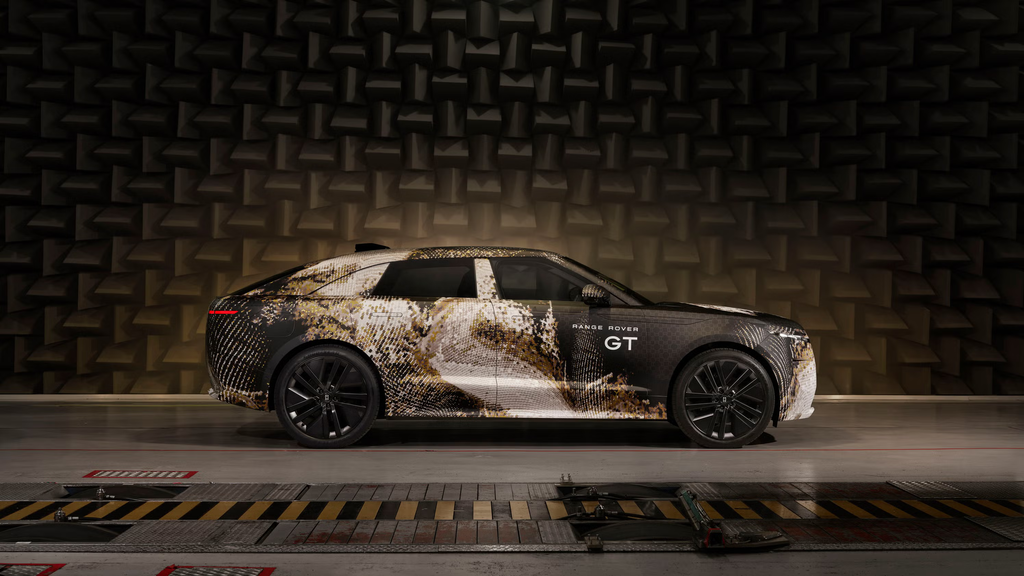
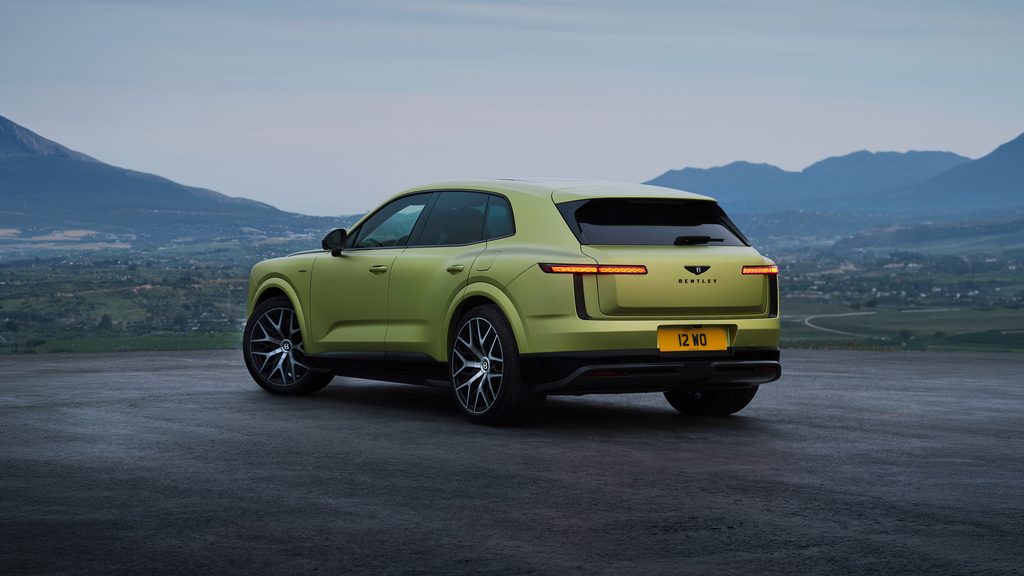
The Torcal itself is not a token gesture. The standard car produces 810 hp from a 113-kWh battery on an 800-volt electrical architecture with DC rapid charging. The Torcal S raises output to 876 hp and covers 0–60 mph in a claimed 2.8 seconds. On sale in the United States in early 2027 as a 2028 model year vehicle, it arrives roughly 12 months later than Bentley's original internal schedule, according to Autocar's account of the Beyond100+ revision — a delay attributed to market uncertainty rather than engineering problems. The arithmetic of Bentley's EV ambition is stark. The Torcal is model one. The next Bentley EV is described only as arriving "from the start of the next decade" — meaning 2030 at the earliest, and more likely 2031 or 2032 given platform lead times. That is a gap of at least three years between model one and model two, against a backdrop in which EU ZEV compliance thresholds tighten annually. Bentley's annual global sales volume sits around 13,000–14,000 units. Even if the Torcal accounts for 3,000 sales per year, that is roughly 22% of the portfolio on battery power — well short of any plausible EU ZEV band for a manufacturer of Bentley's type by 2030.
Rolls-Royce, Kia, and the Fracturing of the 2030 Consensus
Bentley is not isolated. Rolls-Royce quietly walked back its 2030 EV-only commitment while continuing to ship V12-powered models — a retreat that drew less attention than Bentley's because Rolls-Royce never published a Beyond100-style roadmap with fixed dates. The contrast with volume-segment manufacturers is sharper. Kia UK reached 100,000 cumulative EV sales but publicly called the ZEV mandate's pace unrealistic, a complaint that lands differently from a brand moving tens of thousands of units per year than from Bentley, which sells roughly 1,200 cars annually in the United Kingdom. Regulatory exposure differs too. The European Commission's CO₂ fleet targets apply to manufacturer groups, meaning Bentley's combustion-heavy sales are consolidated with Volkswagen Group's wider fleet data — a buffer unavailable to standalone luxury marques. That group structure has historically allowed Bentley to remain compliant on paper even as its own powertrain mix lags behind the fleet average. Whether that buffer survives the 2035 ICE sales ban in the EU without further policy revision is a question Walliser pointedly declined to answer.
The Platform Problem No One Is Talking About
Here is what does not add up. Bentley's future EV models are widely expected to use Volkswagen Group's Scalable Systems Platform — SSP — which remains unvalidated in production. SSP has already slipped from its original 2026 launch window. If Bentley's second EV depends on SSP being road-ready, and SSP is delayed into 2030 or beyond, the gap between the Torcal and model two becomes structural rather than commercial. Bentley has not confirmed SSP dependency publicly. The Beyond100+ plan, as described in Autocar's September 2026 coverage, names no platform by designation for future models. That is a conspicuous omission given that platform decisions at this lead time are typically locked. The EU Industrial Accelerator Act, which targets UK EV manufacturing access, adds a further wrinkle: Bentley's Crewe factory sits outside the EU single market post-Brexit, meaning any future tariff or rules-of-origin tightening on vehicles assembled in Great Britain could complicate European pricing for a brand whose cars already start above £200,000. Walliser's "flexibility" framing may be less a commercial choice than an acknowledgement that the dependencies — platform, regulation, demand — are simply unresolved.
What the Retreat Means for Crewe and EU Compliance
The specific named actor carrying the most immediate risk is Bentley Motors Ltd at its Pyms Lane factory in Crewe, Cheshire — the sole production site for every Bentley sold globally. Walliser confirmed that combustion and hybrid variants will continue rolling off Pyms Lane lines "well into the next decade," which preserves workforce continuity in the near term but creates a capital allocation problem. Retooling Pyms Lane for EV-capable mixed production requires investment commitments that conflict with an undefined timeline for model two. Volkswagen Group's own financial pressures in 2025–26, documented in the group's annual report for fiscal year 2025, included plant rationalisation discussions in Germany — a context in which discretionary spending on a low-volume UK facility faces internal competition. On the regulatory side, as Europe weighs tightening IVA rules alongside the 25% U.S. truck tariff, Bentley's combustion extension into 2035 puts it in direct tension with European Parliament resolutions calling for rigorous enforcement of the 2035 ICE ban. The European Automobile Manufacturers' Association's position paper, published February 2026, called for "technology-neutral" compliance pathways — language that aligns with Walliser's flexibility argument but has not yet translated into revised Commission guidance.
Bentley produced 13,560 cars in calendar year 2023, its highest annual total at that point — a record set before the current EV transition debate accelerated. The Torcal is the first entirely new Bentley model since the Bentayga entered production at Pyms Lane in 2015. No order books have opened as of the date of this article's publication. The complete Bentley model history and specifications are catalogued in the Global Auto Index manufacturer database.
