







Paul Philpott warns government targets demand softer approach despite electric vehicle sales milestone.
Kia UK reached 100,000 electric vehicle registrations while simultaneously challenging government sales targets. Paul Philpott, the brand’s UK head, wants softer ZEV mandate requirements. The milestone comes as manufacturers face mounting pressure from regulatory deadlines.
The call reflects growing industry tension over zero-emission vehicle targets that require 22% of manufacturer sales to be electric by 2024, rising to 80% by 2030. Kia’s stance contrasts with Tesla’s UK charging network expansion and other manufacturers’ accelerated electrification plans, according to Autocar Business reporting published December 2024.
Pace versus Principle Divide
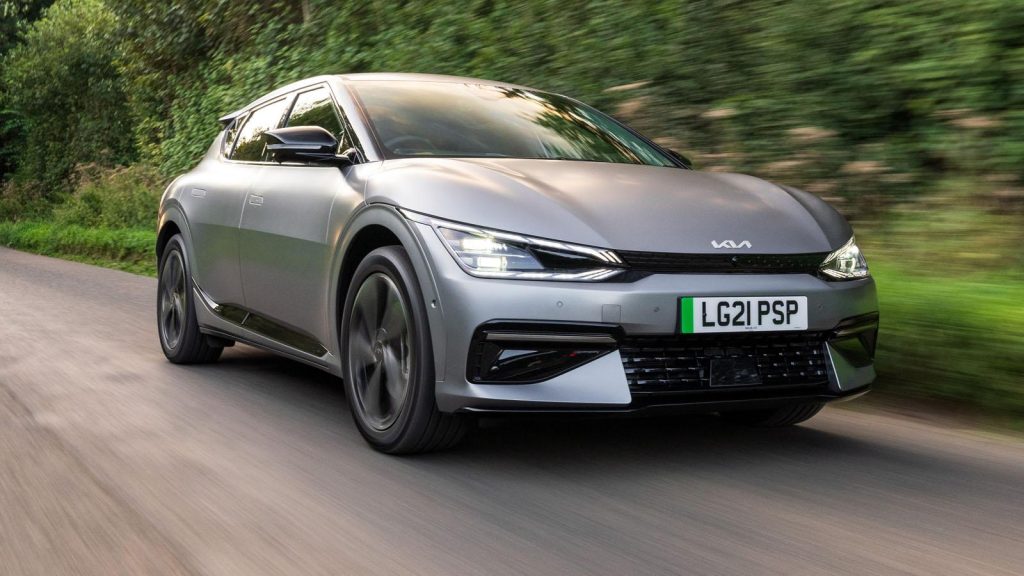
Philpott described the ZEV mandate as sound in principle but problematic in execution speed. “The principle of the ZEV mandate is sound but poses a challenge in the pace of change expected,” he told Autocar Business. The statement comes as manufacturers face penalties of £15,000 per vehicle for missing electric car quotas. Kia’s 100,000 EV milestone spans multiple model launches including the EV6, EV9, and e-Niro variants. The manufacturer achieved this figure across approximately four years of UK electric vehicle sales. Each missed percentage point in ZEV compliance triggers automatic financial penalties calculated on total annual vehicle registrations.
Target Mathematics Create Pressure
The ZEV mandate demands 22% electric vehicle sales in 2024, jumping to 28% in 2025. By 2030, manufacturers must achieve 80% zero-emission sales across their UK portfolios. Kia’s 100,000 electric registrations represent roughly 15% of its total UK sales since EV launch. Missing the 2024 target by just 2 percentage points costs manufacturers £15,000 × 2% × total sales volume. For a brand selling 50,000 units annually, a 2% shortfall equals £15,000,000 in penalties. The calculation: £15,000 × 0.02 × 50,000 = £15,000,000. Current EV market share sits at approximately 18.5% across all manufacturers, according to SMMT data through November 2024.
Manufacturer Approaches Diverge
Kia’s request for mandate softening contrasts sharply with approaches from other manufacturers. Tesla’s infrastructure expansion suggests confidence in meeting targets through charging accessibility improvements. BMW confirmed plans for its 1,300hp four-motor M3 by 2027, indicating aggressive electrification timelines. Honda faces a product drought until 2027 while Kia already achieved six-figure EV sales. The divergence reflects different manufacturer readiness levels. Some brands invested heavily in electric platforms from 2019 onwards. Others delayed commitments until government mandates forced action. Kia positioned itself between these extremes with measured but consistent EV launches. — EU regulatory pressures on UK EV manufacturing.

Industry Restructuring Accelerates
The ZEV mandate pressure drives fundamental changes in how manufacturers approach UK market planning. Chinese brands like Jaecoo enter with electric-first strategies, applying competitive pressure on established manufacturers. Kia must balance ZEV compliance costs against maintaining combustion engine profitability through the transition period. Dealerships require retaining for EV sales and service capabilities. Manufacturing plants face conversion costs for electric vehicle production lines. Supply chains need restructuring for battery procurement and charging infrastructure partnerships. The 2030 deadline allows just six years for complete business model transformation.
ZEV mandate reviews are scheduled for 2025 and 2027, offering potential adjustment windows. The government has not indicated willingness to soften current targets despite manufacturer concerns. Industry consensus builds around infrastructure rather than target modifications. The complete Kia model history and specifications are catalogued in the Global Auto Index manufacturer database.
