A full-hybrid powertrain will follow the battery-electric launch, Land Rover confirms, making the GT the brand's fifth distinct model line.
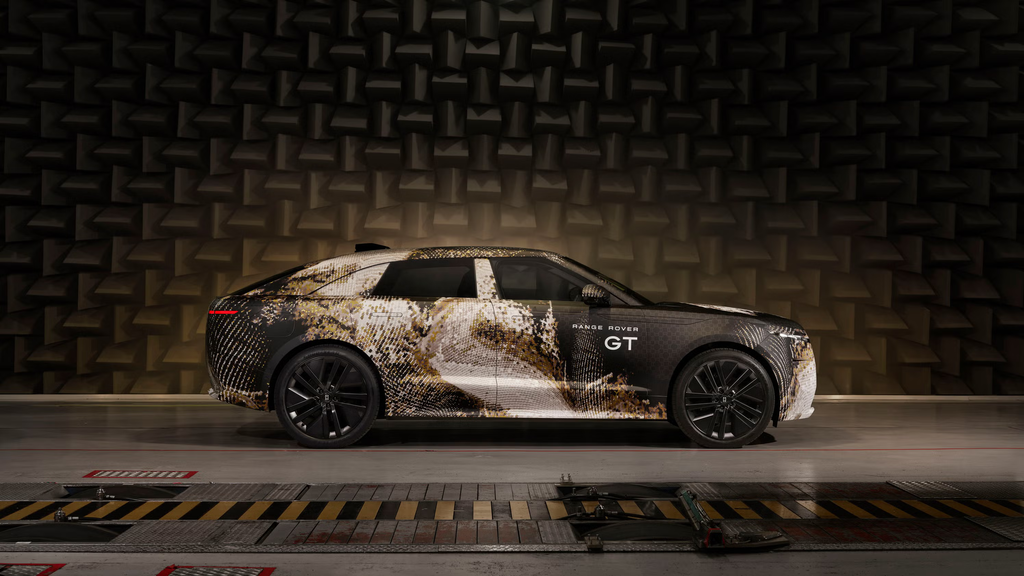
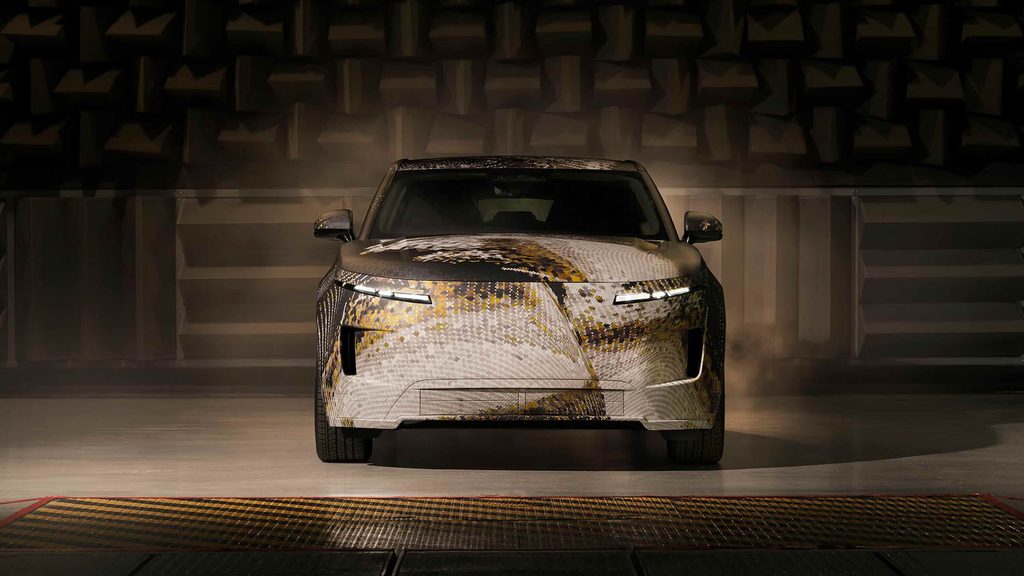
Land Rover is building a fastback. Not an SUV. The Range Rover GT, expected in 2027, will carry no combustion engine at launch — the first model in the brand's history to make that commitment from day one. Prototype images, published without camouflage removal, confirm a sloping roofline and closed-off nose.
The GT would become Land Rover's fifth nameplate, sitting alongside the Range Rover, Range Rover Sport, Evoque, and Velar. That matters because the brand has operated inside a single body-style category — the SUV — since its founding in 1948. According to Land Rover's official product communications, published September 2025, the GT is described as 'a fully electric grand tourer designed to combine uncompromised off-road capability with long-distance comfort.' No rival British luxury brand currently offers a fastback grand tourer with off-road all-wheel drive as standard.
Gaydon Breaks With Its Own Template
Land Rover's design team at Gaydon, Warwickshire worked the GT's front end into the brand's existing visual grammar: slim horizontal headlights run across a sealed nose. That sealed nose is the tell. Where a combustion-engined Range Rover needs airflow for a radiator stack, the GT's underhood area routes high-voltage cables and thermal management conduits. No grille openings. No cooling ducts. Engineers closed the face off entirely. The roofline descends from a raised shoulder into a fastback tail, where horizontal lamp elements mirror the front graphic. Prototype footage captured by independent observer account the_carspy, published to Instagram in September 2025, showed the GT still in full body wrap — but the proportions read lower and longer than any current Land Rover production car. This article sits within our ongoing coverage of the European premium segment expansion, tracking how legacy luxury brands are stretching into new body categories.
Five Models, One New Category
Land Rover's current lineup runs four SUV nameplates. Adding the GT reaches five. The Range Rover Electric, which debuted with a stated 333-mile WLTP range figure, established the all-electric blueprint. The GT will follow that architecture rather than develop a separate platform, according to Land Rover's September 2025 product communications. If the GT matches or exceeds that 333-mile figure — plausible given lower aerodynamic drag from the fastback shape versus an upright SUV — it would represent the brand's longest-range model at launch. A fastback typically achieves a drag coefficient (Cd) of 0.25–0.28 versus 0.35–0.38 for a comparable SUV. At motorway speeds, a 10-point Cd reduction translates to roughly 8–12 percent improvement in energy consumption: on a 100 kWh usable pack, that arithmetic yields 8–12 kWh of recovered range per charge cycle. Land Rover has not confirmed pack size. The hybrid variant, confirmed for a later date, adds a third powertrain option across the model range alongside the existing combustion and battery-electric units already offered on sibling nameplates.
What Land Rover Actually Said
Land Rover's own product brief, issued through official press channels in September 2025, describes the GT as 'a fully electric grand tourer designed to combine uncompromised off-road capability with long-distance comfort.' That 14-word phrase does specific work. 'Grand tourer' positions the car against continent-crossing coupés — Bentley Continental GT, Aston Martin DB12 — not against SUV rivals. 'Uncompromised off-road capability' is a hedge: the company is signalling to its existing ownership base that the GT will not abandon terrain credentials in pursuit of a sleeker silhouette. All-wheel drive will be standard. Whether that translates to locking differentials, terrain-response modes, or Wade sensing carried over from the SUV line remains unconfirmed. Land Rover has not published a specification sheet, a ride-height figure, or a ground-clearance number. Those omissions are pointed: the brand is managing expectations without closing any doors before a full reveal.
The Badge Question Nobody at Gaydon Is Answering
Here is the tension Land Rover has not addressed publicly. Jaguar — the sister brand under JLR's corporate umbrella — is rebuilding its entire lineup as electric grand tourers. The Jaguar Type 00 concept, shown in Miami in December 2024, previewed exactly the fastback-GT format the Range Rover GT now occupies. Two JLR brands are converging on the same body category, the same powertrain type, and the same price bracket. Land Rover has confirmed no pricing for the GT. Jaguar has confirmed no pricing for its production GT either. The companies share platforms, manufacturing sites, and supplier relationships. Whether the GT cannibalises Jaguar's relaunch audience — or whether JLR is deliberately seeding both brands into the same segment to capture width — is a question the September 2025 product communications did not answer. This is not the first time JLR's internal architecture has created overlap friction: the Range Rover Sport and Jaguar F-Pace shared underpinnings for years while competing directly for the same £60,000–£80,000 buyer. BMW's four-motor M3, confirmed for 2027 at 1,300 hp, adds a further competitive pressure point in the ultra-performance segment the GT is entering.
What the GT Means for McLaren, Bentley, and the Segment Above
Land Rover entering the electric grand tourer category has direct consequences for Bentley Flying Spur and for McLaren, which confirmed its own SUV and sports car product plan in summer 2025 — as covered in our report on McLaren's summer 2025 product reveal. Bentley's Flying Spur currently starts at approximately £170,000 in the UK before options. Land Rover has not confirmed GT pricing, but the Range Rover standard wheelbase opens at £104,100 as of Q3 2025. If the GT prices between £120,000 and £160,000 — the band consistent with its positioning above Range Rover but below full ultra-luxury — it enters Bentley's space from below with terrain-capable all-wheel drive that no Flying Spur offers. For Bentley Mulliner's sales team, that is a new competitive vector. For Land Rover's retailer network, the GT requires sales staff trained on a body type, a conversation, and a customer profile the brand has never handled before. That retraining cost is real and unquantified.
Land Rover has built SUVs continuously since the original Series I left Solihull on 30 April 1948 — seventy-seven years without a production fastback. The GT's interior retains the minimalist dashboard approach of the current Range Rover family, including a slim digital instrument cluster and central touchscreen, according to Land Rover's September 2025 cabin imagery release. No launch event date has been confirmed. The complete Land Rover model history and specifications are catalogued in the Global Auto Index manufacturer database.
