VW Group has cut SSP's planned variants from eight to four, shrinking the platform's scope mid-development.
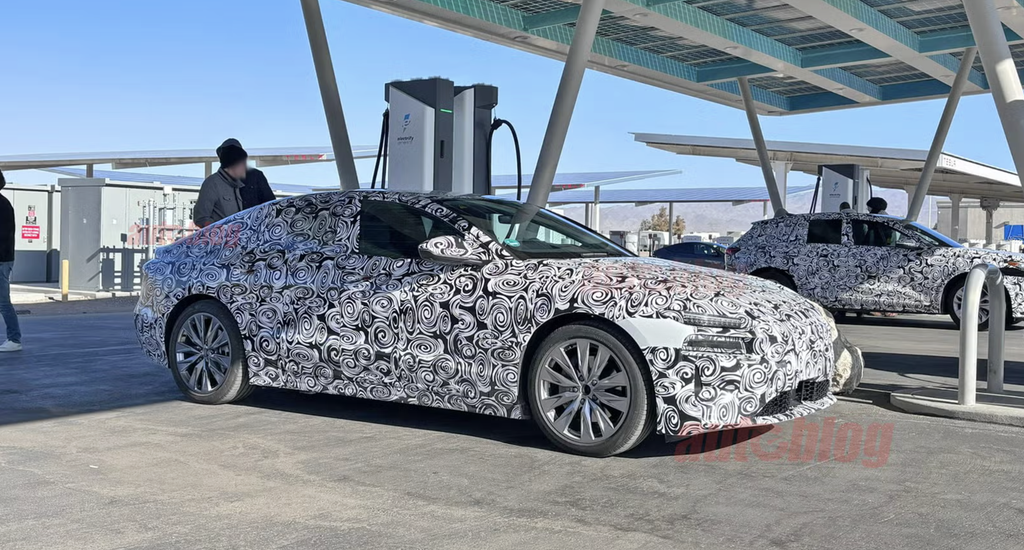
March 2029. That is the earliest the A4 E-Tron enters production. Audi CEO Gernot Döllner confirmed the date, according to reporting . It is nine months later than the mid-2028 target Döllner himself set in October 2025. Insiders warn it could slip further.
The delay matters because SSP was announced in July 2021 as Volkswagen Group's successor to both the MEB and PPE architectures — a single scalable EV platform to underpin dozens of models across the Group. According to Handelsblatt's reporting, SSP now lands roughly three years behind its original 2026 launch deadline. BMW's new EV platforms, , are already in series production, with BMW's four-motor performance derivatives confirmed for 2027.
A Nameplate Displaced Twice in Four Years
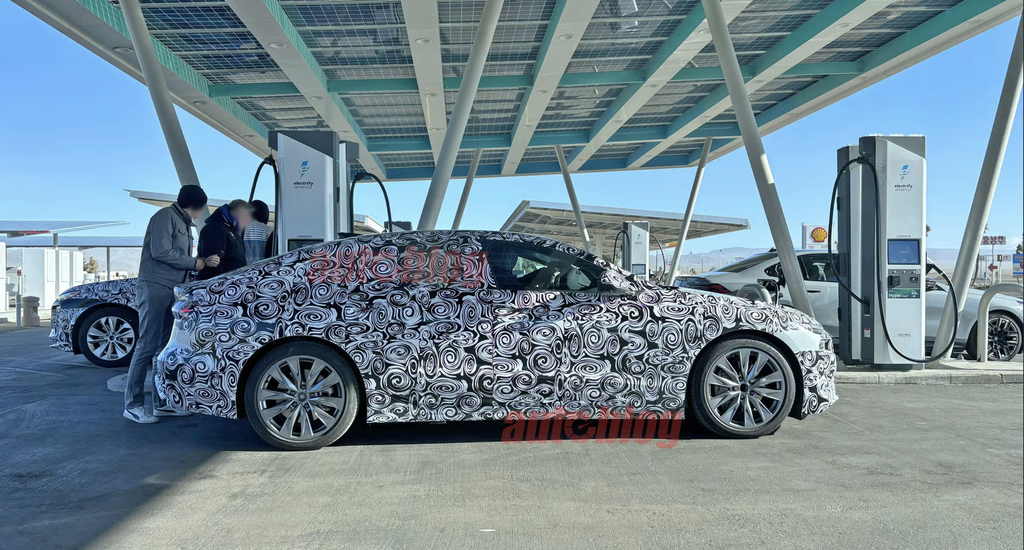
The combustion Audi A4 ended production in 2024, replaced in showrooms by the new A5. Döllner promised the A4 name would return — this time as a fully electric SSP model — by 2028 at the absolute earliest. That floor has now moved. The March 2029 target, reported by Handelsblatt, represents the second consecutive slip for the nameplate. Chief Technical Officer Rouven Mohr had stated publicly there was "no need to correct" the production date. Within weeks, Audi corrected it. The A4 E-Tron's design draws from the Concept C shown earlier this year, and the car is still planned in two body styles — saloon and Avant. What has changed is not the car. It is the platform the car was supposed to prove. This article is part of GlobalAutoIndex's ongoing coverage of Volkswagen Group production planning and platform development.
SSP by the Numbers: Variants, Volts, and Years Lost
Volkswagen announced SSP in July 2021. The original launch target was 2026. The current floor, per Handelsblatt, is spring 2029. That gap is 36 months — three full years of schedule erosion. The platform's variant count has also been cut: from 8 planned derivatives down to 4, a reduction of exactly 50 percent. The 12-volt-to-48-volt electrical architecture switch, made mid-development, is cited as the single largest driver of delay. Engineering rework cascaded across Volkswagen Group suppliers, none of whom had budgeted additional time. The A4 E-Tron's slip from mid-2028 to March 2029 alone represents 9 months of delay on one model. Handelsblatt sources suggest April or May 2029 are live possibilities, which would extend the single-model slip to 10–11 months. Multiply that across SSP-dependent nameplates — the electric Golf, electric T-Roc, and Rivian-partnered models — and the aggregate delay exposure across the Group runs to decades of model-year revenue.
The Platform That Was Already Shrinking Before It Launched
Here is what does not add up. Volkswagen describes the cut from eight SSP variants to four as a deliberate consolidation — a choice, not a retreat. Yet the timing fits neither definition cleanly. The reduction occurred while SSP was already running years behind schedule and while the 12-volt-to-48-volt rearchitecting was consuming engineering bandwidth across the Group. Consolidating a platform that has never produced a single car in series, while simultaneously reworking its electrical spine, suggests the two decisions are connected in ways the company has not publicly acknowledged. Volkswagen Group's own communications have not confirmed whether the variant reduction predates or postdates the voltage-switch decision. That sequence matters: one reading implies a managed scope reduction, the other implies a platform under distress. No official statement from Wolfsburg has clarified the order of events, according to documentation reviewed for this article. Changan's rejection of shared European production arrangements shows that VW Group is not alone in facing platform-sharing complexity, though the SSP situation is self-inflicted.
MEB and PPE Inherit the Rest of the Decade
The practical effect on Audi's model planning is direct. MEB-based models — the Q4 E-Tron range — and PPE-based models — the A6 E-Tron and Q6 E-Tron — were conceived as bridges to SSP. They are now the permanent architecture for Audi's electric lineup through at least 2029, and potentially into 2030 depending on further SSP movement. The electric Golf and electric T-Roc face delays that push both into 2030, according to Handelsblatt. Volkswagen Group's Rivian-partnered SSP derivatives are described internally as arriving only "from the end of the decade" — a phrase that, in product planning terms, can mean anywhere from 2029 to 2031. For Ingolstadt specifically, the engineering and investment assumptions underpinning Audi's electrification roadmap were built around SSP arriving on schedule. Each month of platform delay is a month in which Audi's electric mid-size offer — the segment historically anchored by the A4 — sits vacant. Honda's North America product gap until the 2027 CR-V redesign offers a parallel case of pipeline disruption, though Honda's drought is shorter and does not stem from platform architecture failure.
What Döllner Said — and What Mohr Said Before Him
Gernot Döllner, Audi CEO, characterised the revised timeline as ordinary development friction. The shift, in his framing, reflects "development friction rather than a rethink of the car itself" — language that attributes the delay to process rather than platform. Rouven Mohr, Audi's Chief Technical Officer, had taken a harder line before the correction landed. Mohr stated publicly there was "no need to correct" the production date, a position the company abandoned within weeks of him making it. The distance between those two statements is not trivial. Mohr's comment was not a hedge or a qualified estimate — it was a denial that any correction was coming. When the correction came anyway, neither Audi nor Volkswagen Group issued a substantive explanation of what changed between Mohr's statement and Döllner's revised figure. That silence is itself a data point, per Handelsblatt's reporting, which notes that insiders regard the March 2029 date as an optimistic floor rather than a firm commitment.
The A4 nameplate has existed continuously since 1994, spanning four generations and more than 8 million units sold globally before the 2024 production halt. If the A4 E-Tron reaches customers in 2029, the gap between combustion end and electric start will be five years — the longest hiatus in the nameplate's 35-year history. No Audi statement has addressed that interval directly. The complete Audi model history and specifications are catalogued in the Global Auto Index manufacturer database.
