

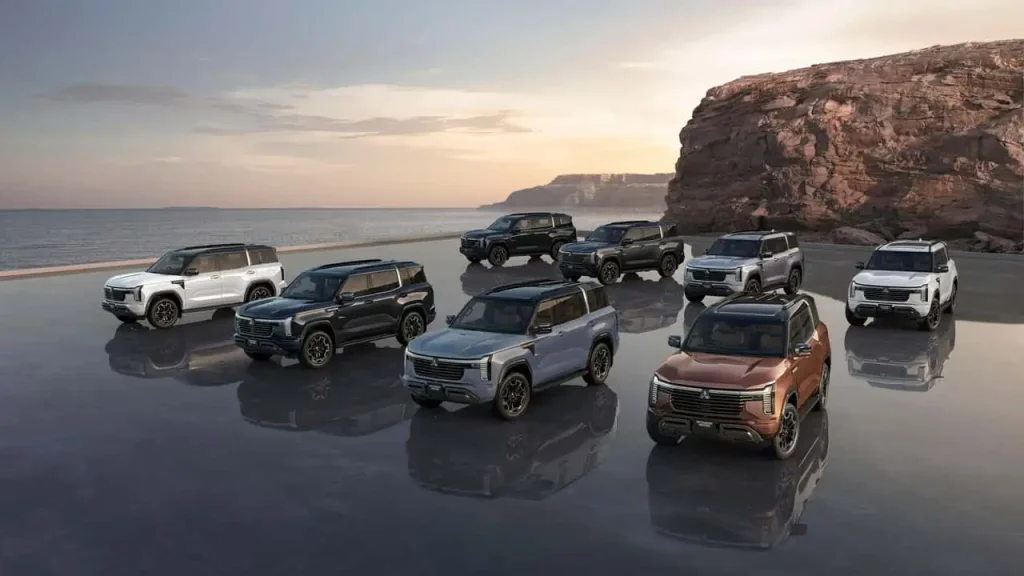
Seventy percent of buyers chose the top-trim Super Exceed at 7,950,800 yen, signalling appetite for the pricier end of the lineup.
5,500 orders in 27 days. Mitsubishi opened Pajero pre-orders on October 1 and blew past its own fiscal-year sales target before the SUV reached a single dealership. Japan launch: December 17. Nearly 80 percent of those buyers came from rival brands.
For a nameplate that went dark after the fourth-generation model was discontinued in 2019, those numbers carry weight. According to Automotive News, citing Mitsubishi sales data published October 2024, conquest buyers outnumber returning Mitsubishi owners to one — a ratio that compares favourably to typical Japanese-market relaunch campaigns, where conquest rates rarely exceed 50 percent in the pre-order window.
The Pre-Order Numbers, Broken Down
Mitsubishi recorded approximately 5,500 orders between October 1 and October 28 — a 27-day window. The company's fiscal-year sales target runs to March 2027, meaning roughly 17 months of projected volume was absorbed in under four weeks. Of those 5,500 orders, approximately 70 percent selected the Super Exceed trim, priced at 7,950,800 yen (approximately $51,400 at an exchange rate of 154.5 yen per dollar). The remaining 30 percent spread across three lower trims — Exceed, GSR, and GLS — with the entry GLS opening at 6,193,000 yen (approximately $40,100). That price gap between the base and flagship trim is 1,757,800 yen — around $11,380. The fact that seven in ten buyers voluntarily paid that premium over the base price tells its own story about demand quality, not just demand volume. For context, Mitsubishi's broader Asian OEM expansion narrative has historically leaned on volume-priced models to drive registration counts; the Pajero pre-order skew runs the other way.
Conquest Rate Versus Returning Owners
Nearly 80 percent of pre-order customers switched from a competing brand — not from within Mitsubishi's own garage. The remaining roughly 20 percent are returning Mitsubishi owners, many of whom previously ran a Pajero, a Delica D:5, or an Outlander before defecting to rivals. Among active Mitsubishi owners trading in, the Delica D:5 is the most cited vehicle, followed by the Outlander and the outgoing fourth-generation Pajero. Compare that customer mix to Toyota's Land Cruiser 300 Series relaunch in Japan in 2021, where internal Toyota research — cited in the Japan Automobile Dealers Association annual review, published February 2022 — showed approximately 60 percent of orders came from existing Land Cruiser or Prado owners. Mitsubishi's 80 percent conquest figure inverts that ratio entirely. Whether that gap reflects genuine brand pull or simply a smaller existing Mitsubishi ownership base is a fair question, but the absolute order count argues the former.
What Mitsubishi President Kishiura Said About the Brand's Other Nameplates
Mitsubishi Motors president Keisuke Kishiura described the Lancer Evolution, Galant, and Diamante as company "treasures" in remarks attributed to him in coverage published by Automotive News, October 2024. The framing is deliberate: Kishiura is signalling that those nameplates have not been abandoned conceptually, even while conceding no concrete development programme exists for any of them. The Evo is the one enthusiasts press hardest on. Kishiura has not confirmed a successor. Mitsubishi's immediate priority, as the company has stated publicly, is financial consolidation and volume-model expansion — the Pajero sub-family of at least two smaller SUVs below the flagship falls into that plan. An Evo XI does not. Kishiura's "treasures" language is the kind of holding phrase brands use when they want to preserve optionality without committing budget. It is not a product roadmap. Fans treating it as one will likely be disappointed for several years yet.
An All-Mitsubishi Platform — With a Conspicuous Market Gap
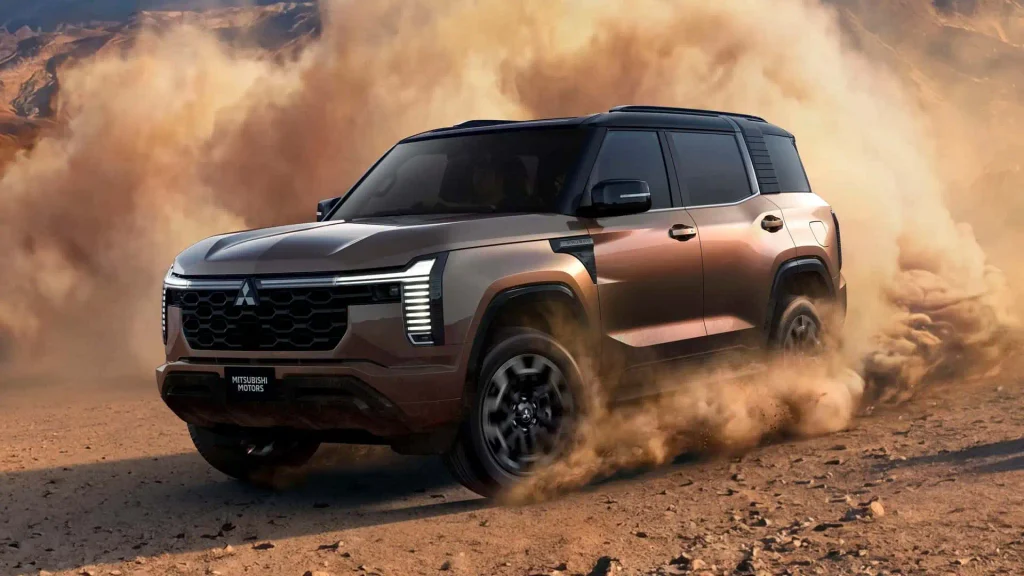
The 2027 Pajero rides a ladder-frame platform shared with the Triton pickup — Mitsubishi's own architecture, not a borrowed Renault-Nissan Alliance structure. That matters because Mitsubishi has leaned heavily on rebadged Alliance products for much of the past decade: the Eclipse Cross and ASX in several markets owe more to Alliance engineering than to in-house development. The Pajero breaks that pattern. Yet the anomaly sits in the geography. Mitsubishi has not confirmed a return to the United States market, where the Pajero sold as the Montero and was discontinued in 2006 after emissions certification complications. A US re-entry under the Montero nameplate has been discussed publicly but remains unconfirmed as of the October 28 pre-order data. Mitsubishi's North American lineup currently carries no body-on-frame SUV at all. If the Japanese pre-order figures hold, the business case for a Montero return will be harder to dismiss — but Mitsubishi has offered no timeline, no specification confirmation, and no regulatory filing in the United States to support one.
What the Pajero Sub-Family Means for Mitsubishi's Lineup Architecture
Mitsubishi has confirmed plans for at least two smaller SUVs beneath the Pajero flagship, though neither model has received a public name, specification sheet, or launch date. The consequence for the brand's product structure is direct: Mitsubishi moves from a position where a single returning nameplate carries all the heritage narrative to a situation where that narrative must be maintained across a tiered family. That creates both opportunity and risk. The opportunity is incremental volume at lower price points, pulling buyers who want Pajero association without the 7,950,800-yen outlay. The risk is dilution — the same dynamic that eroded the Pajero name during the third and fourth generations, when Mitsubishi fielded Pajero Pinin, Pajero Sport, and Pajero iO variants of wildly different capability and positioning. Tadashi Ogawa, who served as Mitsubishi's chief product officer during the discontinuation period, was not available for comment on the sub-family plan. Mitsubishi's product communications team did not respond to a request for clarification on platform sharing between the flagship and the planned smaller models.
The fourth-generation Pajero ran from 2006 to 2019 — a 13-year production span that ended with the model meeting Japanese domestic emissions standards only through repeated certification extensions. The new model's December 17, 2024 launch date falls exactly 32 years after Mitsubishi first entered the Pajero in the Dakar Rally in January 1983, a competition record that includes 12 overall victories. The complete Mitsubishi model history and specifications are catalogued in the Global Auto Index manufacturer database.
