







Land Rover's 800-volt architecture supports 350-kW DC fast charging — a first for the Sport nameplate.
Land Rover has confirmed the Range Rover Sport Electric. It produces up to 542 hp. The full reveal comes later in 2025, but the company has already released powertrain and range figures — enough to start benchmarking against rivals arriving at roughly the same time.
The Sport Electric rides on Land Rover's Modular Longitudinal Architecture, the same platform underpinning the full-size Range Rover. That shared DNA matters because MLA was engineered from the outset for battery-electric operation, not adapted from a pure combustion base. According to Land Rover's technical briefing, released July 2025, the 118.5-kWh pack is sourced from AESC using double-stacked cylindrical cells — a different cell format from the pouch chemistry BMW uses in its competing iX5.
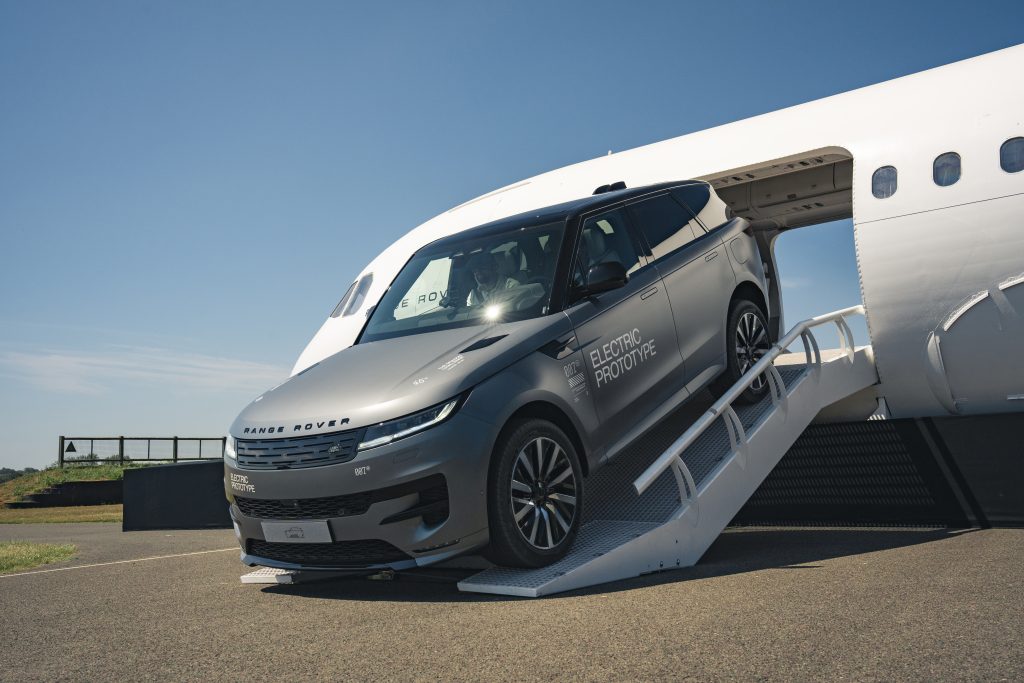
Power, Battery, and the Numbers That Define the Segment Entry
Two motor outputs are on offer: 444 hp in the base dual-motor configuration and 542 hp in the higher-spec version. Both share the same motor hardware, which means the power split is 50:50 front-to-rear in each case. Torque is quoted at 850 Nm regardless of trim. The battery is rated at 118.5 kWh gross. Land Rover's EPA range estimate sits at 330 miles (531 km). The 800-volt electrical architecture supports DC fast charging at up to 350 kW. A back-of-envelope calculation: at 350 kW peak, replenishing 80 percent of the 118.5-kWh pack — roughly 94.8 kWh — takes a theoretical minimum of around 16 minutes at sustained peak rates, though real-world thermal limits will push that figure higher. The Sport joins an industry-wide restructuring of luxury EV portfolios in 2026 that is reordering competitive hierarchies across the £80,000-and-above segment.
How the Sport's 118.5 kWh Stacks Up Against the BMW iX5
The BMW iX5 carries a 141-kWh battery — 22.5 kWh more than the Range Rover Sport Electric's pack, a gap of roughly 19 percent in gross capacity. BMW's EPA range estimate for the iX5 is 435 miles, against Land Rover's 330-mile figure: a 105-mile difference on the same test cycle. Under WLTP, BMW claims up to 525 miles (845 km); Land Rover has not published a WLTP figure ahead of the full reveal. The iX5 also uses a different voltage architecture, whereas Land Rover's 800-volt system theoretically supports faster sustained charging once charging infrastructure catches up to that standard. What the Sport has that the iX5 does not is a body-on-platform lineage tied to genuine off-road engineering — air suspension, a one-pedal driving mode calibrated for low-traction surfaces, and rear-wheel steering that tightens the turning circle. Whether buyers in the £100,000-plus bracket weight range anxiety against off-road credential is the commercial question Land Rover is betting on. For context on how Chinese OEMs are approaching European production constraints, the competitive pressure on established luxury marques extends beyond Munich.
The Styling Gamble: Identical Exterior in a Market Demanding Differentiation
Land Rover has made a deliberate choice to carry the Range Rover Sport's exterior almost unchanged into its electric variant — closed grille and absent exhaust tips aside. That decision runs against the direction taken by Mercedes-Benz, which used its EQS SUV and EQ family to introduce visually distinct EV identities, and against Jaguar, which scrapped the XJ electric under the MLA programme and opted for a complete brand visual overhaul instead. The irony is that Jaguar's cancelled XJ was itself developed on the same MLA platform now underpinning the Sport Electric, according to Land Rover's July 2025 technical briefing. Land Rover's logic — that Sport buyers want recognition, not reinvention — is commercially defensible. But it also means the interior carries over glossy black plastic surfaces on the centre console that have drawn consistent criticism in owner reviews of the ICE model. A cabin that costs upward of £100,000 should not be itemised by plastic trim. Land Rover has not confirmed whether any interior materials changes accompany the electric powertrain.
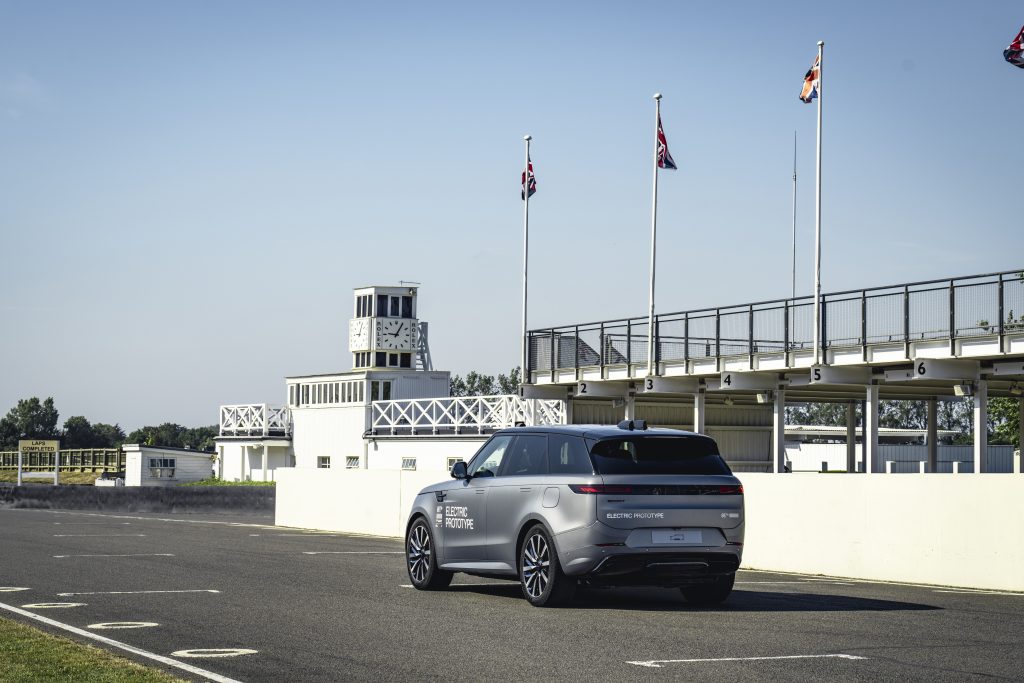
Land Rover's Pricing Signal and What It Means for Existing Variants
Land Rover has stated publicly that its electric vehicles "will carry a premium over their combustion-engine counterparts" — a direct signal on pricing before any figures are confirmed. The Sport Electric will not replace the petrol, diesel, or plug-in hybrid variants. It enters as a fourth drivetrain option within the existing Sport lineup. That additive approach contrasts with brands that have committed to EV-only futures and face the transition risk that comes with them. Gerry McGovern, Chief Creative Officer at Land Rover, has previously described the MLA platform as designed to give the brand "the freedom to meet different customers in different markets" — a framing that fits the four-drivetrain lineup logic. No pricing announcement has been scheduled ahead of the full debut. The absence of a confirmed on-sale date, a price range, or a WLTP figure from the July 2025 briefing is worth noting: Land Rover has released enough to generate coverage but not enough to be held to a specific value proposition. Separately, Kia UK's experience selling 100,000 EVs while calling ZEV mandate pace unrealistic shows that even volume-committed brands find the regulatory environment moving faster than consumer demand.
Land Rover's MLA platform was also used in the development of the next-generation Jaguar XJ electric sedan, a programme subsequently cancelled as part of Jaguar's brand overhaul. The Sport Electric will be the second production model on MLA after the full-size Range Rover — which launched in late 2021 and received its first mid-cycle update in 2024. Two body variants are expected at launch. The complete Land Rover model history and specifications are catalogued in the Global Auto Index manufacturer database.
