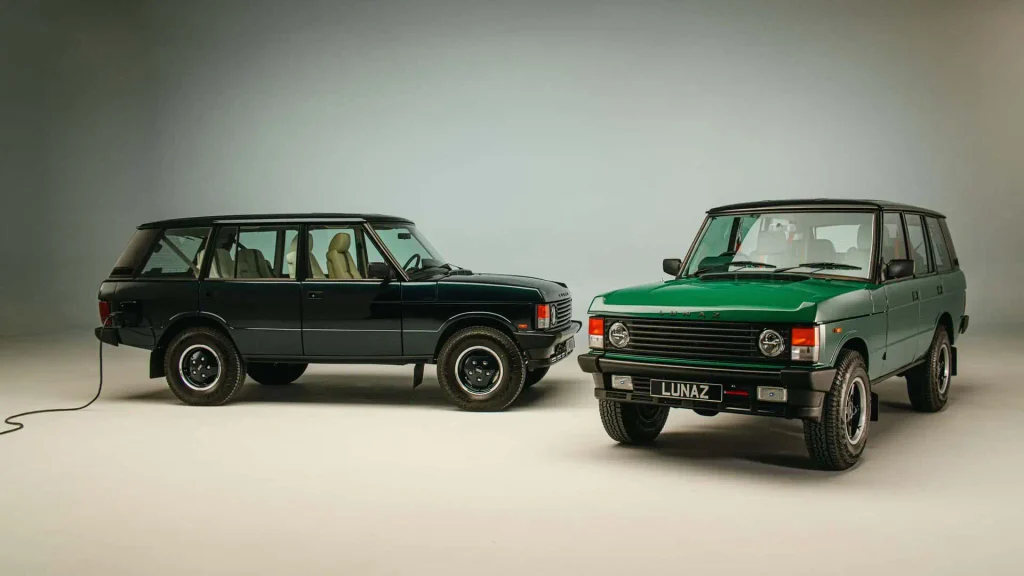
The 25-unit Range Rover Classic run is already spoken for, with American commissions claiming a sizeable portion.
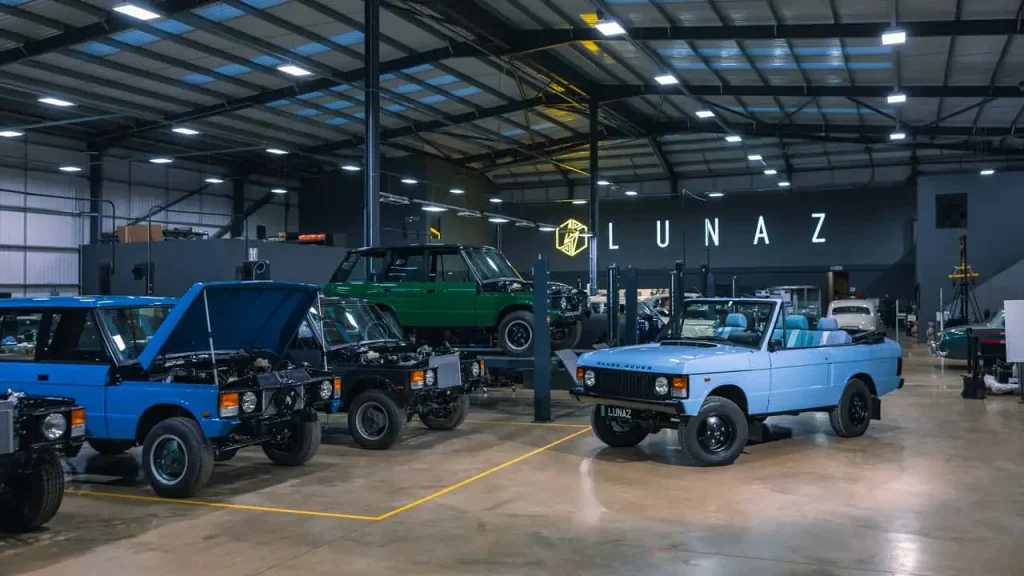
Every US slot gone. Lunaz confirmed this month that American clients have taken all available commissions across its Range Rover Classic and Aston Martin series. The Silverstone-based coachbuilder is not pausing — it is adding a second shift and roughly 40 jobs over the next 24 months.
The sell-out lands as ultra-low-volume electrified restomods move from curiosity to a repeatable order-book business. According to Lunaz Design's production statement, published September 2026, the company's 65,000-square-foot Northamptonshire facility has hit its ceiling for single-shift output. No comparable British coachbuilder reported a full US allocation sell-out in the same period, making Lunaz's position structurally different from the broader industry restructuring narrative of 2026.
Second Shift Approved as US Demand Outruns Floor Space
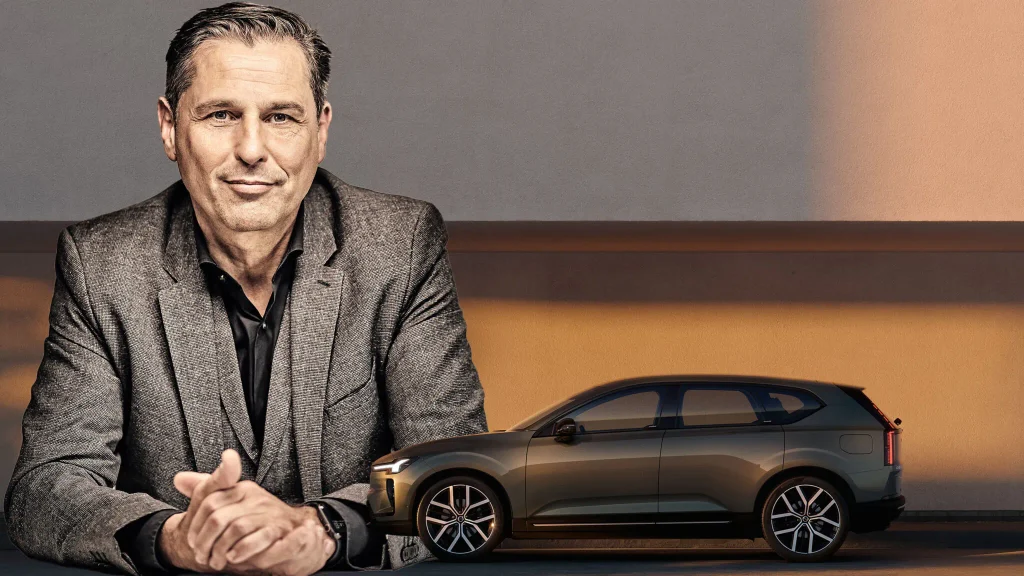
Lunaz entered the United States market earlier in 2026. Within months, American clients became the company's largest single source of international commissions. The pace overwhelmed single-shift capacity at the Silverstone site before the year was out. David Lorenz, founder and chief executive of Lunaz Design, authorised a second shift rather than extend lead times — a decision that reshapes the facility's operating rhythm entirely. Hiring spans design, coachbuilding, powertrain integration and final assembly, all retained on the Northamptonshire campus. Lorenz cited Silverstone's surrounding cluster of motorsport suppliers and specialist fabricators as the primary reason the company can recruit at this pace without relocating. New joiners include both experienced engineers drawn from Formula One supply chains and craft apprentices entering coachbuilding for the first time.
25 Cars, 40 Jobs, One 65,000-Square-Foot Ceiling
The arithmetic of Lunaz's expansion is blunt. The current Range Rover Classic production run is capped at 25 vehicles — not by order volume, which exceeded that figure, but by what the existing floor space can process per cycle. At 40 additional hires across 24 months, that averages 20 new staff per year, or roughly 1.7 per month. The facility itself covers 65,000 square feet; on a per-vehicle basis for a 25-unit run, that is 2,600 square feet of workshop per car — a ratio that reflects hand-built timelines rather than volume production logic. Both the electric powertrain option and the LS3 V8 alternative are rated at over 350 horsepower. The original 3.5-litre unit in a standard Range Rover Classic produced approximately 165 horsepower, meaning each commission delivers more than double the factory output: 350 ÷ 165 = 2.12× the original figure. All 25 examples are designated as 2027 builds.
Lorenz: US Response 'Shows the Strength' of the Cars' Cultural Place
David Lorenz, founder and chief executive of Lunaz Design, framed the American sell-out in terms that go beyond order-book mechanics. According to Lunaz Design's September 2026 production statement, Lorenz described the US response as evidence that shows "the strength" of these vehicles' "place in automotive culture" — a 10-word extract that the company used across its official communications. The framing matters because it positions the sell-out as demand validation rather than lucky timing. Two recent commissions illustrate the cultural register Lorenz is referencing. One is a vivid-green Range Rover Classic internally called "Kermit," its cabin finished in a Pop Art-inspired scheme with contrasting upholstery blocks. The second, called "Nevada," wears deep forest green over an ivory leather interior with woven heritage textiles on the door cards. Both were built before the second shift was approved, which means quality benchmarks exist against which the expanded workforce will be measured.
Aston Martin DB Series vs the Range Rover Classic: Different Drivetrains, Same Logic
The Range Rover Classic and the Aston Martin DB series share an order structure but diverge on mechanicals in ways that complicate direct comparison. The Range Rover accepts either Lunaz's own electric powertrain or a modern LS3 V8 — both exceeding 350 horsepower — across two-door, four-door, long-wheelbase and convertible body configurations. The Aston Martin DB series, marking 60 years of the DB nameplate, uses a hand-built 5.0-litre V8 also rated at 350 horsepower; it is Lunaz's first combustion-only project and draws on Formula One-derived engine development. Where the Range Rover programme is Lunaz's longest-running and has the deepest US penetration, the Aston Martin work is newer and carries a different collector audience. Bentley, Rolls-Royce and Jaguar commissions are also reported by Lunaz to be following a US-led demand pattern, though none of those lines has yet reported a comparable full-allocation sell-out. The divergence in drivetrain philosophy also intersects with broader regulatory questions: US tariff and European IVA tightening could alter the landed cost of components for future combustion builds.
What Lunaz Has Not Confirmed: Pricing, Waiting Lists, and the Quality Question
Lunaz has not published a price for any 2027 Range Rover Classic commission. No figure appears in the September 2026 production statement, and no floor or ceiling was offered when the US sell-out was announced. Given that comparable coachbuilt electrified classics from smaller British workshops have traded between £350,000 and £650,000 depending on specification, the absence of a public number is conspicuous rather than accidental — it preserves negotiating latitude on a per-client basis. Equally absent: any confirmation of what happens to clients who contacted Lunaz after US slots closed. Whether a waitlist exists for 2028 production, or whether the 25-unit cap will be revisited once the second shift reaches operating speed, remains unanswered. The quality question is the sharpest gap. Adding 40 staff to a craft operation that built its reputation on small-team continuity carries real risk, a point that even sympathetic observers of the low-volume British specialist sector have raised when headcount doubles inside 24 months. Lunaz has not addressed this directly.
Lunaz was founded in 2018 and completed its first electric Range Rover Classic conversion the same year. The Silverstone facility sits within three miles of the circuit's pit lane complex, giving it direct access to a supplier base that collectively employs more than 4,500 engineers in Northamptonshire. The 2027 Aston Martin DB series marks the nameplate's seventh decade. Demand will outlast slots. The complete Lunaz model history and specifications are catalogued in the Global Auto Index manufacturer database.
