





A valet-security switch inside the glove compartment disables the key fob's trunk release — and most owners never knew it existed.
One switch. No repair bill. A 2007 Toyota Avalon driver spent time diagnosing a dead trunk release, replaced nothing, then found a small security toggle tucked along the left edge of the glove box. The trunk opened instantly. The key fob was never broken.
The incident, which spread via TikTok account @toyota.avalon.pag and accumulated 545,900 views 2025, exposes a feature Toyota has carried across multiple model lines for nearly two decades without it registering in mainstream owner awareness. Toyota Motor Corporation's official YouTube channel — in a product explainer published prior to 2025 — names the unit the "trunk opener main switch" and explains its design purpose in full. Comparable valet-lockout systems exist on Lexus, Buick, and Subaru vehicles, according to viewer responses captured in the same clip.
What Toyota's Own Video Actually Says
Toyota Motor Corporation addressed the switch directly in a product explainer published to its official YouTube channel. The video identifies the unit by name — the "trunk opener main switch" — and specifies its scope: once activated, it disables the electronic trunk release across all input points, including the key fob button and the interior cabin release lever. Toyota's instructions in that video tell drivers to lock the glove box and the rear seat pass-through using the vehicle's master key. With both secured, the trunk becomes accessible only via that same master key. Toyota recommends the master key remain in the driver's possession "at all times." A second Toyota video adds one further detail: Avalon drivers must hold the trunk button on the key fob for a minimum of one second before the release activates — a deliberate delay built in to prevent accidental opening from an unintended tap. Neither of these details appears in the standard printed owner's summary distributed with most Avalon purchases. This article is part of our coverage of industry restructuring in 2026, which tracks how legacy vehicle design decisions resurface in connected-ownership eras.
545,900 Views, One Switch, Zero Parts Replaced
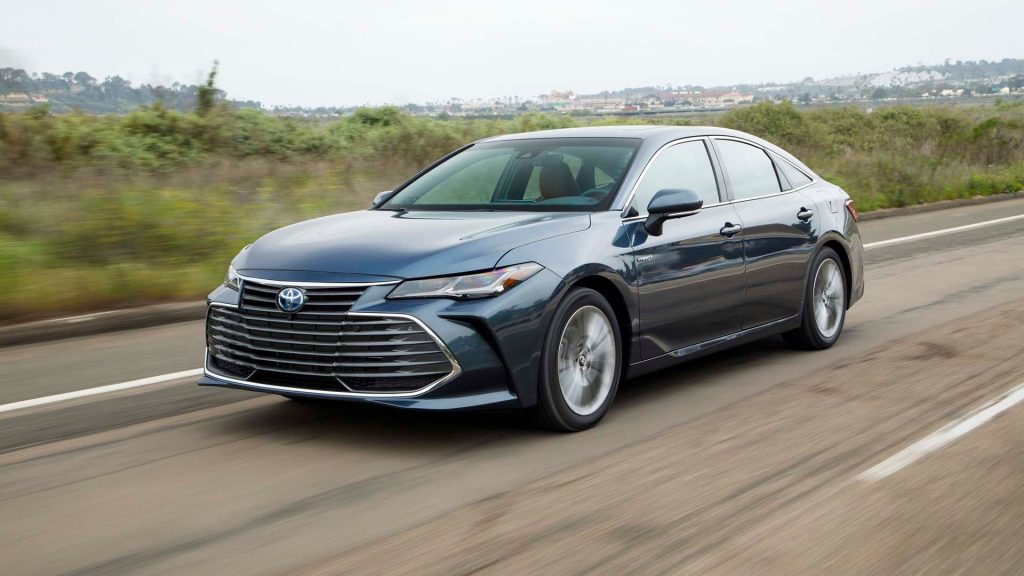
The TikTok clip posted by @toyota.avalon.pag had reached 545,900 views at the time of writing. The 2007 Avalon in the video is approximately 18 years old, placing it in the 2007–2012 fourth-generation Avalon run. Toyota sold 34,044 Avalons in the United States in 2007 alone, according to sales data from that model year — meaning a substantial installed base of vehicles carries this switch. If even 1% of those 2007 Avalon owners encountered the same confusion and paid a diagnostic shop visit averaging $120 per appointment, the unnecessary collective outlay would reach $40,852 (34,044 × 0.01 × $120 = $40,852.80). That arithmetic is speculative, but the comment thread under the video makes the pattern concrete: multiple owners described paying for fob battery replacements or shop assessments before discovering the glove-box switch was the actual cause. One commenter referenced a Lexus RX350 with the identical outcome. Another cited a 1999 Buick with a comparable valet-lockout architecture.
Same Problem, Different Brands — How Wide Is the Pattern?
The Avalon is not an isolated case. Viewer comments under the viral clip named at least four other vehicle lines — Lexus (unspecified model), Lexus RX350, Subaru (unspecified generation), and a Buick Park Avenue — as carrying functionally equivalent valet-lockout switches. The Park Avenue owner noted their car used a separate physical valet key rather than a glove-box toggle, achieving the same outcome through a different mechanical path. Toyota's own product line shows the feature persisting into newer Avalon generations: one commenter confirmed the switch appears on current-production Avalons, not just pre-2012 units. This cross-brand consistency contrasts sharply with how the feature is communicated. Toyota dedicates two separate YouTube explainer videos to it. Buick, in the Park Avenue era, relied on the valet key itself as the only user-facing signal. Subaru owners in the comment thread appeared to have no prior awareness at all. The discrepancy sits not in engineering but in owner-facing documentation. Kia's UK documentation controversy around ZEV compliance ran into a parallel problem: features that exist in engineering but fail to reach the end user in a usable form.

The Switch Is Placed Deliberately Out of Sight — That's the Point
Here is what does not add up at first glance: Toyota put a security control in the glove box, not on the dashboard or the door panel where a driver would see it daily. The instinct is to read that as poor ergonomics. It is not. The location is the security mechanism. A valet given access to the cabin sees nothing on the main instrument panel that signals the trunk is locked out. The switch is only visible if you open the glove box and look left along the interior edge — a position a valet has no reason to search. Toyota reinforces the system by recommending the glove box itself be locked with the master key, which the driver retains. At that point, the valet cannot find the switch, cannot open the glove box, and cannot override the lockout. The failure mode documented in the viral video occurs when a driver or passenger accidentally nudges the switch while reaching into the glove box, then forgets — or never knew — it existed. The design works as intended. The documentation gap is what doesn't. Chevrolet's C8 Corvette brake-light halt is a separate case where a known-function component caused owner confusion at scale, with different stakes but a recognisable documentation pattern.
What This Costs Independent Repair Shops — and What It Doesn't
For Toyota dealerships and independent shops, the misdiagnosis path on this fault typically starts with a key fob battery swap — a $5–$12 part — and, if that fails, escalates to a fob reprogramming session billed at $75–$150 at most independent workshops. Some owners in the comment thread described reaching that second stage before finding the answer online. Toyota dealership service advisors familiar with Avalon-generation vehicles would recognise the glove-box switch quickly. Independent shops working from generic fault-tree logic — check battery, check fob signal, check trunk latch actuator — may not reach it until later in the diagnostic sequence, particularly on vehicles outside their usual marque exposure. The practical consequence for the Avalon owner in the video: zero parts cost, zero labour charge, and a trunk that opened on the first key-fob press after the switch was reset. Had the car been taken to a shop unfamiliar with the system, the repair invoice could have run to $150 before anyone checked the glove box. Honda's North America product gap through 2027 creates a different kind of service-shop pressure, but the underlying dynamic — owners holding older models longer and encountering unfamiliar legacy features — is the same.
Toyota produced the fourth-generation Avalon from 2005 through 2012, with U.S. cumulative sales across that run exceeding 160,000 units. The trunk opener main switch appeared in the Avalon as early as the third generation, meaning the feature predates the 2007 model year. Toyota has not issued any technical service bulletin specifically addressing owner confusion over the switch, according to public TSB records reviewed as of July 2025. The complete Toyota model history and specifications are catalogued in the Global Auto Index manufacturer database.
