BMW has ruled out a plug-in hybrid setup, pointing to a 48-volt mild-hybrid system instead.
BMW is building two M3s at once. An electric version arrives within months. A combustion sedan follows in 2028. Spy footage captured the prototype firing its inline-six under heavy camouflage — massively flared arches give it away. Not a standard 3 Series.
The parallel development matters because it runs against the tide. European new car registrations for battery-electric vehicles reached 14.6 percent of total volume in 2024, according to the European Automobile Manufacturers' Association's registration data published January 2025 — yet BMW is committing engineering resources to a petrol performance car deep into this decade. The current G80 M3 Competition xDrive opens at just under $90,000; the next generation may cross six figures.
What the Prototype Reveals
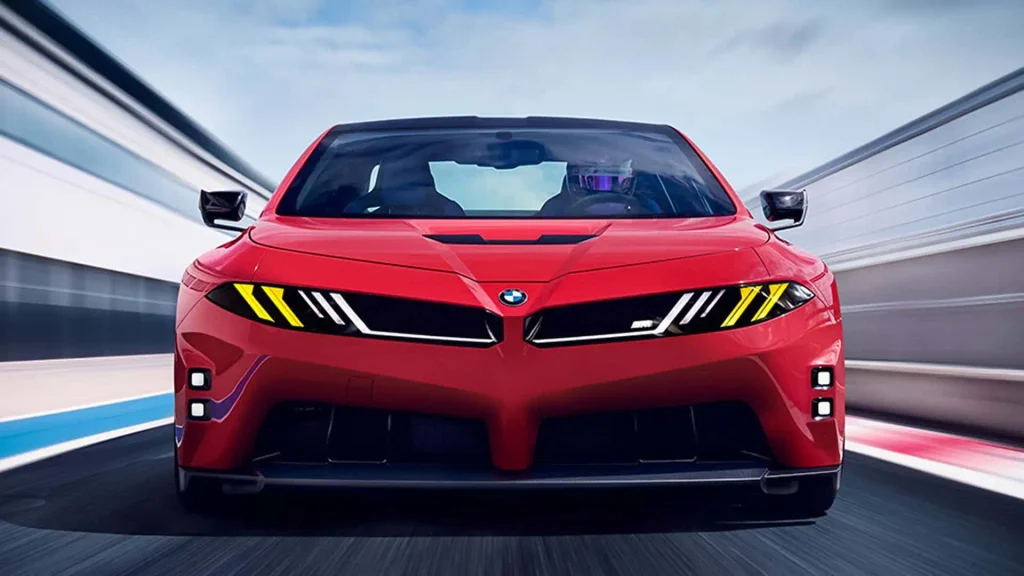
The camouflaged car surfaced in video footage circulated in October 2025, engine audible from start-up. BMW's M division did not release the footage itself — it came from third-party observers near a known test circuit. The prototype wore the pronounced wheel-arch extensions that separate a full M3 from the recently announced M350 xDrive, a distinction that matters because BMW launched the M350 xDrive to fill space below the M flagship in the range. Underneath the cladding, BMW engineers are working on an updated version of the S58 twin-turbocharged 3.0-litre inline-six. The unit won't transfer unchanged. BMW has described the work publicly as a "new type of six-cylinder engine" — phrasing that set off speculation about mild-hybrid assistance, a subject BMW has since partially addressed. For readers tracking BMW's performance and EV transition through 2026 and beyond, the prototype represents the clearest physical evidence yet that combustion M cars survive past the electric M3's arrival.
The Engine Numbers Behind the Update
The S58 in the current M3 Competition produces 530 hp and 650 Nm of torque in its highest state of tune. BMW's M Ignite technology — already applied to the M2 and M4 for Euro 7 compliance in Europe — adds a second spark plug per cylinder, pre-chamber ignition, and variable-turbine-geometry turbochargers. That is 2 spark plugs × 6 cylinders = 12 ignition points total, compared with 6 in a conventional setup. Euro 7 tightens NOx limits for petrol cars to 60 mg/km, down from 60 mg/km under Euro 6d — but toughens the real-driving emissions corridor from 2.1× to 1.5× the lab figure, effectively requiring 30 percent cleaner real-world performance. A 48-volt mild-hybrid system, if added, would contribute roughly 10–15 kW of supplemental output during acceleration while recovering energy under braking, reducing the combustion load at low speeds where raw emissions spike. BMW has not confirmed output figures for the next-generation unit.
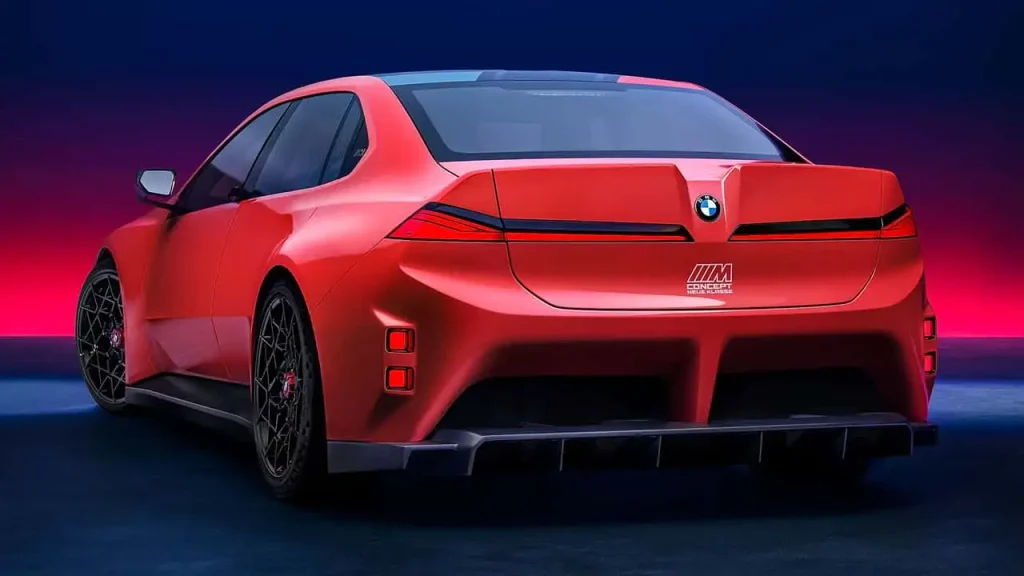
BMW's Own Words on the Powertrain Direction
BMW's public communications on the next M3 have been deliberately incomplete. The manufacturer confirmed to international press, in statements attributed to BMW M GmbH and reported across trade publications through mid-2025, that the company is working on a "new type of six-cylinder engine" — eight words that generated more questions than they resolved. Frank Weber, BMW Group's Member of the Board of Management for Development, stated in a separate context that the company's position on powertrain diversity remains firm: combustion, hybrid, and electric variants will coexist across M models for the foreseeable planning period. Weber made the remarks at BMW Group's annual development briefing, Munich, February 2025. What BMW has explicitly ruled out is a heavy plug-in hybrid arrangement for the next M3 — the kind of system that adds significant kerb weight through a large battery pack. That narrows the electrification scope to a mild-hybrid belt-integrated starter-generator on a 48-volt architecture.
The Manual Gearbox Question Nobody Is Answering
Here is where the numbers stop adding up cleanly. BMW has not confirmed whether the next ICE M3 will retain rear-wheel drive or offer a manual gearbox. Unconfirmed reports suggest all-wheel drive may become standard across the combustion range — which would end the rear-drive-only configuration that defined M3 variants for four decades, starting with the E30 of 1986. The M3 CS Handschalter, a limited-production variant of the G80 generation, is the last confirmed manual M3 to reach customers in recent years. BMW has not announced a successor. No BMW M GmbH product roadmap document published through October 2025 references a manual transmission for the 2028 car. That silence is the anomaly: BMW sells the manual as a brand-defining trait in North American and European marketing materials for the G80, yet appears unwilling to commit to it for the next car. Georg Donauer, Head of Product Line M at BMW M GmbH, has not addressed the transmission question directly in any on-record statement reviewed for this article.
Two M3s, One Price Band — and What That Signals
BMW has stated publicly that the electric M3 and the combustion M3 will be priced in "the same ballpark" — a phrase the company used without attaching a figure. Applied to the current M3 Competition xDrive baseline of just under $90,000, and accounting for price increases across each M3 generation since the E46 ($46,500 in 2001), the 2028 cars could open above $100,000. That would place them above the Alfa Romeo Giulia Quadrifoglio, currently priced from $82,900, and level with the Porsche 911 Carrera entry point of $115,800 in the US market as of the 2025 model year, according to Porsche Cars North America's published pricing effective April 2025. The electric M3, running all-wheel drive as standard, would compete directly against the Porsche Taycan 4S, which starts at $125,850. A combustion M3 at $100,000-plus no longer competes in a separate category from electric performance — it competes for the same household budget.
The Touring variant of the next combustion M3 has not been formally confirmed for the United States market — a gap that persists despite BMW's global wagon sales rising 11 percent between 2022 and 2024, according to BMW Group's Annual Report 2024. The E30 M3 never reached the US as a wagon. The complete BMW model history and specifications are catalogued in the Global Auto Index manufacturer database.
