A signed memorandum of understanding puts Thai factory volume at the centre of the deal.
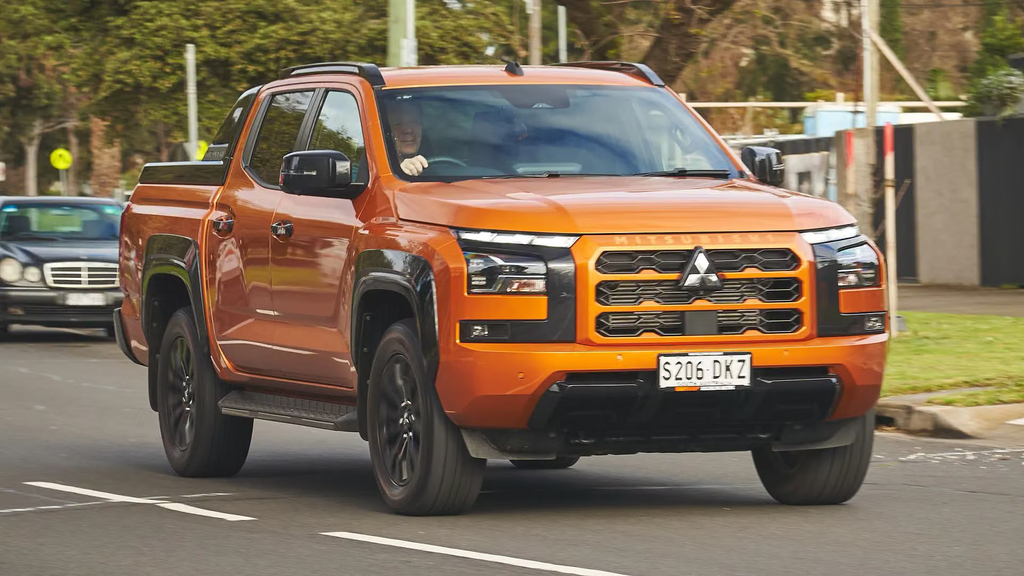
Honda has a pickup truck deal. It is signed. The two companies — Honda and Mitsubishi — formalised a memorandum of understanding this month, committing to a Triton-platform model badged as a Honda and aimed at ASEAN markets by 2028. No name. No pictures yet.
The agreement is the first complementary vehicle-supply initiative between the two OEMs, according to Honda's official statement published October 2024. It lands as both companies face mounting platform-sharing pressure: Mitsubishi already supplies the current-generation Nissan Navara to Australia and New Zealand under a separate arrangement, demonstrating that cross-brand production from the same Thai facility is an established, not experimental, model.
From Rumour to Signed MOU in Weeks
Honda confirmed the agreement after weeks of trade-press speculation. The two automakers signed the memorandum, locked a 2028 sales target, and named the Triton as the donor platform — all in one release. Honda disclosed no truck name, no exterior design, and no powertrain selection for its version. What the company did confirm is that ASEAN is the intended launch region. Mitsubishi, for its part, said nothing publicly about production allocation figures. The signed MOU also builds on the three-way partnership that Honda, Nissan, and Mitsubishi formalized in August 2024, a structure that survived after the proposed Honda-Nissan merger collapsed earlier this year. That earlier collapse left each OEM carrying standalone cost burdens that platform-sharing arrangements now partially offset. For Honda's North America and global product planning, the ASEAN pickup sits outside existing light-truck commitments but demonstrates that the company is willing to accelerate segment entry through borrowing rather than clean-sheet engineering.
What the Triton Platform Actually Delivers
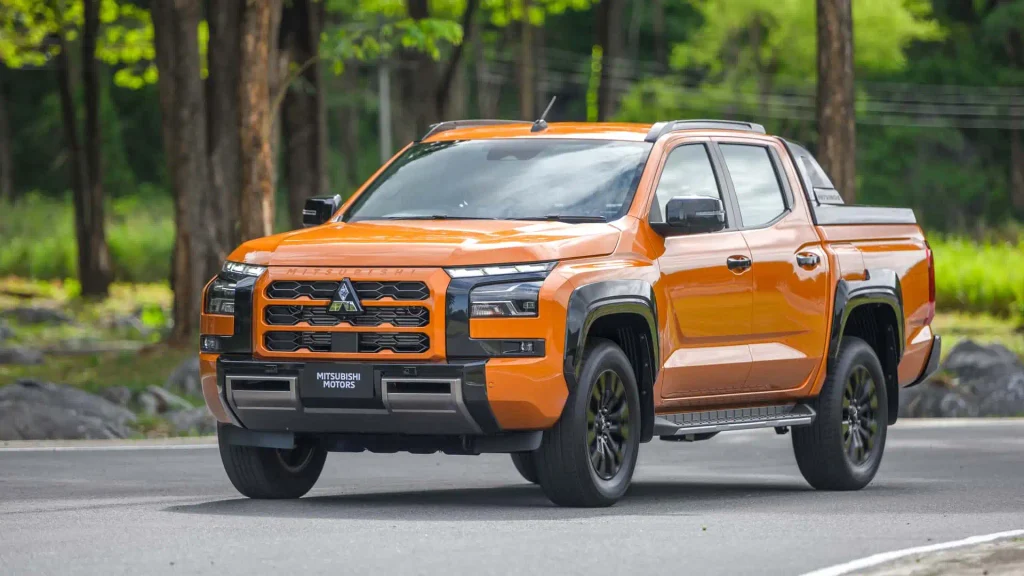
The Mitsubishi Triton runs a ladder-frame body-on-frame chassis. Powertrain options vary by market: a naturally aspirated 2.4-litre petrol four-cylinder sits at the base, while the range-topping twin-turbo diesel 2.4-litre unit produces 201 hp and 470 Nm of torque. That 470 Nm figure is delivered through a six-speed automatic transmission. Towing capacity in workhorse specification reaches 3.5 metric tonnes — equal to 7,716 lb — which places it directly against the Toyota Hilux's published 3.5-tonne maximum. Mitsubishi's Super Select 4WD-II system adds a locking rear differential and seven selectable terrain modes. On-page: if Honda captures even 15 percent of Mitsubishi's Thai plant output and the plant runs at a notional 100,000 units per year, that is 15,000 Honda-badged trucks annually before any ramp-up adjustment. Whether Honda targets that level of volume has not been disclosed.
Badge Engineering vs. the Ridgeline — Two Different Philosophies
Honda's existing pickup, the Ridgeline, is a unibody truck sold in North America. It shares its platform with the Pilot SUV. The Triton-based truck will be a body-on-frame vehicle — a fundamentally different construction — built in Thailand and sold in Southeast Asia. These are not competing products aimed at the same customer. They are architecturally incompatible and geographically separated. The Ridgeline's base price in the United States sits above USD 40,000 in current trim. ASEAN mid-size pickup trucks — the Triton among them — retail at roughly a third of that figure in markets such as Thailand and Indonesia, where one-tonne trucks serve as primary commercial workhorses, not lifestyle vehicles. That price gap alone explains why Honda chose supply partnership over platform adaptation. Developing a bespoke body-on-frame truck from scratch is estimated by analysts at IHS Markit's 2023 platform-cost study to require upward of USD 1 billion in engineering spend for a volume below 50,000 units annually.
The Chicken Tax Problem Nobody Is Talking About
Honda's official statement makes no mention of the United States. That silence is telling. The US Chicken Tax — a 25-percent tariff on imported light trucks, in force since 1963 and unchanged by subsequent trade negotiations — makes Thai-origin pickup imports commercially unviable at any realistic ASEAN price point. Honda has not confirmed whether it is exploring local US assembly for this platform, and the company has not answered questions about whether any North American volume is under consideration. What is also absent from the MOU disclosure: any reference to electrification. The Triton does not currently offer a battery-electric or plug-in hybrid variant. ASEAN emissions schedules vary sharply by country — Thailand targets 30 percent zero-emission vehicle sales by 2030, according to the Thailand Board of Investment's policy update from March 2024 — and a 2028 launch on a diesel-and-petrol-only platform may face a tighter regulatory window than the timeline implies. Neither Honda nor Mitsubishi addressed that gap in the October release.
Mitsubishi's Thai Factory Gets a Lifeline
Koji Sato, President of Toyota Motor Corporation, told analysts in Toyota's Q2 2024 earnings call that capacity utilisation across the ASEAN production network was under pressure from softening regional demand. Mitsubishi faces that same pressure at its Laem Chabang facility in Rayong Province, Thailand, where the Triton is assembled. Adding Honda-badged volume to that line directly improves utilisation without requiring capital investment in a second platform. Shunichiro Aoki, Executive Vice President at Mitsubishi Motors, confirmed in a statement carried by Mitsubishi's investor relations page — published October 22, 2024 — that increased production volume at the Thai plant is an explicit objective of the MOU. For Honda, the consequence runs in the other direction: the company enters a one-tonne ASEAN segment where it currently holds zero market share, without committing engineering headcount or platform capital. The risk profile is low. The ceiling on differentiation, however, is equally low — Honda will be selling what is recognisably a Mitsubishi truck with a different badge until the two companies agree otherwise.
Mitsubishi's Triton has been on sale in Thailand since 2005 across four generations, accumulating a regional production total that Mitsubishi cited as exceeding one million units as of its 2023 annual report. The Honda variant will be the platform's third simultaneous badge alongside the Triton and Navara. No Honda pickup has previously been manufactured in Thailand. The complete Honda model history and specifications are catalogued in the Global Auto Index manufacturer database.
