The Acura ZDX went first in 2025; now Honda's last production electric is gone, and three future EV projects are cancelled.
Honda is out of EVs in the United States. Production of the Prologue ends with the 2026 model year. Inventory sales continue into 2027. Three separate EV projects — the Acura RSX electric, the 0 SUV, and the 0 Sedan — were cancelled before a single unit reached a dealership.
The exit is abrupt . Twelve months ago Honda was showing near-production EV concepts in Tokyo; today the brand holds zero battery-electric entries in its US retail lineup, compared with the two it had at the start of 2025. According to Honda's statement to CarBuzz, published July 2025, "customer demand for EV models has shifted significantly over the past 18 months" — a timeline that maps directly onto the expiry of the US federal $7,500 EV purchase tax credit.
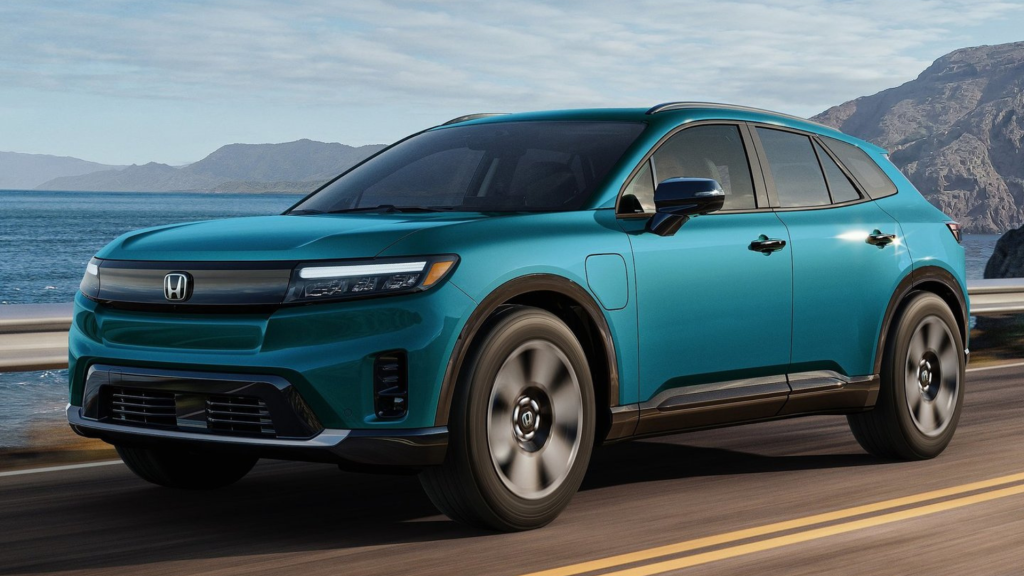
From Tokyo Motor Show to the Scrap Pile
Honda showed the 0 SUV and 0 Sedan concepts at the Tokyo motor show in late 2024, billing them as near-production previews. The reception was warm. Neither vehicle survived the following six months of internal review. In March 2025, Acura confirmed the electric RSX crossover would not proceed. Weeks later, Honda quietly shelved the 0-series pair. The Prologue, already in dealers, was the last electric standing — and now that too is gone. The sequence matters: this was not a single pivot but a rolling withdrawal, project by project, across roughly nine months. Our coverage of industry restructuring in 2026 has tracked similar multi-step retreats at other volume brands, though few have shed their entire EV retail presence in a single fiscal year.
¥4.4 Trillion on Hybrids: The Arithmetic of the Retreat
Honda has committed ¥4.4 trillion to hybrid development through to March 2030. At an exchange rate of ¥157 to the dollar — the mid-July 2025 spot rate — that converts to approximately $28.0 billion. The target is 15 new hybrid models by March 2030, which is roughly 55 months away at time of writing. That works out to one new hybrid model every 3.7 months on average. The next-generation hybrid system, previewed on two prototypes unveiled in May 2025, is projected to deliver a 10 percent improvement in fuel efficiency against the system Honda introduced in 2023. Honda sold approximately 1.4 million vehicles in the United States in 2024 according to Wards Intelligence's full-year registration data, published January 2025. Hybrids accounted for around 11 percent of that volume. Lifting hybrid share to 30 percent — a reasonable ambition given the spend — would add roughly 266,000 electrified units annually without selling a single battery-electric car.
Honda's Official Line on the Prologue
Honda's written statement, provided directly to Motor1 and published 17 July 2025, reads in part: "production of the Prologue will end at the completion of the 2026 model year." The company added that "sales will continue through 2027 based on expected inventory" and that existing owners "will continue to receive full support through our dealer network, including service, parts, and warranty coverage." The language is careful. Honda does not use the word discontinued. It does not name a replacement. The warranty and parts commitment is standard practice for a model exit, but its explicit inclusion in an official statement suggests Honda's communications team anticipated the question from Prologue owners. Tom Hsieh, Vice President of Sales, Honda North America, has not made public comment on the withdrawal timeline beyond the written statement as of the date of publication.
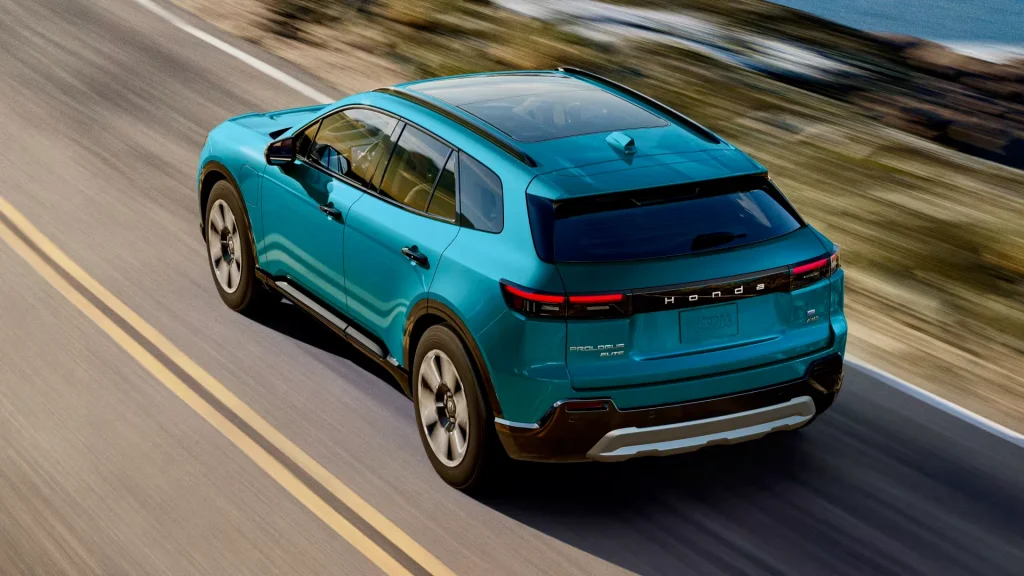
Where Honda Stands Against Its Segment Peers
General Motors, which co-developed the Prologue's Ultium platform and supplies Honda under a supply agreement, retains multiple BEV nameplates in US retail — Chevrolet Equinox EV, Blazer EV, and Silverado EV among them. Toyota, Honda's closest domestic rival by US volume, sells no battery-electric passenger car in the United States at volume but has maintained that position consistently rather than entering and exiting. Hyundai and Kia between them registered more than 100,000 EVs in the United States in the first half of 2025, according to their respective sales releases. Kia's own assessment of EV demand, however, notes that mandate-driven targets are running ahead of actual consumer uptake — a tension Honda is apparently resolving by stepping back entirely rather than absorbing margin pressure to hold market position.
The GM Partnership That Leaves Both Sides Exposed
The Prologue shares General Motors' BEV3 platform and Ultium battery architecture. That arrangement was presented publicly as a win for both companies: Honda got a fast path to a US-compliant BEV; GM got a volume anchor for its platform. With the Prologue gone, GM's own product line takes on the full amortisation burden of that shared tooling without Honda's contribution. Neither company has disclosed the financial terms of the supply agreement or confirmed whether Honda faces an early-exit penalty. What is not confirmed: Honda has not published, and has not been asked to confirm publicly, whether a termination fee applies or what volume commitment underpinned the original deal. The absence of that number is conspicuous. The Acura ZDX, which shared the same platform, was pulled in 2025. That means GM lost both Honda-affiliate off-take volumes within roughly 18 months of the partnership's commercial launch. US trade policy shifts have added further cost uncertainty to cross-brand platform deals of this type.
Honda's US EV sales peaked at 4,261 Prologue units in the fourth quarter of 2024, according to Honda's own quarterly sales release filed January 2025 — a figure that represents less than 0.3 percent of its total US volume that period. The next Honda EV earmarked for the US market has no confirmed name, no confirmed date, and no confirmed platform. The complete Honda model history and specifications are catalogued in the Global Auto Index manufacturer database.
