A 22-speaker Bose system and Zero Gravity captain's chairs arrive in a van Nissan won't sell outside Japan.
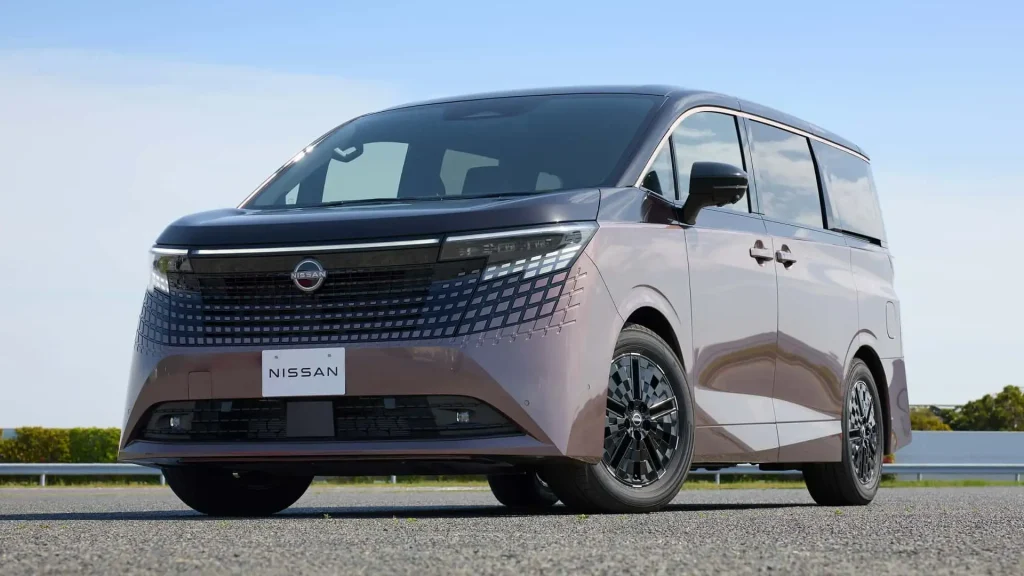
Nissan launched the fourth-generation Elgrand on July 16. Japan only. No export date confirmed. The van starts at ¥6,897,000 — roughly $42,500 at current rates — and replaces combustion-only engines with a hybrid-electric drivetrain for the first time in the nameplate's history.
The Elgrand's domestic relaunch lands while Nissan executes a global cost reduction programme that has already trimmed headcount and shuttered capacity abroad. Keeping a high-specification van exclusive to Japan, where minivans remain culturally entrenched, follows a pattern the brand used with the E13 Note Aura — domestic-first, export uncertain. According to Nissan Motor Co.'s product announcement, published July 2025, no right-hand or left-hand export variant has been approved for production.
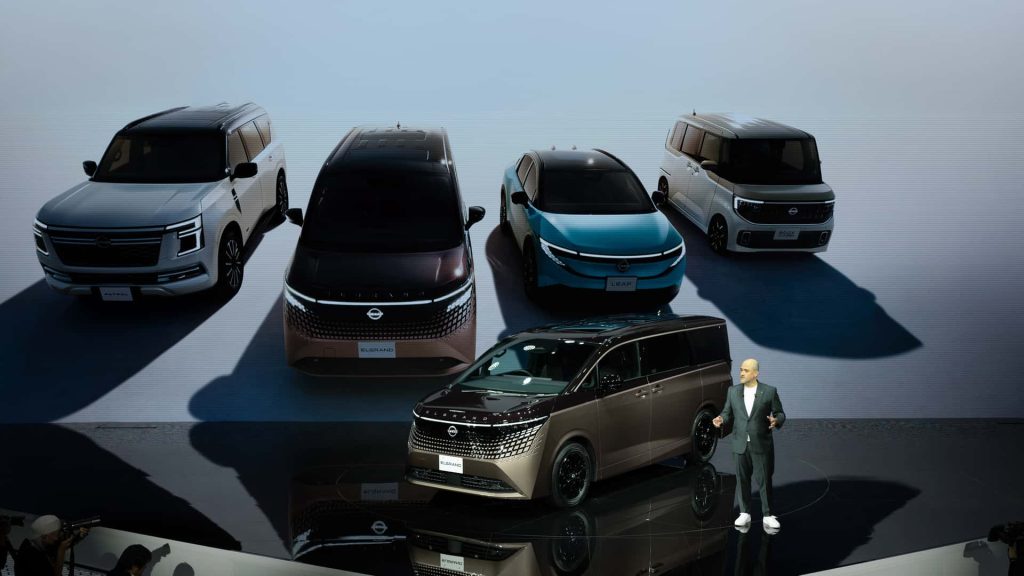
From Japan Mobility Show Concept to Showroom Floor
Nissan first showed the fourth-generation Elgrand at the 2025 Japan Mobility Show in late 2024. The crowd response was documented. Orders opened shortly after the July 16 launch date. The nameplate traces back to 1997, when the first-generation model entered a Japanese market already crowded with Toyota Alphard predecessors and Honda Odyssey variants. Each subsequent generation expanded equipment levels without crossing into export territory at meaningful volume. This fourth iteration does the same — it arrives fully formed for the Japanese buyer, with hands-free driving assistance, rear entertainment screens, and a purple interior option that no regional Nissan catalogue outside Japan currently lists. Dealers in Japan received allocation guidance before the public launch. Nissan has not confirmed build volumes. The company's Asian OEM domestic-segment product decisions continue to draw scrutiny from analysts tracking the gap between home-market investment and export retrenchment.
E-Power Figures and What the Powertrain Actually Means
The Elgrand's E-Power system uses a 1.5-litre three-cylinder turbocharged petrol engine solely as a generator. Two electric motors drive the wheels via Nissan's e-4ORCE all-wheel-drive system. Nissan has not published peak system output for the Elgrand specifically, but the same e-4ORCE architecture in the Ariya crossover produces 290 kW (389 hp) in dual-motor form — the Elgrand's heavier body will almost certainly use a lower tune. Entry price is ¥6,897,000. At a July 2025 exchange rate of approximately ¥153 to $1, that converts to $45,079 — not $42,500 as some reports have rounded. The difference is $2,579, or roughly 6%. Top-trim specification has not been priced publicly. Japan's consumption tax of 10% applies at point of sale, meaning the tax component alone on the base price is ¥689,700 ($4,508). Buyers choosing the three-seat second-row bench rather than the Zero Gravity captain's chairs will pay a specification-dependent surcharge not yet published.
What Nissan's Own Launch Material Says — and Doesn't Say
Nissan's launch statement, released July 16, 2025, describes the Elgrand as offering "a new dimension of luxury travel for Japanese families." The phrase is deliberate. Every market reference in the document names Japan. No passage addresses export homologation, crash-test submission to Euro NCAP or NHTSA, or right-hand-drive adaptation for markets such as Australia or the United Kingdom. The 22-speaker Bose audio system — which includes headrest-mounted drivers in the second-row seats — is cited in section two of the release as a flagship differentiator. The Kumiko wood trim, a lattice-joinery technique associated with Japanese craft traditions, is described in the same section as "authentic," without specifying supplier or region of manufacture. What the document does not contain: any mention of the Infiniti brand, despite the Elgrand's specification level sitting comfortably within Infiniti's historical positioning. Nissan declined to comment on whether an Infiniti-badged variant was evaluated during development.
The Quest Gap and the US Minivan Market Nissan Vacated
Nissan withdrew the Quest from the US market after the 2016 model year, citing declining segment sales. In 2025, according to figures cited in Motor1's July 2025 market summary, US minivan registrations rose 21% year-on-year to approximately 400,000 units — a recovery Nissan cannot participate in with domestic product. The segment is now effectively a two-brand duopoly: Chrysler's Pacifica and Toyota's Sienna account for the overwhelming majority of those sales. A comparable Japan-domestic van, the Toyota Alphard, starts at ¥7,990,000 in current trim — roughly ¥1,093,000 more than the Elgrand's base. That gap is approximately 13.7%, which gives Nissan a price entry point below its most direct competitor at home. In the US, the Chrysler Pacifica starts at $40,490, meaning the Elgrand's calculated $45,079 base would land above it. Honda's own North American product gap until the 2027 CR-V redesign shows how quickly domestic-market focus can hollow out an OEM's export presence.
A Luxury Van Launch During a Cost-Reduction Programme
The timing is worth examining. Nissan's Re:Nissan restructuring plan, announced in 2024 and still running, targets elimination of approximately 20,000 positions and the closure of seven production plants globally, according to Nissan Motor Co.'s financial disclosure, published November 2024. Against that backdrop, launching a high-specification domestic van with 64-colour ambient lighting, a rose-gold two-tone exterior option, and ottoman seating for the front passenger requires explanation. Nissan has not provided one publicly. The Elgrand is almost certainly built at the Oppama or Kyushu plant, both of which handle Japan-domestic high-margin product — but Nissan has not confirmed the assembly location. High-margin domestic models can cross-subsidise restructuring costs, which may explain the investment. Or the Elgrand programme predates the cuts and was too far along to cancel. Those are different stories. The company has not clarified which is true. Separately, US tariff pressure at 25% on imported trucks may have further discouraged any export planning for a large van that would face that levy at the border.
The Elgrand nameplate has existed for 28 years across four generations, never achieving meaningful volume outside Asia. Nissan sold 1,143 Quests in the US in its final 2016 model year — down from a peak of 57,003 in 2004. That 98% sales decline over twelve years ended the nameplate in North America. The complete Nissan model history and specifications are catalogued in the Global Auto Index manufacturer database.
