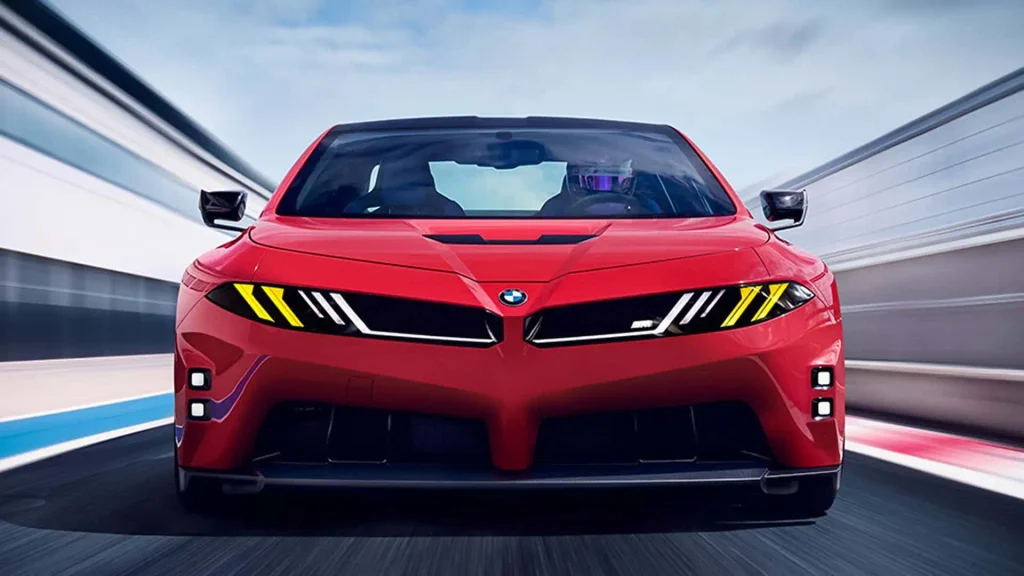
A 100 kWh-plus battery pack will power four motors, with the front axle fully decoupable for rear-wheel-drive mode.
BMW M's chief has drawn a line. The electric M3, due in 2027, will beat the combustion car on output. It will not touch 1,000 hp. Frank van Meel said so directly — thermal management, not politics, sets the ceiling.
The confirmation matters because it is the first time BMW M has bracketed the electric M3's output between two hard numbers: above 543 hp (the M3 CS figure, per BMW's own product documentation) and below 1,000 hp. According to van Meel's interview with Bimmer Today, published July 2025, sustained cooling constraints — not regulatory pressure or brand caution — are what rule out megawatt outputs. That puts the electric M3 in a narrower window than rivals: the Mercedes-AMG CLA 45 E already advertises 680 hp in its top variant.
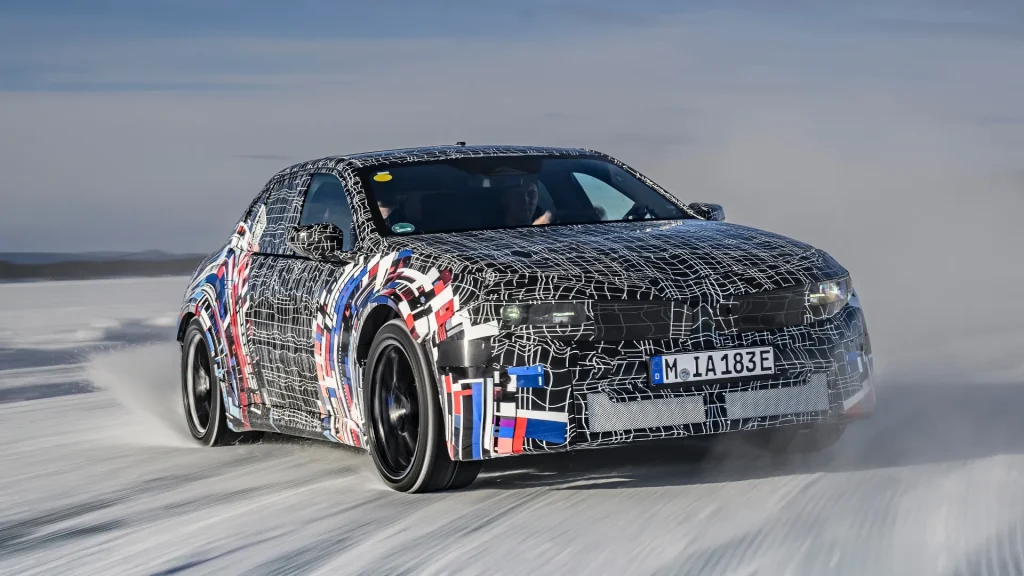
Van Meel's Thermal Argument, Word for Word
Frank van Meel, CEO of BMW M GmbH, was unambiguous when speaking to Bimmer Today in July 2025. His precise words: 'If I put over a megawatt of power into a car, then I can accelerate a few times, but the temperature will start to rise and become an issue.' The consequence, he said, is collapse — the system shuts down before the driver wants it to. Van Meel went further: 'You definitely don't need 1,000 hp or more.' That is not a hedge. It is a product decision stated as settled policy. BMW M's broader electric performance transition has been built around exactly this argument: that repeatable, sustained output matters more than a peak number on a specification sheet. The Vision Driving Experience concept, which BMW has demonstrated internally, reportedly generated around 1,341 hp across four motors — proof the hardware can do it. Van Meel's point is that production cars cannot manage the heat that figure produces.
The Numbers That Define the Ceiling and the Floor
Work through the confirmed figures. The current M3 CS produces 543 hp — the highest output BMW has ever extracted from the S58 inline-six in a 3 Series body. Van Meel confirmed the electric model will exceed that. He ruled out 1,000 hp. That gives a confirmed output corridor of 544 hp to 999 hp: a spread of 455 hp. A midpoint of that range would be roughly 771 hp. For context, the M3 CS weighs approximately 1,730 kg in competition trim; if the electric car carries a 100 kWh-plus lithium-ion pack — the usable capacity BMW has confirmed — pack weight alone likely adds 400 kg to 500 kg over the combustion car's battery-delete weight. At 771 hp and an estimated 2,100 kg kerb weight, the power-to-weight ratio would land near 367 hp per tonne. The M3 CS delivers 543 hp across roughly 1,730 kg, or 314 hp per tonne. On that arithmetic, the electric car wins — but only if BMW holds mass below approximately 2,200 kg. That is the real constraint van Meel did not mention.
Where BMW Sits Against the AMG Benchmark
Mercedes-AMG has not shown the same restraint. The new CLA 45 E — a car in a smaller segment — offers 680 hp in its highest state of tune, according to Mercedes-Benz's product release documentation from early 2025. The AMG GT 4-Door Coupe's top variant exceeds 1,100 hp. BMW's electric M3 will arrive after both of those products are already on sale, which means it cannot use output surprise as a launch tool. What it can use is the thermal-management argument van Meel is already constructing in public. The comparison with the four-motor M3's 1,300 hp debut specification — confirmed separately for a later, higher-tier variant — shows BMW is not philosophically opposed to extreme figures. It is sequencing them. The base electric M3 sets a floor. Derivatives, presumably a CS or CSL designation, may climb well above it. That is the same playbook BMW used with the combustion S58 engine across the M3, M3 Competition, and M3 CS between 2021 and 2024.
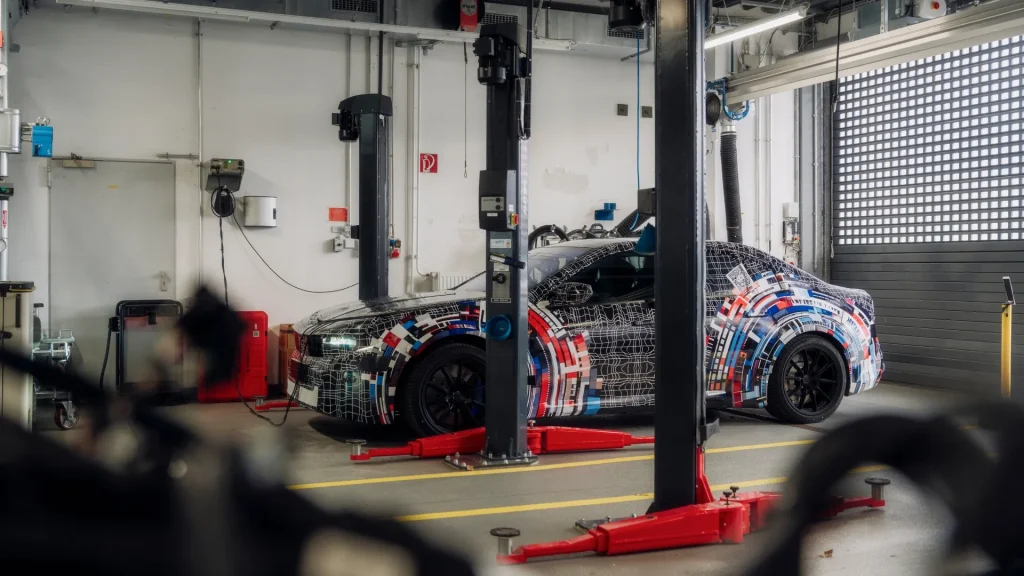
The Engine BMW Did Not Retire
Here is the tension in BMW M's current plan: the electric M3 arrives without replacing anything. Van Meel confirmed the combustion M3 continues, with a next-generation model expected — though no date was given, and nothing before 2028 is considered realistic by people tracking the product cycle. BMW has already invested in updating the S58 engine with pre-chamber ignition technology to meet Euro 7 emissions targets. That investment does not make sense for an engine approaching end-of-life. It makes sense for an engine with a decade left. The M2 and M4 share the S58, which extends the argument across BMW M's entire two-door line. So BMW is simultaneously launching an electric performance car and hardening the case for its combustion successor. Neither replaces the other. That is an unusual posture given the regulatory pressure European manufacturers face — as illustrated by the ZEV mandate debate that Kia UK has publicly called unrealistic in pace. BMW M is, in effect, betting that enough buyers will want both options to justify running parallel development tracks through at least the early 2030s. No internal BMW document seen publicly has confirmed the budget allocated to that parallel track.
BMW M produced 204,000 vehicles in 2023, its highest annual total to date, according to BMW Group's Annual Report 2023. The electric M3 will be built at the Dingolfing plant in Bavaria, which BMW confirmed as the production site in a separate facility announcement. No on-sale date for European markets has been published. The complete BMW model history and specifications are catalogued in the Global Auto Index manufacturer database.
