Off-street parking mandates in many U.S. municipalities could make pay-to-park lock systems illegal before they spread.
A physical bollard. Twelve dollars. Gone is the free front-row spot. ParkVIP installs locking barriers in retail car parks, then charges drivers via a smartphone app to lower them. The service showed up in a TikTok video that passed 282,000 views. The legal picture is murkier than the pricing.
Pay-to-park technology at private retail sites is not new, but ParkVIP's bollard-plus-app model is spreading into lots where municipal off-street parking requirements may prohibit charges entirely. According to Parkopedia's Global Parking Index, published 2023, average daily off-street parking prices rose 5.2 percent between 2019 and 2022. Daily urban parking now runs $30 to $50 in many U.S. cities — context that makes a $12 reserved spot look cheap until zoning lawyers get involved. Our broader coverage of industry restructuring in 2026 tracks how monetisation models are reshuffling across the transport sector.
How the System Works at the Kerb
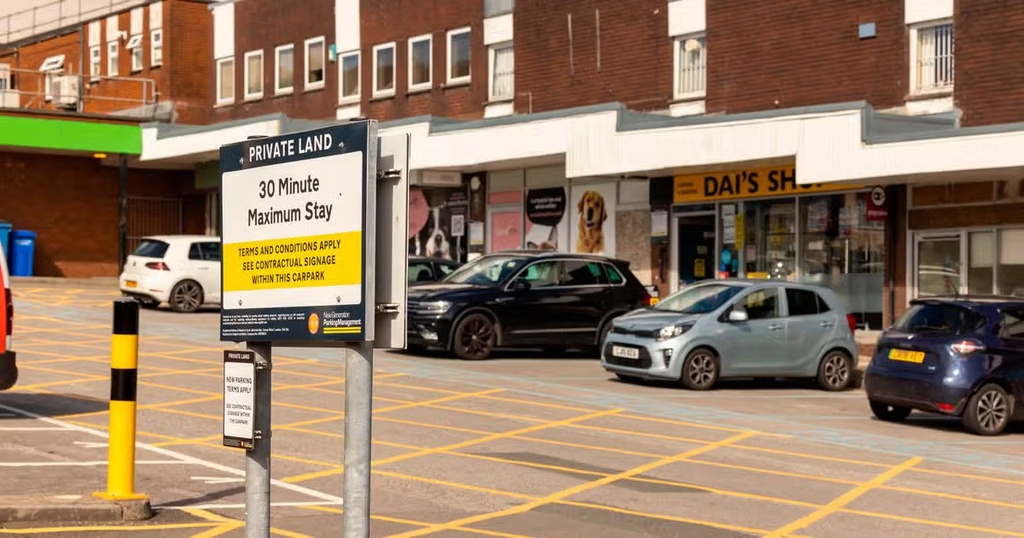
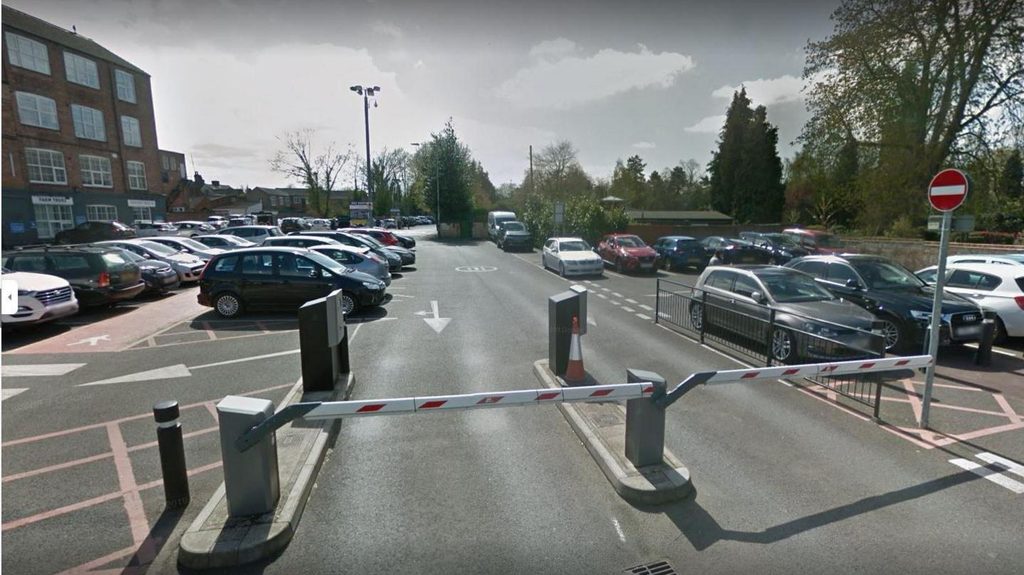
Carter Cole, a content creator whose handle is @cartercole.com, walked up to a row of reserved bays at a U.S. shopping centre and filmed what he found. A metal parking space lock sat in each bay. Above them, a sign read: 'ParkVIP. Reserve your spot in advance.' Cole narrated the obvious: pay $12 through the app, the lock drops, you park. Do not pay, the lock stays up. ParkVIP describes itself as a 'luxury, self-valet system.' The app handles payment, reservation windows, and bay access. Retail tenants sign up to offer the bays; ParkVIP takes a cut. The physical bollard is manufactured to block a standard passenger car; one commenter on Cole's video noted, 'My truck would clear it.' ParkVIP did not respond to a request for comment sent before publication.
The Revenue Arithmetic Retailers Are Running
A standard retail car park with 400 spaces might convert 5 percent — 20 bays — to ParkVIP-style reserved slots. At $12 per reservation, each bay occupied once daily generates $12. Twenty bays, 365 days: 20 × $12 × 365 = $87,600 in gross annual revenue from asphalt that previously earned nothing. Bump occupancy to twice daily during peak weekend hours and that figure approaches $175,200. Against the backdrop of Parkopedia's reported 5.2 percent price rise between 2019 and 2022, the commercial logic is not hard to follow. Daily parking in comparable urban lots already commands $30 to $50, according to Parkopedia's Global Parking Index, 2023 — making ParkVIP's $12 fee appear modest. The margin question is whether zoning penalties or reputational blowback erase the gain before the model scales.
The Zoning Problem ParkVIP Has Not Answered
Here is what does not add up. Dozens of U.S. municipalities require businesses above a certain floor-area threshold to supply a minimum number of off-street parking spaces as a condition of their operating permit. Several of those same ordinances specify that the spaces must remain freely accessible to patrons. ParkVIP's own website acknowledges the constraint obliquely, advising prospective retail partners to 'check local requirements' before installation — which is not the same as confirming compliance. The company has not published a list of cities where it has received municipal sign-off, nor a list of cities where it cannot legally operate. That gap matters: a retailer whose lease or operating licence requires free parking could face fines or permit revocation if ParkVIP bays are challenged. Neither ParkVIP nor any named municipal planning department has confirmed a tested legal ruling on the system. This mirrors broader regulatory uncertainty around access-and-compliance friction appearing across multiple transport sectors in 2026.
Driver Reaction: Workarounds versus Acceptance
Comments on Cole's video split into two camps, and the proportions matter. Most responses described avoidance — parking between the locked bays, arriving in a vehicle narrow enough to squeeze past, or simply ignoring the bollard in a lifted truck. A minority took the opposite view: 'Still better than paying $25-plus for parking half a mile away,' one commenter wrote. That framing is telling. In dense U.S. urban cores where garage rates hit $30 to $50 per day, $12 for a reserved front-row bay is a discount. In suburban retail parks where free surface parking has historically been universal, the same $12 feels punitive. The contrast maps directly onto income geography: the same price point reads as a bargain to a city commuter and as a shakedown to a shopper who drove 20 minutes from a suburb expecting free parking. Towing is the enforcement mechanism if a driver ignores the bollard; ParkVIP has not disclosed towing rates or disputed-fee data.
What Happens to the Retailers Who Sign Up
The named actor facing the clearest exposure is not ParkVIP but the retail tenant or shopping-centre owner who deploys the system. If a city inspector determines that reserved-fee bays violate an off-street parking ordinance, the enforcement notice goes to the property operator, not the app company. ParkVIP positions itself as a technology vendor; liability language in its partner agreements has not been made public. For shopping-centre operators already navigating falling footfall — U.S. enclosed mall vacancies stood at 8.6 percent in Q1 2025, according to Cushman & Wakefield's Retail Vacancy Report, Q1 2025 — adding friction to the arrival experience carries customer-retention risk. A driver who circles a car park looking for a free space, finds only locked ParkVIP bays, and leaves without shopping is a loss that does not appear in ParkVIP's parking-utilisation dashboard. That data gap is precisely the kind of incomplete metric driving scepticism toward dynamic-pricing schemes. Similar accountability questions have surfaced in other transport technology rollouts where vendor dashboards and real-world outcomes diverge.
ParkVIP was founded in the United States and, as of early 2025, had not publicly disclosed the total number of retail sites carrying its bollard system or the aggregate number of transactions processed. The company's app carried a 3.2-star average rating across 47 reviews on the Apple App Store as of September 2025. The complete ParkVIP service history and operator database are catalogued in the Global Auto Index manufacturer database.
