




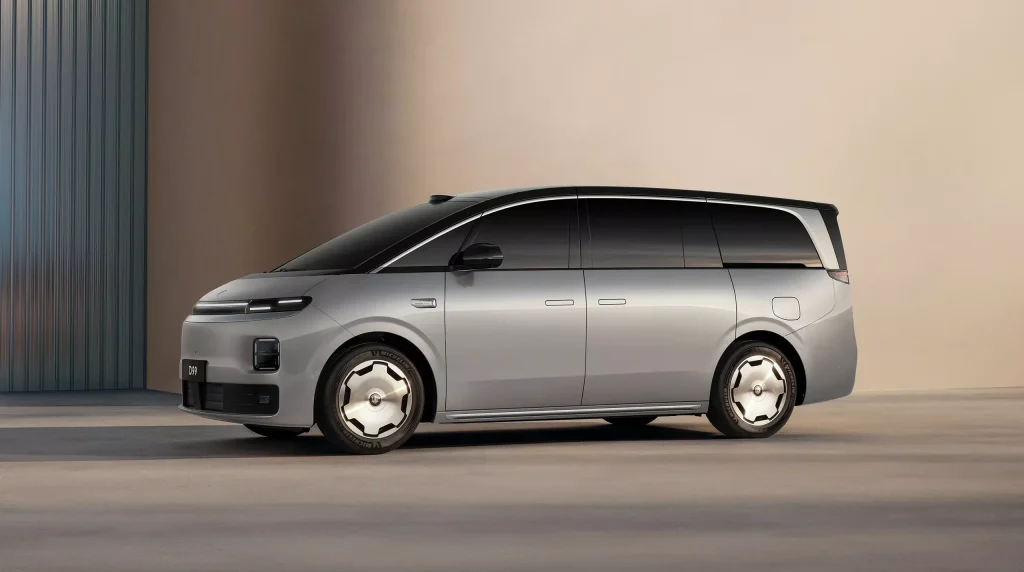

A casino parking lot encounter in 100-degree heat triggered a response that got the owner ejected from the property.
Two dogs. One parked Silverado. Around 100°F outside. A bystander leaving a casino spotted the animals pressing against a cracked window and went straight to security. The owner was found and removed from the property. No window got broken — this time.
The incident lands inside a well-documented public-safety gap. According to the American Veterinary Medical Association's guidance on companion animal welfare, cracking a window provides no meaningful temperature relief. Cabin heat can climb roughly 20°F in ten minutes on a sunny day, per research cited in its hot-car advisory. Thirty-two states plus Washington, D.C., now criminalise the act — up from fewer than twenty a decade ago — yet enforcement remains event-driven rather than systematic.
How the Casino Lot Encounter Unfolded
Chris Sanchez was walking to his car after leaving the casino when he noticed movement inside a parked Chevrolet Silverado full-size pickup. Two dogs — visible through the glass — moved back and forth against the slightly cracked passenger window. Sanchez filmed the scene and spoke directly to the animals. "What's up buddy? Are y'all hot?" he asked. He then walked to casino security and reported what he saw. Security staff located the vehicle's owner inside the building and ejected them from the property. Sanchez later confirmed the outcome in comments beneath the TikTok clip, which had accumulated more than 14,600 views as of early October. He did not need to break the window, though multiple viewers told him he would have been legally protected had he done so. Several commenters urged him to call law enforcement immediately in any future encounter. The advice tracks with guidance from the American Kennel Club, which instructs people who find animals in hot vehicles to contact local police before attempting entry themselves. This episode is part of a broader wave of incidents tracked across the industry restructuring coverage examining how vehicle ownership patterns collide with public-safety obligations.
The Temperature Math That Makes Minutes Matter
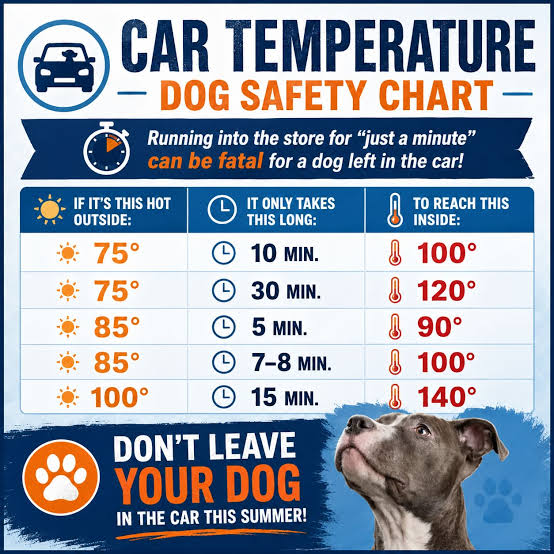
The arithmetic is unforgiving. Start with an ambient temperature of 100°F — the figure Sanchez cited in his video. Research referenced in the ASPCA's hot-car advisory shows cabin temperature rises approximately 20°F within the first ten minutes. That puts the interior at roughly 120°F before Sanchez even finished filming. After one hour, the same data shows an increase exceeding 40°F above the starting point: 100 + 40 = 140°F sustained interior temperature. The American Veterinary Medical Association states that dogs begin showing heatstroke symptoms — drooling, excessive panting, elevated respiratory rate — once body temperature climbs past approximately 104°F. At 140°F ambient cabin air, that threshold is crossed fast. For context, the ASPCA reports that more serious symptoms, including seizures and vomiting, emerge when a dog's core temperature exceeds 104°F. A cracked window, per the AVMA, reduces interior temperature by a statistically negligible margin in direct sunlight conditions. The thirty-two-state legal ban exists precisely because the window-cracking assumption remains widespread and demonstrably wrong.
What Bystanders Said — and What the Law Backs Up
The most direct instruction in Sanchez's comment section came from a viewer who wrote: "Call the cops and tell them you're breaking the window." That eight-word formulation captures the legal reality in several jurisdictions. A number of states grant civil immunity to individuals who damage a vehicle to rescue an animal, provided they first attempt to contact law enforcement. Sanchez did not quote that statute, but his decision to involve casino security — an institutional authority — mirrors the intent of those rescue provisions. The American Kennel Club, in its published guidance on companion animal safety, states flatly that dogs should be left at home rather than brought to venues where they cannot accompany their owner inside. That guidance has not changed since the AKC first issued it, though the organisation updated supporting materials to reflect higher recorded summer temperatures in urban areas. Sanchez told commenters he was relieved he arrived before the situation worsened. "I'm just grateful I was there before it was too late," he wrote — a response that drew hundreds of supportive replies.
State-Level Law Versus National Patchwork
Thirty-two states plus Washington, D.C., now make it a criminal or civil offence to leave a pet in a vehicle under dangerous conditions, according to the ASPCA's state-law tracker updated in 2024. That leaves eighteen states with no specific statute on the books. The contrast matters practically: in a state without a hot-car animal law, a bystander who smashes a window to rescue a dog may face a criminal damage charge with no statutory immunity. Nevada, where the Sanchez incident appeared to occur based on the casino setting visible in the clip, does carry provisions addressing animal cruelty in vehicles, though enforcement authority and response times vary by county. Compare that to California, where both the rescue-immunity clause and mandatory law-enforcement notification requirements are codified in a single section of the Penal Code. The gap between the two regimes means that the same Chevrolet Silverado, the same 100°F day, and the same cracked window produce entirely different legal outcomes depending on which side of a state line the parking lot sits on. The regulatory fragmentation debate playing out in European manufacturing has a domestic analogue here: inconsistent rules produce inconsistent protection.
The Window-Cracking Assumption That Won't Die
Here is what does not add up. Every major veterinary body — the ASPCA, the American Veterinary Medical Association, the American Kennel Club — has published clear, consistent guidance for years: cracking a car window does not materially reduce interior temperature for a trapped animal. The AVMA states this explicitly in its companion-animal hot-car advisory. Yet the behaviour persists at scale. The Sanchez video shows exactly this: an owner who took what they likely believed was a precautionary step — the cracked window — then went inside a climate-controlled casino. The gap between the owner's apparent belief and the documented thermal reality is not a knowledge problem at this point. The information is freely available and widely circulated each summer. It is a behaviour problem. What remains unpublished — and what neither the ASPCA nor the AKC has quantified in any document reviewed for this article — is the number of non-fatal heatstroke incidents in animals each year that go unreported because the owner retrieved the pet before collapse occurred. That figure, whatever it is, would almost certainly change the public conversation. For related coverage of how product liability and vehicle safety intersect with owner behaviour, see the Chevrolet C8 Corvette brake-light recall and the emerging questions it raised about manufacturer communication obligations.
The ASPCA recorded 57 confirmed animal-in-hot-car fatalities during the summer of 2023 in states where such incidents are tracked and reported — a figure that excludes the eighteen states with no mandatory reporting mechanism. A federal bill introduced in 2019, the Protecting Animal Welfare and Safety Act, would have created national standards; it did not advance out of committee. The complete Chevrolet Silverado model history and specifications are catalogued in the Global Auto Index manufacturer database.
