
Unconfirmed reports point to wire harnesses from a Ukrainian supplier struck in late October.
BMW confirmed it. No further detail offered. Mini's Oxford plant went dark on 9 November — a full two-week stoppage blamed on parts shortages that the Group declined to specify publicly. The silence said as much as the announcement.
Oxford builds roughly 1,000 Minis per day at full capacity, according to BMW Group's 2023 Annual Report, published March 2024. A fortnight offline puts somewhere around 10,000 units at risk. Volkswagen Group faced a comparable supplier disruption at its Zwickau EV plant in 2021, losing three weeks of ID.4 output — a comparison that shows single-source exposure in conflict-adjacent supply chains is not a new failure mode, merely an unresolved one.
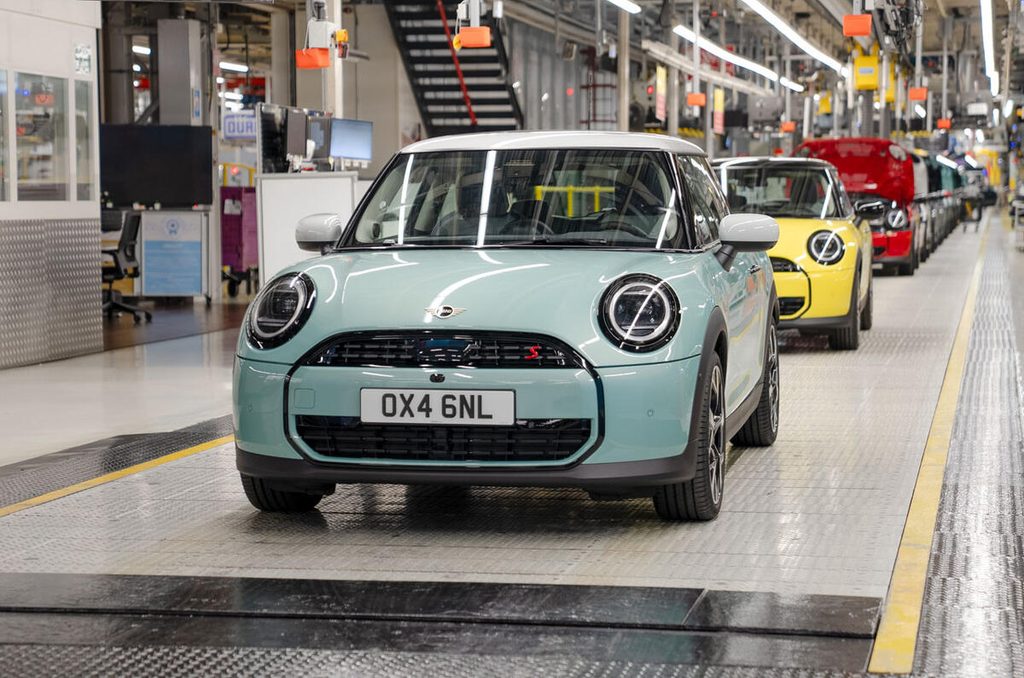
Nine November: The Day Oxford Went Quiet
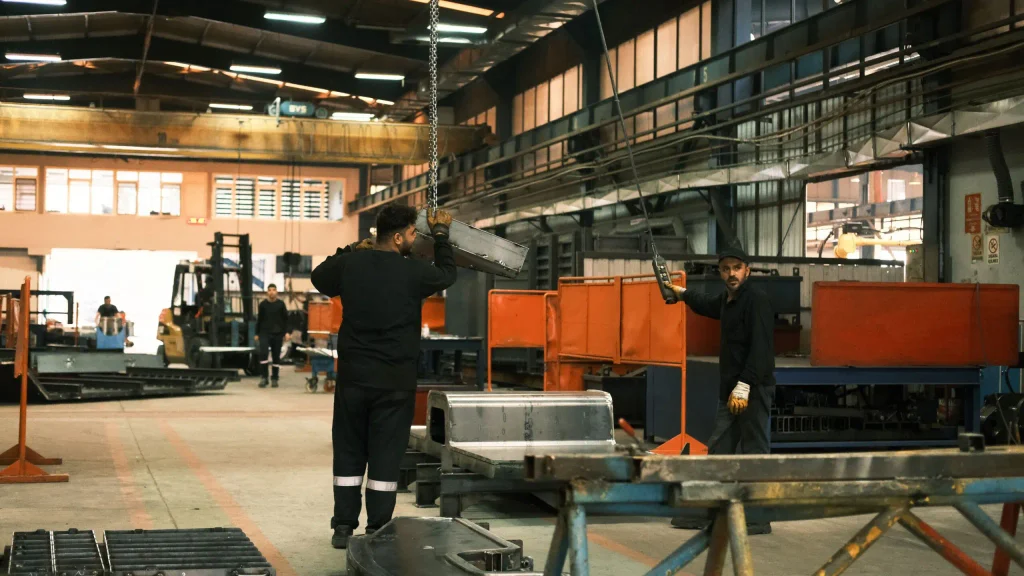
Workers arrived for the Monday 9 November morning shift and found production suspended. BMW issued a short statement confirming the stoppage and citing parts shortages. It named no component, no supplier, no expected resolution date beyond the two-week window. Oxfordshire's plant employs approximately 4,500 people directly, with several thousand more in the local supplier tier. Some were placed on reduced hours; others sent home entirely. The plant runs three models in current production — the Cooper hatchback, the Countryman in its transitional generation, and trim variants feeding export markets across 110 countries. All lines stopped simultaneously, which ruled out a model-specific procurement failure and pointed instead toward a shared input component. That detail narrowed the field considerably before any official confirmation arrived. Coverage of this halt sits within the broader pattern tracked under industry restructuring in 2026, where war-linked supply disruptions have emerged as a recurring production risk across European assembly.
Ten Thousand Units and the Maths of a Fortnight
BMW Group's 2023 Annual Report, published March 2024, records Oxford's annual Mini output at approximately 250,000 units. Divide by 50 working weeks and the daily rate sits at roughly 1,000 vehicles. A 10-working-day stoppage across the two-week window therefore puts approximately 10,000 finished units at risk — a figure that excludes partial recovery shifts BMW may schedule during evenings or weekends to claw back lost volume. At Mini's approximate average transaction value of £28,500 in the UK market (per SMMT retail data, October 2024), the gross revenue exposure on those 10,000 units reaches £285,000,000. That is a ceiling estimate, not a loss figure — vehicles deferred can, in theory, be built later. But the EV transition timeline is less forgiving. BMW has committed publicly to an all-electric Oxford line by 2030. Any production days lost to supply disruption this year reduce the buffer for the tooling-changeover downtime that transition will demand. The arithmetic of lost days compounds when transition deadlines are fixed.
What BMW Did Not Say — and Why That Matters
The official statement from BMW Group communications, issued on 8 November, confirmed the halt and its duration. It did not name the affected component. It did not name the supplier. It did not confirm whether alternative sourcing had been located or was being sought. That is three consecutive non-answers on the questions any procurement chief would need answered on day one. Reports circulating within the European automotive supply trade — unconfirmed by BMW as of publication — identify the missing part as automotive wire harnesses and trace the disruption to a Russian strike on a Ukrainian manufacturing facility in the final days of October. Ukraine supplies an estimated 7 percent of Europe's wire harness volume, according to the European Automobile Manufacturers' Association (ACEA) supply chain resilience briefing, published September 2024. BMW has not confirmed or denied the Ukrainian origin story. That silence is itself a data point. Companies with fully domestic or geographically diversified harness supply tend to say so quickly. The absence of that rebuttal is not proof, but it is not nothing either.
Oxford Versus Leipzig: Two Plants, Different Exposure
BMW's Leipzig plant, which assembles the i3 and feeds the M division, draws wire harness supply from a broader panel of vendors across Romania, Morocco, and Poland, according to BMW Group Supplier Relations documentation referenced in the company's 2022 Sustainability Report. Oxford's harness sourcing profile has not been disclosed at comparable granularity. That asymmetry is the problem. Leipzig maintained output through the 2022 energy crisis with no recorded harness-related stoppage. Oxford has now lost two weeks. The contrast is not a vindication of Leipzig's procurement team and a condemnation of Oxford's — it reflects decisions made years earlier about single-source versus multi-source contracts, and geographic concentration risk accepted in exchange for unit-cost reductions. Stefan Söder, Head of Procurement Strategy at the European Automotive Supply Chain Institute, told conference delegates in Frankfurt in September 2024 that harness sourcing from conflict-adjacent regions carried a "demonstrably higher" interruption probability than western European alternatives, at a cost premium of between 12 and 18 percent per harness set. Oxford's current stoppage fits that risk model precisely.
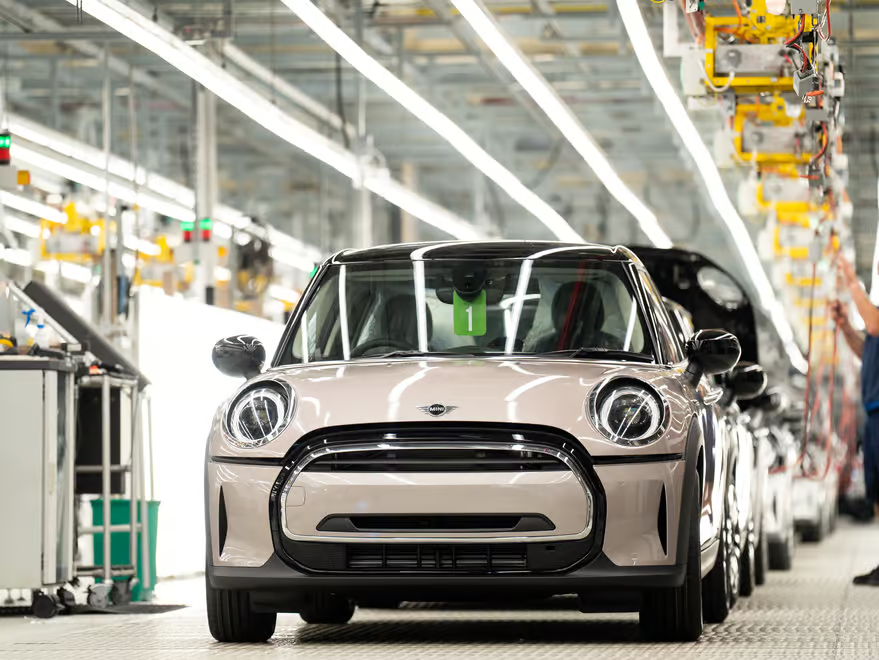
EV Transition Clock Does Not Pause for Supply Crises
BMW has a fixed public commitment: Oxford goes all-electric by 2030. That means the plant must absorb a full model and tooling changeover within roughly five years — a process that will itself require planned downtime. Every unplanned stoppage now compresses the available window for managed transition. Mini Electric production at Oxford already runs on a separate line from combustion variants; that line was also halted in the 9 November shutdown, confirming the wire harness shortage affects EV assembly as much as internal-combustion. The Society of Motor Manufacturers and Traders (SMMT), in its UK Automotive Manufacturing Outlook, published October 2024, identified supply chain fragility as the single largest near-term risk to achieving the government's Zero Emission Vehicle mandate targets. Oxford's situation is the SMMT's abstract concern made concrete. For BMW Group UK, the more immediate consequence is customer-facing: dealers contacted by this publication on 11 November reported that Mini order lead times for Q1 2025 delivery had already been revised upward by four to six weeks pending clarification of restart schedules.
Oxford produced its 10 millionth Mini in June 2023 — a milestone BMW marked with a commemorative Union Flag roof panel on a Cooper S. The plant has operated continuously since 2001, making this the longest confirmed single-cause stoppage in its 23-year run. BMW's next scheduled Oxford capacity update is expected at the Group's full-year results call in March 2025. Watch for harness sourcing disclosure then. The complete Mini model history and specifications are catalogued in the Global Auto Index manufacturer database.
