

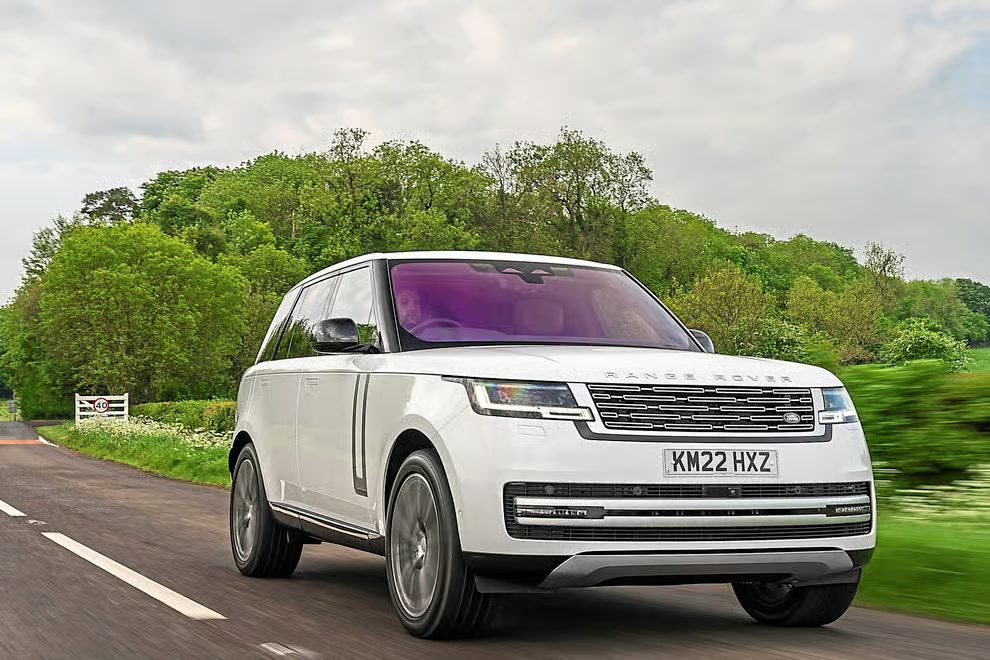
Range Rover EVs built in Britain could qualify as 'Made in Europe' — but only if London complies.
Brussels has issued London a direct ultimatum. Match our Chinese EV tariffs — up to 45% depending on the manufacturer — or watch Nissan, Bentley and Range Rover lose their shot at 'Made in Europe' status. The demand lands as UK ZEV mandate targets tighten heading into 2026. The stakes are real.
The EU's proposed Industrial Accelerator Act would extend quasi-European origin status to EVs assembled in Britain, giving UK-built models tariff-free access to continental markets — a concession worth hundreds of millions in avoided duties annually. But according to reporting in the Financial Times, published May 2025, that offer is conditional: the UK must first apply equivalent additional tariffs on Chinese-manufactured EVs, mirroring Brussels' own schedule. The EU levied those tariffs from October 2024. London has not moved.
What the Industrial Accelerator Act Actually Proposes
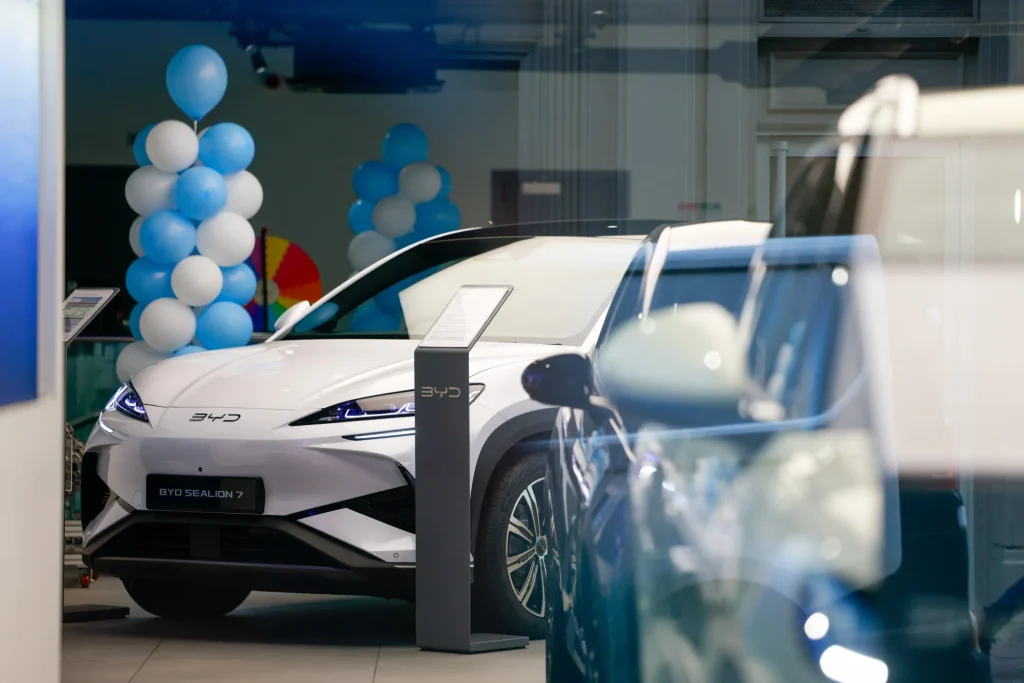
The EU's Industrial Accelerator Act — a draft regulation circulating among member-state trade ministries since early 2025 — is designed to ring-fence European EV production from what Brussels describes as structurally subsidised Chinese competition. Section 4 of the draft, as referenced in Financial Times coverage dated May 2025, sets out an 'equivalent third-country measures' clause: non-EU nations may access the Act's origin concessions only if they enforce tariff regimes broadly aligned with EU rates on the same product categories. For Chinese-built battery electric vehicles, EU additional duties currently range from 7.8 percentage points above the standard 10% MFN rate for BYD, to 35.3 points for SAIC — producing effective ceiling tariffs of 45.3%. The UK's standard MFN rate on imported cars sits at 6.5%. Without matching supplementary duties, British-assembled vehicles would remain outside the Act's preferential origin provisions entirely. Broader analysis of how the Act reshapes access conditions across the continent is tracked in our coverage of EU trade barriers and regulation developments in 2026.
Three Brands, One Calculation, Very Different Exposure
The three manufacturers named in EU-UK discussions — Nissan, Bentley and Range Rover (Jaguar Land Rover) — have sharply unequal exposure to any tariff alignment deal. Nissan's Sunderland plant produces the Leaf and, from late 2024, the new Leaf e+ and electric Juke derivatives. JLR's Solihull facility assembles the Range Rover and Range Rover Sport, with the electric Range Rover launched at £170,000. Bentley's Crewe plant builds the Bentayga EV from approximately £160,000. On-page arithmetic: if each of these models faced the existing EU 10% MFN duty when exported to Europe without an IAA exemption, a £170,000 Range Rover EV would carry £17,000 in baseline import duty alone before any additional national tariffs apply. With IAA exemption, that falls to zero. Across JLR's projected 15,000 European EV unit sales for 2026 — a figure cited in JLR's investor materials, Q1 2025 — the duty saving at 10% MFN would reach £255 million on list-price value. That number does not include potential retaliatory measures if the UK declines the deal.
The Mandate Problem Nobody Is Talking About
Here is what does not add up. The UK government's own Zero Emission Vehicle mandate requires 28% of new car sales to be electric in 2026, rising to 80% by 2030, according to the Department for Transport's ZEV Mandate statutory guidance, updated February 2025. Chinese-built EVs — from BYD, MG's SAIC parent, Chery's Omoda brand and others — are currently among the most competitively priced options available to British buyers, often sitting £5,000–£12,000 below equivalent European-assembled alternatives. Applying EU-equivalent tariffs of up to 45% on those models would compress that price gap sharply or eliminate it entirely, potentially slowing EV uptake at precisely the moment the mandate demands acceleration. The Jaecoo 7 became the first Chinese model to top UK monthly sales charts, a signal of how quickly Chinese brands are moving volume. Raising their prices to protect Solihull and Crewe could undermine the very mandate targets those same plants depend on for long-run demand. No government department has published a reconciliation of these two objectives. Asked directly, the Department for Business and Trade had not responded to requests for comment at time of writing.
How Brussels Handled the Same Dilemma — and What Happened
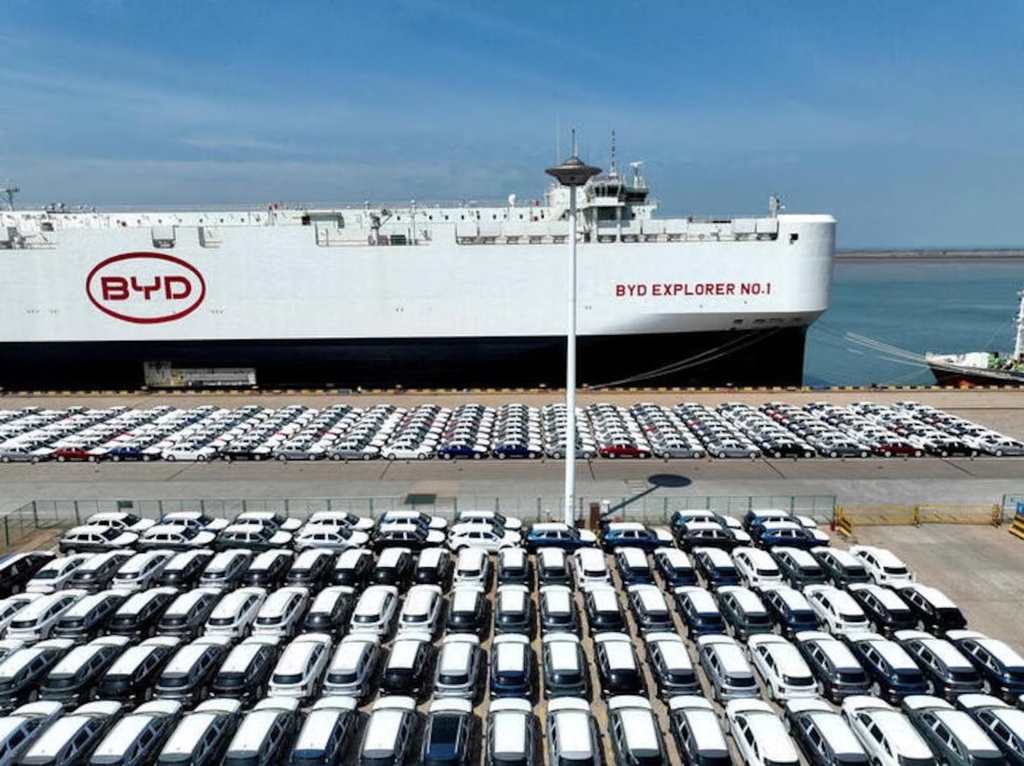
The EU imposed provisional countervailing duties on Chinese-built EVs in July 2024 and made them permanent from October 2024 following an anti-subsidy investigation by the European Commission's Directorate-General for Trade. The investigation found BYD received net subsidies equivalent to 17.8% of vehicle export value; Geely 18.8%; SAIC 35.3%. By January 2025, according to the European Automobile Manufacturers' Association's registration data report, published March 2025, Chinese-brand EV registrations across the EU-27 had fallen 23% year-on-year in the two months following full tariff enforcement. That drop was not uniform: Germany recorded a 31% decline in Chinese EV registrations, while Spain — where Chery operates a joint-venture assembly operation with EV Motors — saw volumes fall only 8%. The UK has no equivalent domestic Chinese EV assembly. Changan's rejection of shared European production arrangements confirms that Chinese OEMs are not rushing to localise in either market. Britain's tariff-free position has, by default, made it a more attractive import destination than the continent — a dynamic that complicates any alignment argument.
Who Gains, Who Loses, and What Kia Signals About Mandate Arithmetic
A decision to align with EU tariff rates would produce distinct winners and losers inside the UK market. JLR gains most directly: the Solihull plant employs 10,400 workers and is mid-cycle on a £15 billion electrification investment announced through 2030. IAA exemption status would protect European sales revenue that JLR finance director Richard Molyneux, speaking at the company's Q4 2024 earnings call, described as "foundational to the Reimagine business case." Nissan Sunderland, with 6,000 direct jobs, would gain equivalent protection. The losers are less politically visible but numerically meaningful. British buyers currently purchasing MG4s, BYD Atto 3s and Omoda 5 EVs — models priced between £22,000 and £35,000 — would face price increases that erode the affordability that brought them to EVs in the first place. Kia UK's assessment that ZEV mandate pace is unrealistic even at current price points suggests that removing affordable Chinese options tightens mandate compliance for the entire market, not just Chinese brands. The Society of Motor Manufacturers and Traders has not published a formal position on tariff alignment as of May 2025.
One detail absent from most coverage: the EU's Industrial Accelerator Act has not yet passed into law. The European Parliament's Industry Committee was still debating origin-rule thresholds in committee session as of 14 May 2025, meaning the concession Britain is being asked to pay for does not yet legally exist. The UK government has until Q1 2026 to signal its position before the Act's projected enforcement window opens. Twelve months. The complete Nissan, Bentley and Jaguar Land Rover model history and specifications are catalogued in the Global Auto Index manufacturer database.
