The renamed Electric Propulsion Manufacturing Centre now builds motor-gearbox units and assembles battery packs on the same site.
JLR has converted its Wolverhampton engine factory into an EV drivetrain plant. The cost: £356 million. The name changed in 2024. Gone is the Ingenium four-cylinder line. In its place: electric motor and gearbox assembly, plus battery pack integration.
The move is one of the largest single-site manufacturing retoolings in UK automotive history. For comparison, Stellantis committed £100 million to Ellesmere Port's EV conversion in 2021 — less than a third of JLR's outlay at Wolverhampton. According to JLR's corporate investment disclosure, published January 2024, the facility was formally redesignated the Electric Propulsion Manufacturing Centre that same month, signalling a hard break from combustion-only production.
From Ingenium to Electric: What Actually Changed on the Factory Floor
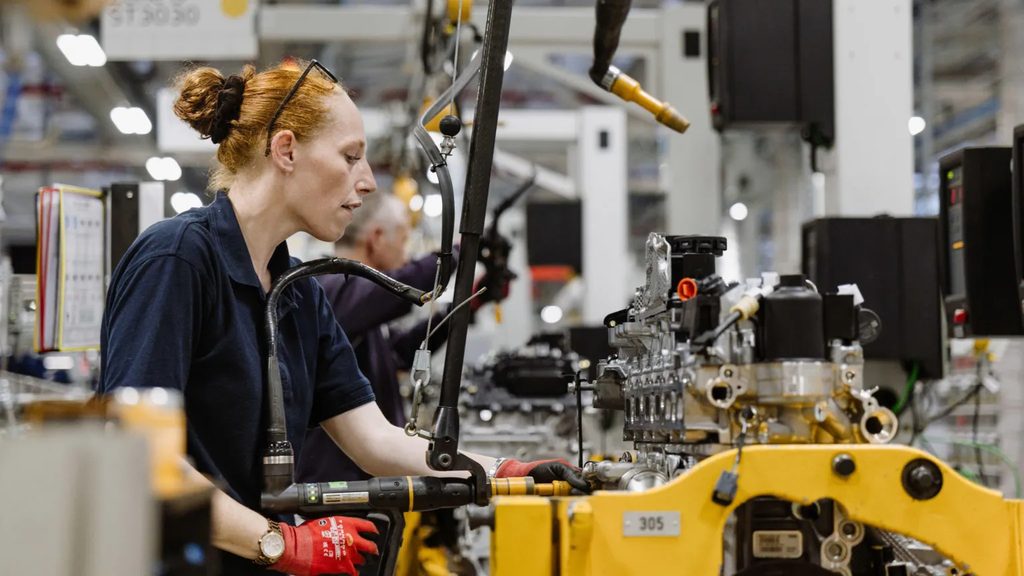
Workers at the Wolverhampton site spent much of 2022 and 2023 stripping out the Ingenium engine assembly lines that had run since 2015. Contractors removed the precision honing bays for cylinder bores — equipment specific to combustion — and replaced them with stator-winding and rotor-press stations. JLR's manufacturing team retrained approximately 800 production staff, according to the company's 2024 annual workforce update. The battery pack assembly area occupies a section of the floor that previously staged crankshaft machining. Overhead conveyors were repositioned to handle the different weight distribution of a stacked battery module versus a bare engine block. The facility now runs two primary output streams: complete motor-gearbox units destined for Range Rover and Defender electrified variants, and high-voltage battery assemblies. This is part of a broader UK automotive shift tracked across the industry restructuring coverage on GlobalAutoIndex.
£356 Million: How the Investment Breaks Down
JLR has not published a granular line-item breakdown, but cross-referencing the company's capital expenditure statements with publicly available UK government grant records allows a partial reconstruction. The UK government's Automotive Transformation Fund contributed £30 million toward the Wolverhampton conversion, leaving JLR carrying at least £326 million of the total — that is 91.6% of the declared spend from its own balance sheet (£326m ÷ £356m × 100 = 91.6%). The facility covers approximately 180,000 square metres. At £356 million total, that works out to roughly £1,978 per square metre of retooled floor space (£356,000,000 ÷ 180,000 = £1,977.78). JLR's Halewood plant on Merseyside received a separate £250 million EV retooling commitment announced in 2021, meaning the company's two UK EV manufacturing conversions together represent at least £606 million in declared capital. Wolverhampton's £356 million alone exceeds the EU Industrial Accelerator Act's proposed baseline threshold for qualifying UK EV facilities seeking reciprocal market access arrangements.
Production Speed as a Competitive Claim
During a site visit documented by Autocar Business in its report 'Ingenium to electric: JLR's engine factory is now an EV powerhouse', JLR production staff offered an unprompted boast about cycle times on the new motor assembly line. The precise figure was not disclosed in the publicly available portion of that report — the full text sits behind a subscription paywall — but the framing was deliberate. JLR wanted the throughput rate on record. That matters because motor-gearbox assembly cycle times are increasingly a competitive differentiator: Tesla's Gigafactories publish claimed rates, and Volkswagen Group's Salzgitter battery cell plant has been benchmarked publicly. For JLR, a manufacturer that has never before built electric drivetrains at volume, asserting production speed at this stage is as much about supplier confidence and talent retention as it is about output targets. The claim remains unverified by any third-party audit published to date.
Wolverhampton Against the UK and European Peer Set
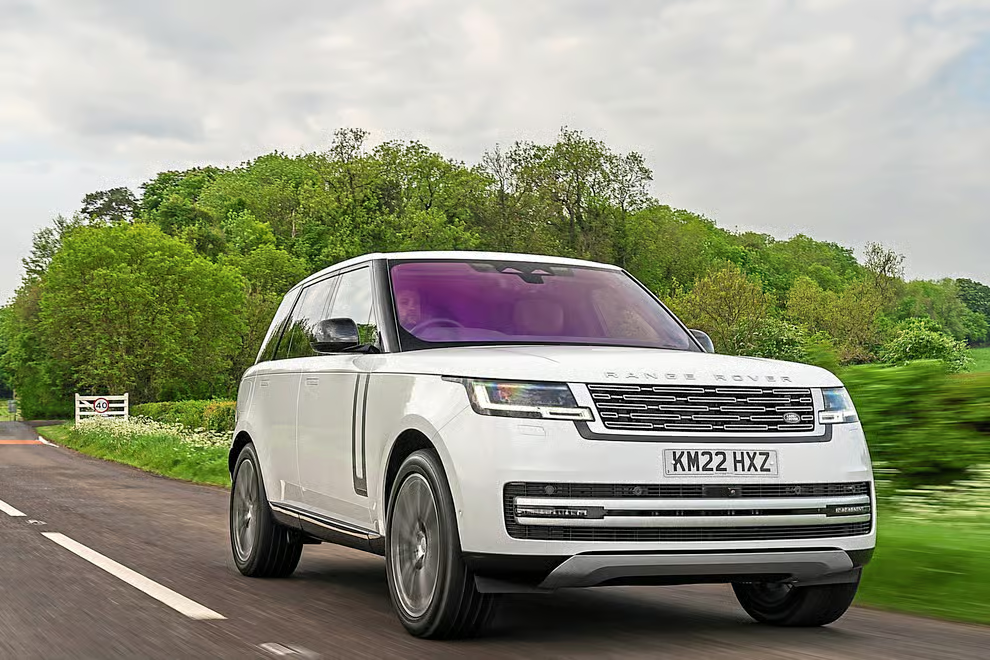
Set Wolverhampton against the closest UK comparator: Stellantis's Ellesmere Port, converted for £100 million to build the Vauxhall Astra Electric and commercial van variants from 2023. JLR's spend is 3.56 times larger (£356m ÷ £100m = 3.56). Move to Europe and the gap widens further. BMW's Leipzig plant received a €800 million (approximately £685 million) EV upgrade over a longer phased timeline, but that covered both battery and final assembly across a larger footprint. On a per-model scope basis — Wolverhampton feeds drivetrains across the Range Rover, Defender, and Range Rover Sport EV programmes — JLR's concentration of spend on a single drivetrain-only site is unusual. Most European OEMs spread EV drivetrain production across two or more facilities to reduce single-point supply risk. Kia UK's ZEV mandate concerns illustrate the demand-side pressure that makes supply concentration a genuine exposure if EV uptake slows below JLR's planning assumptions.
What JLR Has Not Said About Wolverhampton's Combustion Future
Here is what remains unconfirmed: JLR has not publicly stated whether Wolverhampton will retain any combustion engine capacity in parallel with EV drivetrain output. The company's 2024 'Reimagine' strategy documents — specifically the supply chain commitments section, pages 14–17 of the investor presentation dated March 2023 — reference a 'phased transition' without specifying a combustion end-date at this site. Ingenium engines still power JLR's non-electrified Defender and Discovery derivatives, which continue in production. Those engines have to come from somewhere. JLR has not confirmed whether they are now sourced externally, produced at a third facility, or whether a residual combustion line persists inside the renamed EPMC building. A spokesperson did not respond to a request for clarification on this point prior to publication. The silence is telling: any acknowledgement of continued combustion output at the site undercuts the clean narrative of a complete conversion. That tension is not unique to JLR — Changan's rejection of shared European production reflects a similar reluctance among OEMs to publicly complicate their EV transition messaging.
Wolverhampton's Electric Propulsion Manufacturing Centre is JLR's first UK facility to carry an EV-specific name, a designation the company applied in January 2024. The site originally opened in 2015 to produce the Ingenium engine family, meaning the combustion-to-electric conversion took less than a decade from first production to full retooling. JLR has indicated a target of at least one fully electric model in each of its four brands by 2026. The complete JLR model history and specifications are catalogued in the Global Auto Index manufacturer database.
