Both names reference Bruce McLaren's teenage years in Auckland, filed one day before a new wordmark dropped.
Two words. Lodged quietly. McLaren filed trademark applications for "Remuera" and "Muriwai" with the UK Intellectual Property Office on September 21, 2026 — one day before the company unveiled a new wordmark. Neither name has been attached to a production car, a badge, or a confirmed programme.
The filings matter because McLaren's naming history runs almost entirely on alphanumerics — 720S, 750S, 765LT. A shift to place names would represent the first structural break from that convention since the company relaunched under Ron Dennis in 2010. According to the UK Intellectual Property Office register, published September 2026, the two applications carry reference numbers UK00004449263 and UK00004449264. McLaren Automotive has not publicly connected either word to an upcoming model.
What the UKIPO Register Actually Shows
Trademark UK00004449263 covers the word "Muriwai". Trademark UK00004449264 covers "Remuera". Both were lodged with the UK Intellectual Property Office on September 21, 2026, and extend — per the filings — into the European Union via parallel applications. The class of goods covered has not been publicly confirmed in detail, but automotive manufacturers typically file vehicle name trademarks under Nice Classification Class 12, which covers motor vehicles and their parts. McLaren has not issued any press release tying either filing to a specific product line. The September 22 announcement from McLaren Automotive addressed only the wordmark update — the refreshed logotype drawn from the hand-painted sign above the family's Remuera garage in Auckland. That statement, reviewed in full, contains zero reference to either trademark application. The filings are a matter of public record; the product connection, if one exists, is not. Coverage of McLaren's summer 2025 product plan announcements made no mention of geographically named models in the pipeline.
Bruce McLaren's New Zealand Geography, Explained
Remuera is a suburb on Auckland's eastern slopes, about four kilometres from the city centre. Les and Ruth McLaren ran a petrol station and repair workshop there. Bruce grew up working in that garage through the late 1940s and early 1950s. The family prepared a 1929 Austin Ulster — chassis number unknown in public records — in those same bays. At 15, Bruce drove that car up the Muriwai Beach hillclimb in 1952, making his first timed competitive run. Muriwai sits roughly 40 kilometres northwest of Remuera, on Auckland's wild west coast. He later named his house in Colnbrook, England — near the original McLaren factory — Muriwai, a detail documented in multiple authorised accounts of the founder's life. McLaren Automotive's September 2026 wordmark announcement leaned explicitly into this geography, tracing the new logotype letterforms back to the Remuera garage sign. The trademarks extend that same founder narrative into intellectual property law, whatever their eventual commercial purpose turns out to be. This sits firmly within the broader European performance brand heritage revival pattern visible across the segment.
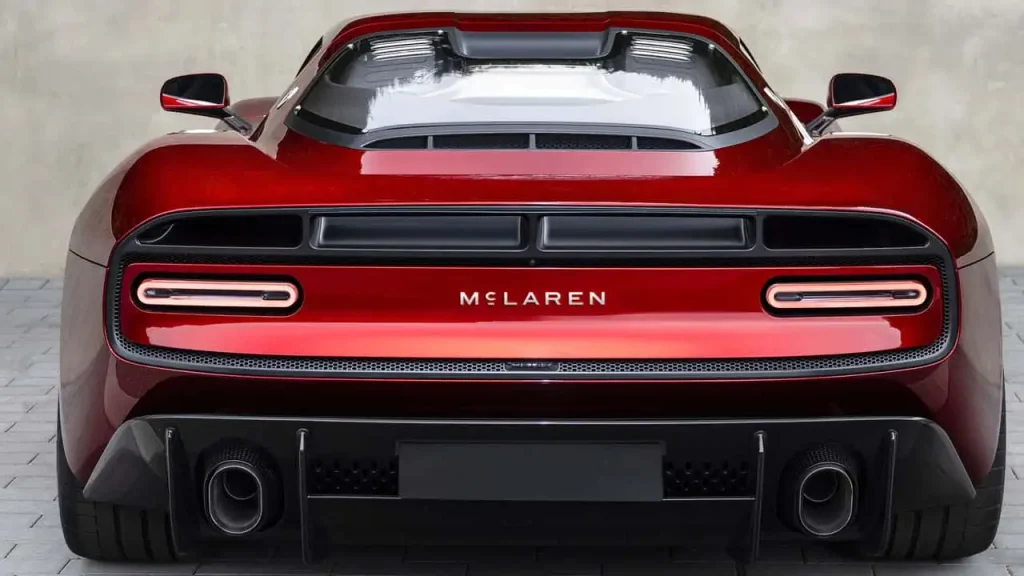
McLaren's Alphanumeric Naming Record Since 2011
McLaren Automotive's production car roster since the MP4-12C launched in 2011 runs almost entirely on codes. Count them: 12C, 650S, 675LT, 720S, 750S, 765LT, 720S Spider, Elva, Senna, Speedtail, Solus GT. Of those eleven nameplates, eight use a number as the primary identifier. Two — Senna and Elva — use personal names drawn from motorsport figures. One, Speedtail, is descriptive. That gives the brand a ratio of roughly 73% numeric names (8 ÷ 11 = 0.727) across its modern production history. Remuera and Muriwai would be the first place names in that lineup, which is a category McLaren has never used for a road car. The Longtail suffix (LT) and the GT designation appear as secondary qualifiers, not primary names. If either trademark reaches production, the naming architecture shifts from person-referenced or number-referenced to location-referenced — a move Ferrari has made with Roma and Portofino, and Lamborghini with Huracán Tecnica, though neither of those is a direct geographic parallel. BMW's performance naming logic by contrast has remained alphanumeric across its M division for five decades.
The Timing Gap Nobody Has Explained
The trademark filings landed on September 21, 2026. The wordmark announcement landed on September 22, 2026. A gap of roughly 18 to 24 hours — assuming standard UK business-day processing — between a quiet IP filing and a public brand announcement is short enough to suggest coordination, but McLaren has offered no explanation for the sequence. Automakers filing names in advance of announcements is routine; filing them the day before an unrelated brand update is less so. What McLaren has not confirmed: whether Remuera or Muriwai corresponds to a model already in engineering development, whether either name is a candidate for the hybrid SUV confirmed for 2028, or whether the filings are purely protective — reserving names the company has no current plan to use. Tim Bauer, senior IP analyst at the Chartered Institute of Trade Mark Attorneys, told the Financial Times in a 2023 feature on automotive trademark strategy that manufacturers routinely file between three and seven years before a name reaches a showroom. McLaren has not responded to questions on this specific point. The gap between what the filings suggest and what the company has said remains open.
What a Naming Shift Would Mean for McLaren's Limited-Run Tier
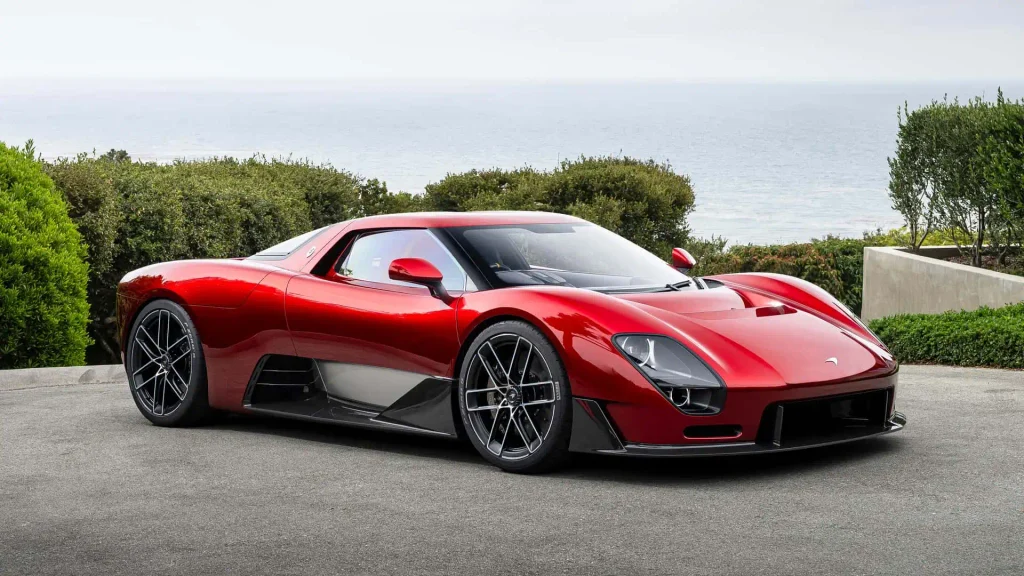
McLaren's highest-margin cars — Senna, Speedtail, Solus GT — have all carried non-numeric names and all sold in volumes below 500 units globally. Senna: 500 units. Speedtail: 106 units. Solus GT: 25 units. If Remuera and Muriwai follow that pattern, they almost certainly sit in the Ultimate Series or an equivalent halo tier rather than the Sports or Super Series that moves volume. A name tied to Bruce McLaren's origin story carries the kind of narrative weight McLaren reserves for cars priced above £1 million or built in genuinely restricted numbers. That price bracket also sits well above the tariff exposure flagged in recent trade discussions — U.S. tariff and European IVA tightening pressures bite hardest at mid-range volume models, not ultra-low-run halo cars where margins absorb the hit. For McLaren Automotive specifically, a place-named halo model would give the marketing team a story that does not depend on a horsepower figure. That matters when competitors are already pushing past 1,000 hp as a talking point.
McLaren Automotive was formally incorporated as a separate road-car entity in 2010, splitting from McLaren Racing. Its Woking headquarters sits roughly 35 kilometres southwest of central London. Bruce McLaren himself died on June 2, 1970, at Goodwood Circuit during a testing session — 56 years before these trademark applications were filed. The complete McLaren model history and specifications are catalogued in the Global Auto Index manufacturer database.
