







Range Rover Electric now leads JLR's battery programme, leaving Defender buyers without an all-electric option for most of this decade.
No date. No platform. No contract. Jaguar Land Rover has shelved any firm commitment to a full-size electric Defender until the 2030s, redirecting scarce battery investment toward Range Rover Electric and a compact Defender-style model that stays on schedule. The gap is real and it is growing.
JLR's EV sequencing now places Range Rover Electric — confirmed for reveal later in 2026 with customer deliveries in the second half of the 2026–2027 financial year, according to JLR's corporate briefings published in early 2026 — ahead of every Defender variant. Mercedes-Benz, , already retails the G 580 with EQ Technology as a 2025 model-year product. JLR is running at least one full product cycle behind its nearest comparable rival in the electric off-road segment.
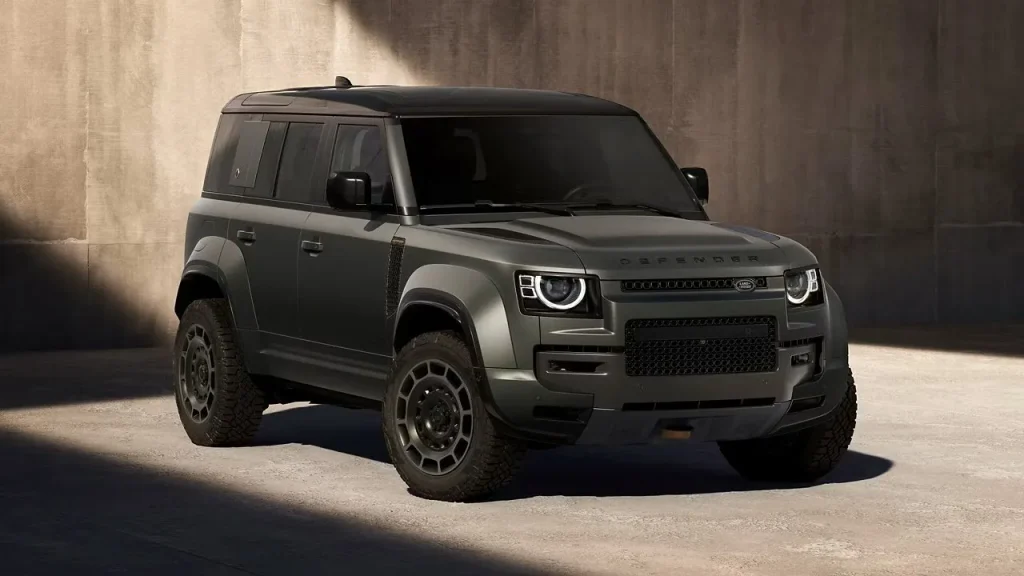
How the Defender EV Fell Down the Order
JLR's electrification sequence shifted in stages. Range Rover Electric was first awarded platform priority, assigned to the Modular Longitudinal Architecture and earmarked for production at Solihull. Range Rover Sport Electric followed on the same MLA platform, also confirmed for Solihull. Then the Electric Modular Architecture received its own brief — a new Range Rover family model assembled at Halewood. Each decision consumed engineering headcount and battery supply allocation. Defender received none of it. Company communications moved from vague references to a future electric Defender toward near-silence on the topic, with investor coverage — including a report cited by The Times — framing the situation as a two-year delay to the next-generation model, pushing any full redesign into the 2030s. JLR has not issued a correction. This article is part of our ongoing coverage of industry restructuring in 2026, where multiple manufacturers are reordering EV programmes under budget pressure.
The Budget Arithmetic Behind the Decision
JLR's EV budget is finite and the numbers explain the sequencing bluntly. Three platforms — MLA, EMA, and a future architecture for Defender — cannot be funded simultaneously at full pace without a defined battery supply chain. AESC's Sunderland plant, which had been linked to potential JLR supply discussions, delayed its own capacity expansion, removing one supply option from the near-term pipeline. Range Rover Electric has been delayed from its original target of reaching showrooms around 2024 to a revised second-half 2026–2027 financial-year launch window — a slip of roughly two to three years on its own. Adding two more years for Defender places any full-size electric variant at 2028 at the earliest on an optimistic count: 2024 original target + 2–3 years slippage = 2026–2027 for Range Rover Electric; apply a comparable offset to Defender's original planning window and the 2030s figure reported by The Times is arithmetically coherent. The compact baby Defender carries no such delay, making it the only Defender-family EV with a plausible pre-2030 window.
Mercedes Already Has an Answer; JLR Does Not
Mercedes-Benz launched the G 580 with EQ Technology for the 2025 model year. It is in showrooms. It has real customers. JLR has no equivalent on sale, no confirmed specification for an electric Defender, and no public production date. That is a gap of at least five model years if Defender EV arrives in 2030, and longer if it slips further. The contrast matters commercially: buyers who commit to an electric off-roader in 2025 or 2026 will spend five years accumulating range data, charging habits, and resale experience with a Mercedes before a Defender EV exists. Brand loyalty softens over that kind of interval. Kia UK's experience reaching 100,000 EVs shows that early-mover volume compounds — latecomers rarely recover lost ground purely on product merit. Scout's electric truck and SUV programme, pushed to the 2028–2030 window, faces a structurally similar problem, though Scout enters from zero rather than from Defender's established position.
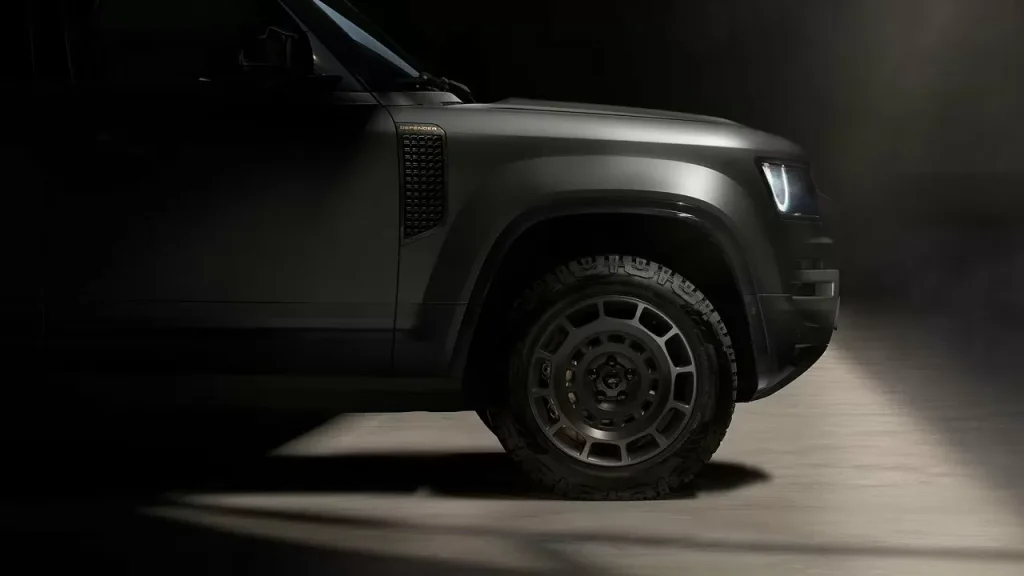
The Baby Defender Paradox
Here is what does not add up. JLR confirmed the compact baby Defender project remains on schedule while the full-size model's electric transition is deferred by a decade. That sequence inverts the normal product logic: the flagship, highest-margin, most globally recognised body-on-frame icon waits, while a smaller, unproven, as-yet-unbuilt model gets the green light. One explanation is platform cost — EMA is cheaper to adapt for smaller vehicles, and a compact Defender can share architecture with the Halewood-bound Range Rover EMA model. But JLR has not confirmed this publicly, nor has it explained what platform a full-size electric Defender would use after 2030 or whether any production facility has been earmarked. The silence on those specifics is the anomaly. JLR published no section of any investor document as of mid-2026 that addresses Defender EV platform selection, supplier contracts, or build location — three details that typically appear two to three years before a model's reveal. UK EV manufacturing access discussions under the EU Industrial Accelerator Act may influence where JLR eventually places the Defender EV programme, but no connection has been confirmed.
What This Means for Solihull and the Defender Buyer
Solihull builds the current Defender alongside Range Rover and Range Rover Sport. Once Range Rover Electric and Range Rover Sport Electric enter production on MLA at Solihull, line capacity will tighten. A combustion Defender running alongside two electric Range Rovers creates a scheduling constraint that JLR will need to resolve — either by extending Defender's combustion life longer than originally planned or by identifying separate capacity. JLR's public position is that petrol, diesel, and hybrid engines remain available across the portfolio, which supports the former reading. For buyers, the practical consequence is clear: anyone wanting a new Defender in the 2026–2029 window will buy a combustion or hybrid variant, not an EV. The UK ZEV mandate requires 28 percent of new car sales to be zero-emission in 2026, rising annually, according to the UK Department for Transport's mandate schedule. JLR meets that obligation through Jaguar's all-electric pivot and Range Rover EV, not through Defender. Defender carries none of the ZEV mandate weight for now.
JLR employed approximately 38,000 people in the UK as of its most recently published annual report, with Solihull accounting for the largest single concentration of production workers. The Defender nameplate returned in 2020 after a 24-year absence; pushing its electric successor past 2030 means the combustion revival will have run for over a decade before any EV replacement arrives. That is a long runway for rivals to fill. The complete Land Rover model history and specifications are catalogued in the Global Auto Index manufacturer database.
