







The stripped GT3-based machine weighs 1,450 kg including 18 kg of mandatory ballast, and targets 2027 series entry.
Porsche has priced its new 911 Challenge at $275,000. Purpose-built. Track-only. No airbags, no floor mats, no passenger seat. The Stuttgart manufacturer confirmed the car publicly in August 2026, with competition eligibility beginning in the 2027 season.
The Challenge fills a gap left Cayman-based race programme. At $100,500 less than the 911 GT4 R — which lists at $375,500 — it gives Porsche's customer racing division a lower entry point without abandoning factory specification. According to Porsche AG's customer motorsport product announcement, published August 2026, the car is eligible for one-make series globally. No independent homologation details have been confirmed.
GT3 Donor Car Provides the Foundation
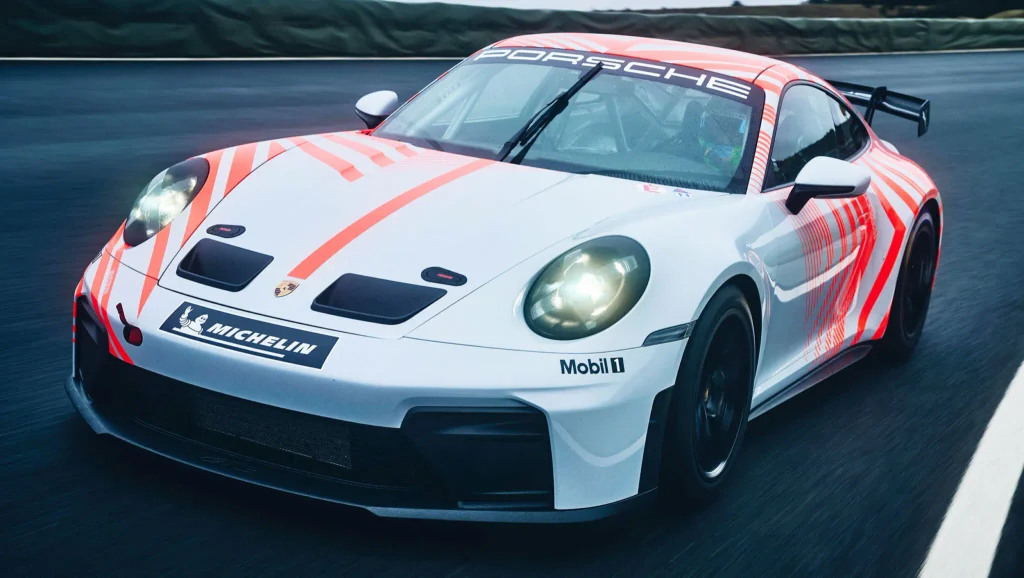
Porsche pulled the 4.0-litre naturally aspirated flat-six directly from the road-going 911 GT3 and fitted it unchanged in displacement. Engineers then tuned it to 508 hp — a modest rise over the street car's output — while torque climbs to 347 lb-ft (470 Nm). The seven-speed PDK gearbox transfers across unmodified. A steering wheel adapted from the GT3 RS adds paddle-shift controls for manual gear changes during competition. Porsche welded in a full roll cage, installed a fire-extinguishing system, and fitted an adjustable racing bucket seat with a six-point harness. Quick-release fasteners on the front hood allow pit crews faster access. An integrated air jack and a rear rain light complete the safety equipment list. The rear wing is four-way adjustable, giving setup engineers meaningful aerodynamic range across different circuit profiles. Air conditioning remains installed — one of the few concessions to driver comfort that Porsche chose not to strip out. This sits within the broader trend tracked in our coverage of European performance car programme expansions, where manufacturers have increasingly pursued tiered race car lineups rather than single flagship entries.
The Weight Numbers Require Some Unpacking
Porsche quotes a kerb weight of 3,197 lb (1,450 kg). That figure includes two adjustments that matter. First: 40 lb (18 kg) of ballast sits on the passenger side, compensating for the absent passenger seat. Second: the listed weight uses transport tyres, not competition rubber. Strip those variables out and the car's structural mass is lower than the headline number implies. Calculation: 3,197 lb minus 40 lb ballast equals 3,157 lb (1,432 kg) before accounting for tyre weight differential. A standard 911 GT3 road car weighs approximately 3,153 lb (1,430 kg) in base configuration, meaning the Challenge's weight savings from deleted interior content are almost exactly offset by the added roll cage, harness hardware, and fire system. The $275,000 sticker sits roughly $37,000 above a road-legal GT3 at MSRP — assuming retail availability, which Porsche did not guarantee. Against the GT4 R at $375,500, the saving is $100,500, or 26.8% less.
What the Programme Documentation States
According to Porsche AG's customer motorsport product specification sheet, released August 2026, the 911 Challenge is described as intended for "one-make series competition worldwide" and is positioned as "the entry-level model in the Porsche motorsport customer programme." The document lists the engine as the same naturally aspirated 4.0-litre unit found in the road car, with the rev ceiling maintained at 9,000 rpm. Porsche motorsport customer programme director Oliver Schwab, speaking at the car's unveil, stated the Challenge "gives drivers a genuine factory racing platform without the operational complexity of the GT class cars" — a direct reference to the 911 GT3 R Rennsport, which carries a price tag above $1 million. The specification sheet does not detail approved series by name or region, nor does it publish maintenance interval costs, which Porsche has referenced verbally as lower than the GT4 R without providing figures.
Where the Challenge Sits Against the Rest of the Portfolio
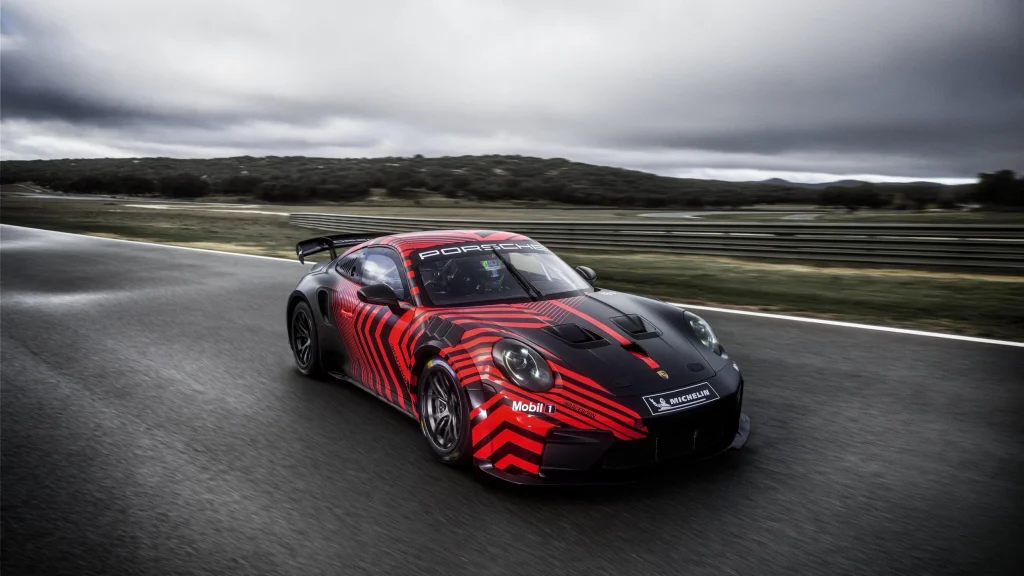
The 911 GT4 R, announced earlier in 2026 at $375,500, uses the engine from the 911 Cup race car — a different unit from the Challenge's road-derived flat-six. The GT4 R replaced a 718 Cayman-based predecessor, severing the entry-level race car's connection to the mid-engined platform entirely. The 911 Challenge, at $275,000, now sits $100,500 below the GT4 R and serves a different competitive tier. At the top of the range, the 911 GT3 R Rennsport debuted at above $1 million — more than 3.6 times the Challenge's price. That spread gives Porsche a three-tier customer race car structure for the first time in recent years. For comparison, BMW's performance programme for 2027 focuses on electrified road cars rather than expanding its one-make race series, leaving Porsche with little direct rival in the combustion-only factory customer racing space at this price level. McLaren's customer racing activity, detailed in its 2025 product plan announcement, targets a higher price bracket.
The Gaps Porsche Has Not Yet Closed
Several specifics remain absent from the August 2026 announcement. Porsche confirmed the car will race in the 2027 season but has not published a list of approved championships, sanctioning bodies, or regional series by name. Running cost figures have been described verbally as lower than the GT4 R's — a claim Porsche's customer motorsport documentation does not support with actual service interval pricing or parts cost schedules. The 508 hp output figure is stated without a test standard reference, making direct comparison to competitors in the same price bracket difficult to verify independently. Weight is quoted with ballast and transport tyres included, which complicates like-for-like comparison with rival manufacturers who quote dry weight at competition specification. Porsche also has not confirmed whether the Challenge will receive factory technical support at non-Porsche-branded series, or whether support is limited to official one-make events. These omissions are not unusual at an initial reveal stage, but they leave the car's real-world operating cost — the figure most prospective customer racers will care about — unquantified.
Porsche's customer motorsport programme has delivered more than 4,500 race cars across all model lines since the programme formally launched in 1990, according to Porsche AG historical records. The 911 Challenge is the first car in the range to carry a road-car PDK unit directly into competition specification without modification. Deliveries begin ahead of the 2027 season. The complete Porsche model history and specifications are catalogued in the Global Auto Index manufacturer database.
