Cameron takes the role on September 1, inheriting a market that already accounts for 28 percent of JLR's annual sales.
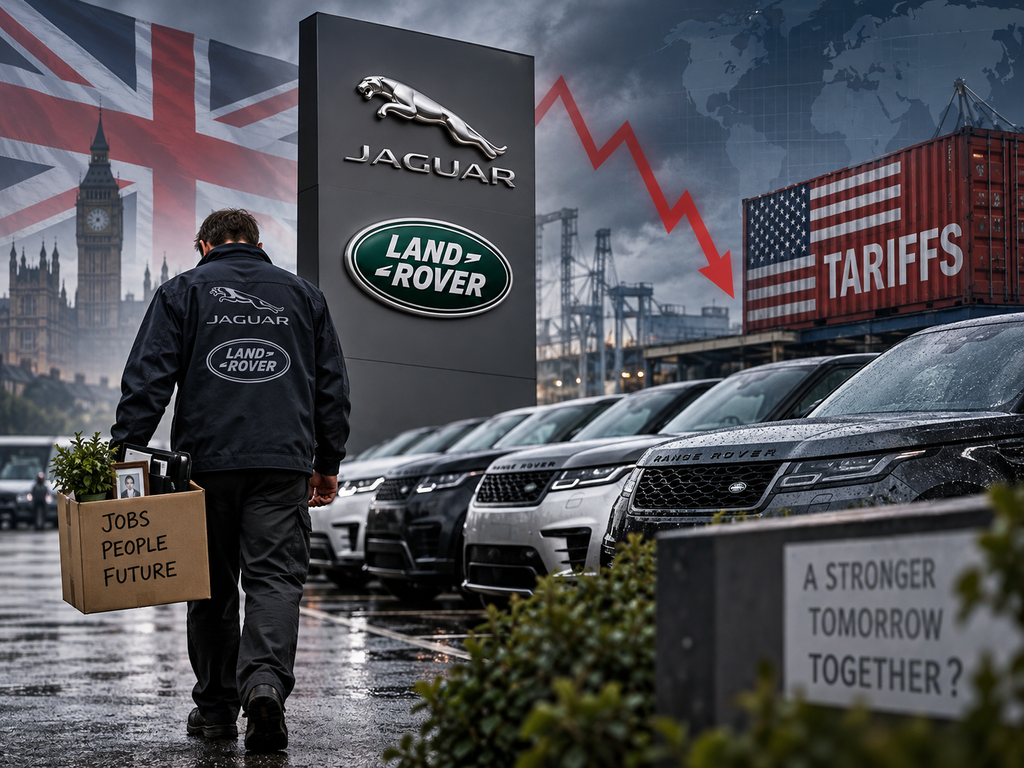
JLR named Mark Cameron its North American CEO on July 31. He starts September 1. Cameron has spent 15 years at JLR and 32 years in the automotive industry overall. The appointment arrives as the company faces US import tariffs, a first-quarter sales decline, and the most crowded product pipeline in its recent history.
North America already generates JLR's highest per-region profit margin and represented 28 percent of its fiscal-year sales volume, according to JLR's investor communication published June 2025. CEO PB Balaji told that same audience the company was 'pivoting' toward the United States as its primary growth engine — a sharper commitment than the incremental market-share language JLR used in its annual report for fiscal year 2024. Cameron's brief is to double that weight within five years.

From Defender's Boardroom to North America's Hot Seat
Cameron did not come from a sales or finance background. He ran the Defender brand as its global managing director — a commercial and product role that put him inside the decisions that turned Defender from a discontinued nameplate into JLR's bestselling line. Lennard Hoornik, JLR's Chief Growth Officer and Cameron's direct reporting line, announced the appointment internally before the public disclosure on July 31. Hoornik cited Cameron's "proven track record, including the success of Defender" as the reason for the selection, according to JLR's official statement issued that date. Cameron will inherit a US operation that has no domestic manufacturing footprint. Every vehicle JLR sells in North America currently crosses an ocean before it reaches a dealership lot — a structural exposure that the 25 percent US auto import tariff, covered in detail in our industry restructuring 2026 tracker, has made acutely expensive.
The Arithmetic of JLR's North America Ambition
JLR's stated goal: grow its US business until it equals the size of the entire JLR group today. The numbers frame what that actually means. North America currently accounts for 28 percent of JLR's global fiscal-year sales. For that regional slice to match the current whole, JLR would need North American volume to grow by a factor of roughly 3.57 — calculated as 1 ÷ 0.28 = 3.57. The company has set a five-year window. JLR's investor materials from June 2025 described a target of "medium-term double-digit revenue growth" without specifying an annual rate, but even at a sustained 12 percent compound annual growth rate, cumulative growth over five years reaches approximately 76 percent — still well short of the 257 percent expansion implied by matching today's global total. The gap between the stated ambition and a plausible growth trajectory is wide. The 25 percent US import tariff compounds the maths: every unit shipped from Solihull or Slovakia absorbs that duty before a single pound of margin is earned.
No Factory, No Exemption — and a Stellantis Deal That Raises Questions
JLR confirmed it will partner with Stellantis to assemble the next-generation Defender in the United States, using the forthcoming Electrified Modular Architecture platform. That announcement resolves the 'no North American plant' problem only partially. JLR has not confirmed which Stellantis facility will host production, what volume commitments underpin the arrangement, or whether the partnership covers any model beyond the EMA-based Defender. As of the July 31 announcement, JLR had not disclosed a production start date, a per-unit cost-sharing structure, or whether US-assembled Defenders would qualify for any tariff offset. The company also has not addressed how Range Rover and Range Rover Sport — both built on the Modular Longitudinal Architecture platform in the UK — will absorb ongoing tariff costs. JLR's Q1 sales decline was not quantified in its investor communication, according to the June 2025 materials reviewed for this article. The precise Q1 volume figure was not published alongside the growth targets. Honda faces a comparable North America product gap, but at least builds the CR-V domestically.
What Hoornik Said — and What It Commits Cameron To
Lennard Hoornik's statement, released by JLR on July 31, set a specific benchmark: Cameron must "make the region the size of our global business today within the next five years." That eight-word target — "the size of our global business today" — is either a rounding ambition or a literal financial commitment, and JLR has not clarified which. What it does do is give Cameron an unusually public performance metric from day one. Hoornik added that Cameron would "strengthen" all four brand pillars — Range Rover, Defender, Jaguar, and Discovery — simultaneously. That is a wider brief than most regional CEOs carry. Jaguar alone is undergoing a full-brand repositioning toward battery-electric vehicles exclusively, with the Type 01 revealing in New York this October. The Discovery brand's future product cadence was not addressed in either the June investor communication or the July 31 appointment statement. That omission was not explained.
Three Launches Cameron Cannot Afford to Miss
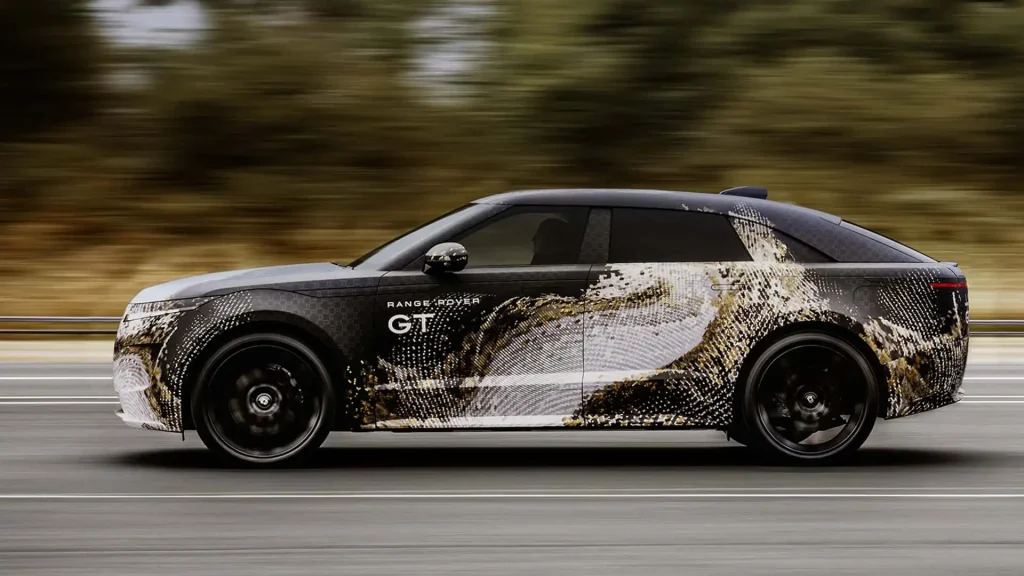
Cameron's September 1 start date places him at the desk roughly six weeks before Jaguar reveals the Type 01 in New York in October 2025. That car carries a 120 kWh battery, three electric motors producing more than 986 horsepower and 959 pound-feet of torque, and a claimed range of approximately 400 miles. It targets a narrow, high-price segment — JLR has described it internally as pursuing "a niche part of a niche part." The Range Rover GT follows: the fifth Range Rover variant, riding the EMA platform, launching first as a battery-electric vehicle with a hybrid variant added later. Both models are US-market critical because they carry the highest transaction prices and therefore absorb tariff costs with the least proportional damage to margin. The new Range Rover and Range Rover Sport, both on the MLA platform with mild-hybrid through full-electric powertrain options, round out a five-model cycle that Cameron must shepherd through US dealer networks before fiscal year 2027 closes. Tariff exposure at 25 percent makes timing each launch correctly a commercial decision as much as a product one.
JLR's North American dealer network numbered 183 authorised points of sale as of its fiscal year 2024 retailer report — unchanged from the prior year, suggesting Cameron faces a distribution density question alongside the product and tariff challenges. The Jaguar brand alone operated fewer than 60 of those outlets. The complete JLR model history and specifications are catalogued in the Global Auto Index manufacturer database.
