← European Premium Segment Expansion
CEO Benedetto Vigna disclosed biofuel trials at Maranello during a quarterly earnings call, with engine performance unchanged.
Two new Ferraris. End of 2026. CEO Benedetto Vigna made both commitments on the quarterly earnings call while net profit climbed and deliveries dipped during a model changeover. Biofuels got equal billing. That last point is the one worth watching.
Ferrari's carbon-neutral fuel programme sits inside a broader European squeeze on combustion engines. The EU's 2035 effective ban on new petrol and diesel cars contains a carve-out for e-fuels and carbon-neutral fuels, ratified under Commission Regulation (EU) 2023/1805, published October 2023. Ferrari sold fewer cars than the prior comparable quarter due to model transitions, according to the company's Q2 2025 earnings release, yet revenue still rose — a ratio no volume producer could replicate.
Vigna's Biofuel Statement, Word for Word
Speaking on the earnings call, Vigna was unambiguous: "We place biofuels in the category of carbon-neutral fuels. For us, they are part of that group, and they work well in our engines. We have already tested different types of carbon-neutral fuels, and the engine performs very well. Nothing changes." That last phrase — "nothing changes" — did a lot of work. It told customers that combustion character is preserved. It told regulators that Ferrari is engaging with the carbon-neutral carve-out written into EU law. And it told competitors navigating the European high-performance segment that Maranello is not treating electrification as the only exit from the emissions problem. Vigna did not name the specific biofuel blends tested, nor identify which engine families participated in the trials. Ferrari's communications office had not responded to a request for those details before publication.
The Product Count and What It Costs to Miss
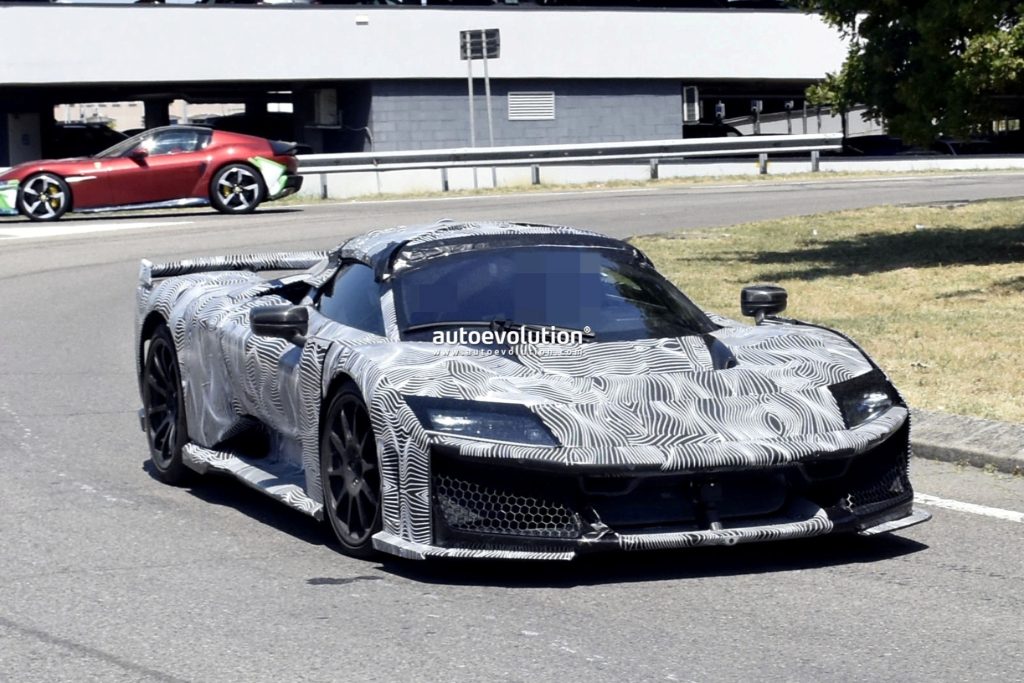
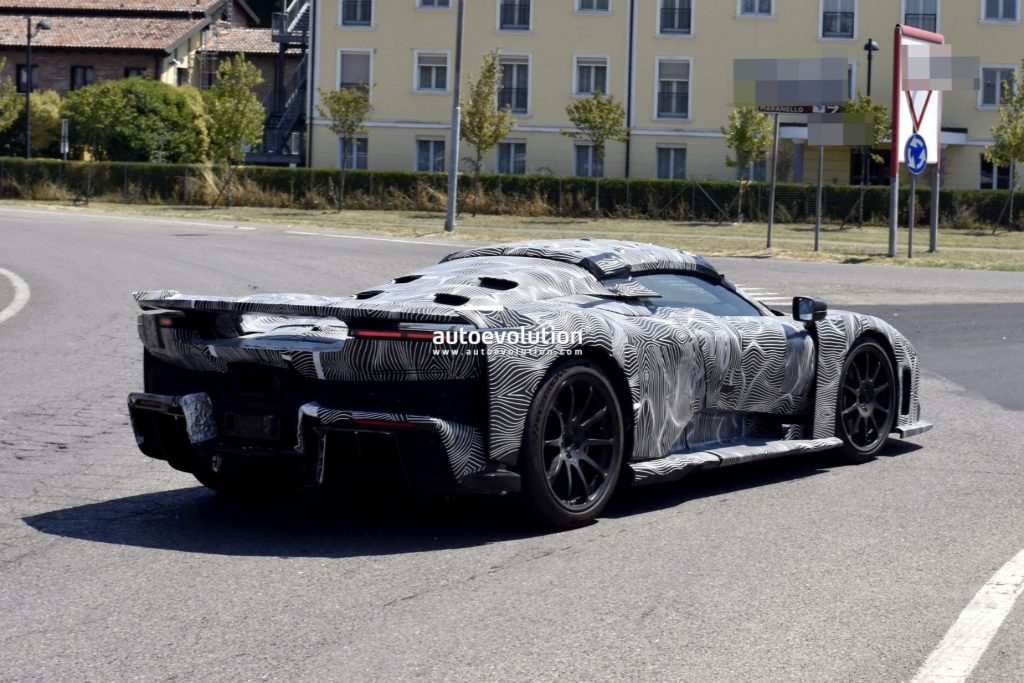
Ferrari's confirmed pipeline through end-2026 now stands at a minimum of two additional models beyond the Luce, which hit its full-year sales target before the mid-point of 2025. The F80 Aperta — the open-roof variant of the F80 coupe — carries the same 1,200 hp hybrid powertrain as the closed car. The F80 coupe itself launched at approximately €3.6 million before local taxes; if the Aperta carries a 10–15% open-top premium common in this segment (Ferrari's own 812 GTS ran roughly 12% above the Superfast at launch), the implied list price lands between €4.03 million and €4.14 million. That calculation: €3,600,000 × 1.12 = €4,032,000. The second expected model is a 12Cilindri Versione Speciale, a variant of Ferrari's V12 flagship line that already spawned the 12Cilindri Manuale earlier this cycle. Two debuts in roughly five months is an aggressive release cadence for a manufacturer that delivered fewer than 14,000 cars across all of 2024.
How Maranello's Biofuel Bet Compares to Maranello's Own EV Bet
The Ferrari Luce — the brand's first battery-electric car — generated weeks of public criticism in enthusiast communities before and after its reveal. Ferrari's own internal communications acknowledged the controversy. Yet the Luce sold out its 2026 allocation before July 2025, a faster pace than even the SF90 Stradale reached in its opening year. Against that backdrop, the biofuel announcement is not a retreat from electrification. It reads more like a second lane on the same road. Kia's UK division, which recently crossed 100,000 EVs sold while publicly calling the ZEV mandate pace unrealistic, is navigating the same tension from a volume position. Ferrari's low production numbers give it different arithmetic: it can run parallel powertrain programmes without the per-unit cost penalty that a mass producer would face. McLaren, by contrast, has not disclosed a comparable biofuel programme as of its summer 2025 product plan announcement.
What the Earnings Call Did Not Confirm
Vigna confirmed biofuel testing. He did not confirm a production biofuel vehicle. He did not identify the fuel blends — whether hydrotreated vegetable oil, synthetic methanol, or second-generation ethanol — used in Maranello's trials. He did not name the engine. The company's Q2 2025 earnings release, which runs to 38 pages including appendices, contains zero technical specifications for the biofuel programme. Section 4, which covers product and technology, describes the initiative in one paragraph without a timeline, a volume target, or a regulatory filing reference. Ferrari has also not submitted any documentation to the European Commission's e-fuels registry as of the publication date of this article. That gap matters because the 2023 carve-out regulation requires fuel producers — not vehicle manufacturers — to seek certification. Ferrari is testing a fuel pathway it does not control and cannot certify unilaterally. Whether that changes depends on whether an accredited fuel supplier steps in as a partner, and no such partner has been named.
What a Certified Biofuel Path Would Mean for Ferrari's Compliance Clock
If a certified carbon-neutral biofuel achieves EU type-approval under Regulation (EU) 2023/1805 before the 2035 cutoff, Ferrari's combustion-engined cars sold after that date could remain legal in the EU — provided they run exclusively on the certified fuel. That is not a trivial provision. It would require pump-level infrastructure Ferrari cannot build. It would require national governments to permit certified biofuel retail sales, which no member state has legislated at scale. And it would require Ferrari buyers to comply at the nozzle, not just at the showroom. The legal and logistical chain is long. Even so, the option has value as a hedge. The EU Industrial Accelerator Act, which targets UK EV manufacturing access, signals that Brussels is still writing the rules, not just enforcing them. Ferrari's public commitment to biofuel testing keeps the brand at the negotiating table rather than simply waiting for a final ruling.
Ferrari's production cap has historically sat below 14,000 units annually — a volume ceiling the company has defended deliberately since Luca di Montezemolo's tenure as chairman through the 1990s. At that scale, even a dual powertrain programme spread across combustion, hybrid, and electric architectures represents a smaller absolute R&D spend than a single platform cycle at Volkswagen Group. The complete Ferrari model history and specifications are catalogued in the Global Auto Index manufacturer database.
