







Liquid fuel forced past the shutoff click saturates activated-charcoal canisters, triggering cascade EVAP failures that require tank removal.
Stop at the click. That's it. A Houston mechanic tore open a Chevrolet's evaporative-emission system on camera and found the charcoal canister had collapsed from the inside — loose black granules blocking every vapor passage downstream. The owner had been topping off at the pump for months.
EVAP repairs are not rare, but the failure mode documented in this case is avoidable. A standard charcoal canister replacement runs $400–$800 on most Chevrolet models, according to service-rate data cited in the Motor1 report published July 2025. Once contamination spreads into fuel-tank vent lines, the job escalates past $1,000 — a steep penalty compared with the pennies gained fuel past the automatic shutoff.
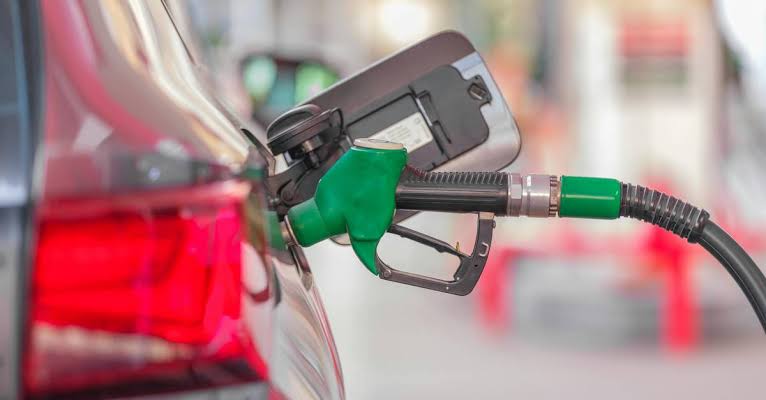
One Charcoal Canister, Fully Destroyed
Jimmy Avila, a mechanic based in Houston, Texas, filmed the teardown and posted it to TikTok under the handle @boss_shittg. He aimed the camera at the underside of the customer's Chevrolet. The charcoal canister — a fist-sized black cylinder whose job is to trap gasoline vapors between fill-ups — had shed its internal filtering granules. Those granules had migrated into adjacent vapor passages. Avila picked loose particles off the component and held them toward the lens. The canister's structural matrix had broken down, he said, after repeated liquid-fuel intrusion overwhelmed the material it was designed to handle. The vehicle's fuel-tank vent valve was obstructed. Avila confirmed the repair could not stop at one part: the fuel tank had to come down before technicians could flush the affected lines, clear the passages, and assess whether replacement extended beyond the canister itself. The clip accumulated more than 25,000 views. This kind of teardown sits within a broader pattern of industry-restructuring pressures in 2026, as repair-cost inflation reshapes how owners interact with both legacy ICE and transitional powertrain vehicles.
What the Repair Bill Actually Looks Like
The cost range Avila described breaks into three distinct tiers. Diagnosis plus a single accessible vent-valve replacement: a few hundred dollars. A new charcoal canister on a mid-range Chevrolet model: $400 to $800, call it $600 at midpoint. A full drop-tank job clearing multiple contaminated lines and replacing several components: past $1,000, with labor rates varying by region. The arithmetic is straightforward. A driver who tops off 0.3 gallons beyond the click at every fill-up, at $3.20 per gallon, recovers roughly $0.96 per visit. At one fill-up per week, that is $49.92 per year in extra fuel. Against a conservative $600 canister repair: 49.92 × 12 = $49.92 annual gain vs. $600 single repair — the break-even requires more than 12 years of trouble-free topping off, which the failure data does not support. The U.S. Environmental Protection Agency specifies that activated-charcoal canisters are designed to store vapors for combustion, not to receive liquid fuel — a distinction Avila's teardown made visible.
"The Pump's Gonna Stop Every Couple Cents"
Avila described the first symptom owners typically notice before they understand what has gone wrong inside the system. Once charcoal granules have migrated into vapor passages and restricted airflow, the fill-pipe venting collapses. The tank cannot displace air fast enough to accept fuel. The pump nozzle reads back-pressure and clicks off repeatedly. "Every couple cents, the pump's gonna stop, acting like the car is full even though it's not," Avila said in the TikTok clip. One viewer who identified herself as a Chevrolet Impala owner confirmed the symptom precisely: "I have to turn the nozzle 10 different ways to get it to take in gas." Avila replied that the EVAP failure described was a plausible cause. A separate commenter reported a 2007 Chevrolet Tahoe displaying a P0455 large-EVAP-leak diagnostic code alongside refueling difficulty. Avila did not confirm the same failure in that case; he recommended smoke-testing the system to locate any leak before condemning components. The distinction matters. Repeated pump click-off has multiple causes.
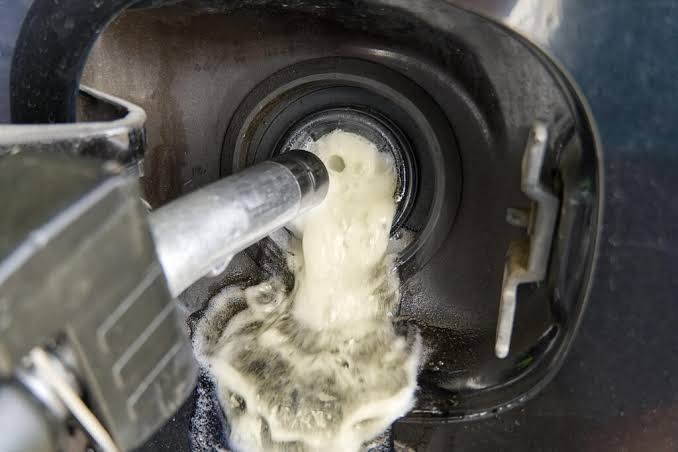
The Symptom That Points Everywhere at Once
Here is the diagnostic problem Avila's video does not fully resolve: a pump nozzle that shuts off every few cents is not proof that topping off caused the failure. A blocked purge valve, a cracked vapor line, a leaking fuel-tank pressure sensor, or a damaged canister from a separate mechanical event all produce the same refueling symptom. The P0455 code on the 2007 Tahoe is a large-leak flag — it could indicate a missing fuel cap, a torn vapor hose, or a failed canister, none of which require a history of topping off. Avila's advice to smoke-test the Tahoe rather than assume the same root cause was technically correct. What the teardown demonstrates is mechanism, not causation in every instance. Owners who habitually top off carry elevated risk. Owners who never top off can still develop EVAP faults from age, heat cycling, or road debris. A full inspection — not a behavioral history — is what produces an accurate diagnosis. Repair shops that skip that step and condemn the canister on symptom alone risk replacing the wrong part. Chevrolet has faced separate component-reliability scrutiny in 2025, and EVAP complaints sit in a different failure category from electrical faults, but the repair-escalation dynamic is comparable.
What Chevrolet's Own Documentation Says
Chevrolet's owner documentation instructs drivers to stop fueling when the nozzle shuts off automatically. The instruction is not advisory. It aligns with EPA guidance on evaporative-emission control systems, which requires canisters to handle only vapor-phase hydrocarbons. Forcing liquid past the shutoff valve bypasses the fill-tube overfill-protection device and routes raw fuel directly into the canister bed. For the specific Chevrolet inspected by Avila, the consequence was a repair requiring tank removal — a labor-intensive process that places the vehicle out of service while technicians clear contamination from multiple components beneath the floor. Broader implications reach ICE vehicle ownership patterns in markets where EV uptake remains slow: drivers holding onto older petrol vehicles face compounding maintenance costs when avoidable damage accelerates component wear. An EVAP system on a 10-year-old Chevrolet already carries age-related vulnerability; adding liquid-fuel saturation shortens the remaining service life of the canister bed materially. Avila confirmed no single-part fix was available for the vehicle in his shop. The tank came down.
The EPA first mandated onboard refueling vapor recovery systems — the EVAP architecture Avila's teardown documents — on all new passenger cars sold in the United States beginning with the 1998 model year. Charcoal canister service life under normal operating conditions is typically rated at the vehicle's useful life, roughly 150,000 miles, a threshold many Chevrolet owners cross without incident when the shutoff click is respected. The complete Chevrolet model history and specifications are catalogued in the Global Auto Index manufacturer database.
