







Off-roader concept features trimmed bumper corners and marker lights on all four fenders.
Nissan will unveil two concept vehicles at the 2026 Beijing Auto Show on April 24. The off-road concept carries auxiliary lights on hood and roof. Lifted suspension and all-terrain tires complete the package.
The concepts arrive as Nissan names China among its three core markets alongside Japan and the United States, according to the company's long-term strategy outlined this week. The off-roader mirrors design elements from the Frontier Pro plug-in hybrid launched in China last year, while the second concept features autonomous driving sensors.
Off-Road Concept Carries Military-Style Lighting
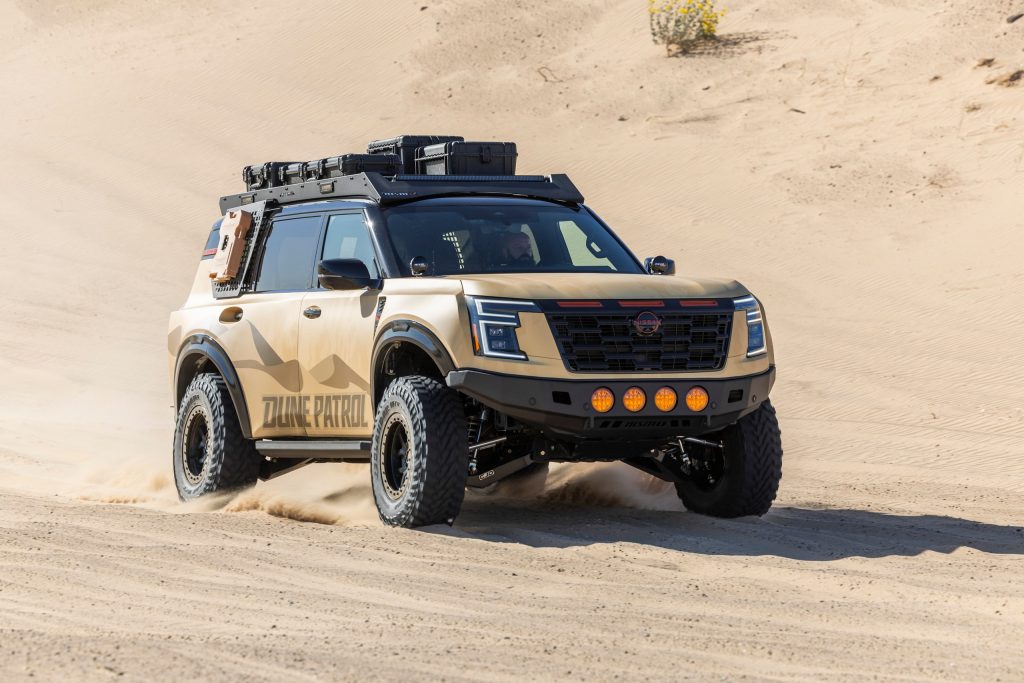
The boxy SUV concept showcases five glowing rectangular elements reminiscent of military vehicles. Engineers trimmed the front bumper corners to improve approach angles for rock crawling. Marker lights occupy all four fenders, while a roof rack system hides in shadow areas above the cabin. The concept mounts conventional side mirror caps rather than camera units, suggesting production viability remains under consideration. Nissan lettering spans the grille in prominent block letters. The vehicle sits on meaty all-terrain tires wrapped around what appears to be 18-inch wheels. Industry restructuring patterns suggest automakers now prioritize market-specific concept development over global platforms.
China Strategy Links to Frontier Pro Hybrid
The concept's five-rectangle lighting signature matches the Frontier Pro plug-in hybrid truck introduced in China during 2024, according to Nissan's product documentation. However, the Frontier Pro represents a joint effort with Dongfeng rather than pure in-house development, built on the Nissan Dongfeng Z9 platform architecture. Nissan's April strategy document identifies New Energy Vehicles as the expansion focus for Chinese operations, where NEV classification covers both plug-in hybrid and battery-electric powertrains. The company confirmed models developed in China will reach export markets including Middle East, Latin America and Southeast Asia territories. The N7 large electric sedan launched in late 2024 follows this export pattern from Chinese production bases.
Second Concept Targets Autonomous Systems
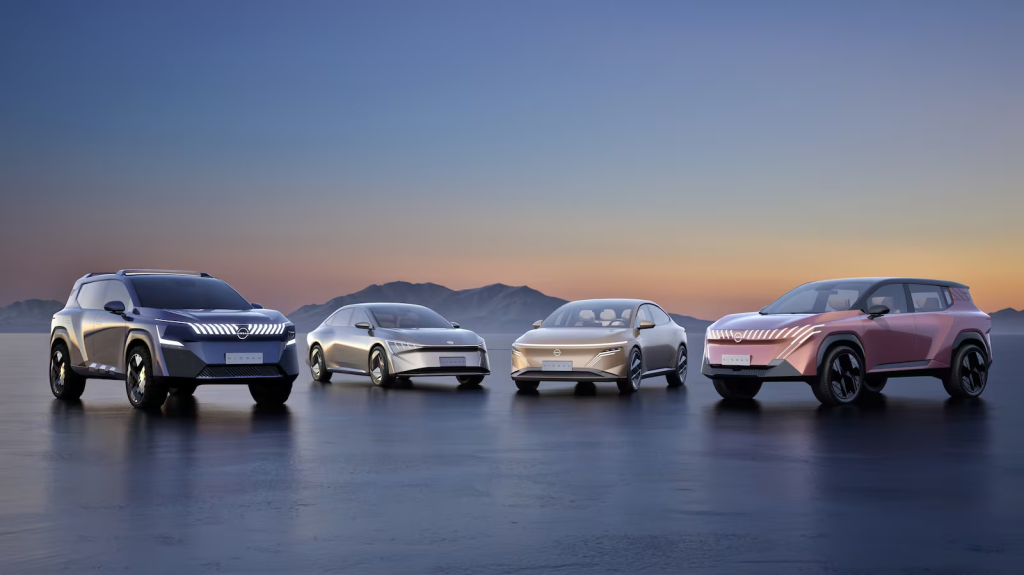
The companion concept abandons off-road capability for autonomous driving technology. A prominent roof protrusion likely houses LiDAR sensors or camera arrays for self-driving systems. The vehicle carries Nissan's corporate logo instead of lettering, with LED signature lighting that echoes the redesigned Leaf electric vehicle. Where the off-roader emphasizes rugged capability, this concept prioritizes urban mobility solutions. The contrast reflects Chinese automakers' dual-track approach of serving both adventure and technology segments simultaneously. Production timing remains unconfirmed, though the concept's refined surfaces suggest advanced development stages compared to the rougher off-road prototype.
Xterra Connection Raises Platform Questions
The timing creates confusion around Nissan's off-road vehicle strategy. The company teased the returning Xterra for American markets earlier this week, yet now reveals a separate off-road concept for China. Both vehicles target similar customer segments but appear to follow different development paths. The Chinese concept's boxy proportions and auxiliary lighting differ substantially from leaked Xterra imagery. Industry sources contacted declined to clarify whether the concepts share underlying architecture or represent completely separate programs. Platform sharing typically reduces costs, making the parallel development approach financially questionable for a company under restructuring pressure.
Nissan discontinued 11 models globally while accelerating Chinese partnerships to reduce development costs in competitive markets. The Beijing concepts follow the electric Juke reveal and next-generation Skyline preview announced during the same April window. The complete Nissan model history and specifications are catalogued in the Global Auto Index manufacturer database.
