







China posted the steepest regional fall, losing a third of its Porsche volume in nine months.
Porsche's nine-month numbers are ugly. Total deliveries fell to 178,532 — 33,977 fewer cars than the same period in 2025. Every region moved lower. One model did not. The 911 added 12 percent.
That split matters because it exposes a deliberate reorientation, not a uniform demand collapse. According to Porsche AG's official delivery report, published October 2026, the brand recorded 212,509 global deliveries through September 2025 against 178,532 this year — a gap of nearly 34,000 units. No other volume brand in the segment has publicly targeted a sub-200,000 break-even threshold while simultaneously growing its most expensive line.
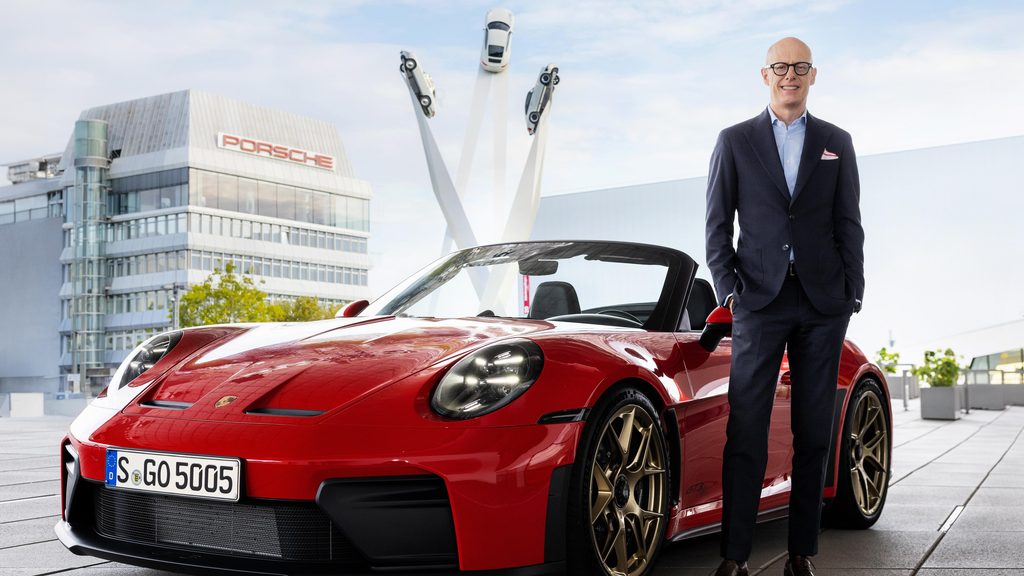
The Numbers Behind the Divergence
Start with the raw split. The 911 reached 42,217 deliveries in nine months; the brand total sat at 178,532. That means the 911 now accounts for 23.6 percent of all Porsche volume — up from roughly 17.6 percent in the same period of 2025, when the model moved approximately 37,693 units against a total of 212,509. The calculation: 42,217 ÷ 178,532 = 0.2365, or about one in four cars leaving a Porsche dealership wearing a flat-six badge. The Cayenne, still the volume leader at 59,586 units, accounts for 33.4 percent of the mix — but its share is shrinking in relative terms as the 911 climbs. Porsche Cars North America recorded 49,038 deliveries through September, of which 11,778 were 911s. That regional 911 share of 24.0 percent tracks almost exactly with the global figure, suggesting the trend is not geographically isolated. Full industry restructuring coverage for 2026 tracks comparable volume-versus-margin shifts across the sector.
Becker's 'Value Over Volume' Framing
Porsche board member Matthias Becker, responsible for sales and marketing, made the direction explicit in the company's accompanying statement. His words: 'Porsche remains committed to its value-over-volume strategy. Our focus is on highly desirable sports cars, appealing derivatives and the continued expansion of our individualisation offering.' He went further, naming GTS, Turbo, and GT variants as the specific derivative categories the brand intends to build demand around — not entry-level trims. Becker also referenced the 'Sportwagenschmiede 35' plan, presented at Porsche's Capital Markets Day, which sets the course through 2035. The plan's arithmetic is deliberately austere: cut model variants by approximately 20 percent, lift sales volume per surviving variant by roughly 30 percent in the medium term, and set a profitability floor below 200,000 annual units. That last number is the most telling. Porsche is engineering a business that can survive at a volume it is already below.
China Collapses, North America Holds — Barely
Regional data from Porsche AG's October 2026 delivery report shows China dropped 33 percent year over year to 21,493 units — the worst regional performance by a wide margin. In the first nine months of 2025, China delivered 32,195 cars. The loss of 10,702 units from a single market accounts for roughly 31.5 percent of Porsche's total global volume decline of 33,977 units. North America fell 13 percent to 56,088 cars, but it remains the brand's largest market by unit count. Germany retreated 7 percent to 20,954 units — the shallowest regional decline. Europe excluding Germany dropped 11 percent to 44,949. Overseas and emerging markets fell 19 percent to 35,048. Put differently, China's percentage decline was 2.5 times steeper than Germany's, and roughly 1.7 times steeper than the global average. No region posted growth. The contrast between China's structural erosion and Germany's comparatively contained retreat will shape where Porsche concentrates its derivative rollouts over the next 18 months.
Margin Math That Doesn't Reconcile With Volume Loss
Here is what does not add up cleanly. Porsche's operating margin collapsed to approximately 1.1 percent in the first half of 2025 after special charges, down from roughly 18 percent in 2023 — a fall of nearly 17 percentage points in under two years. The official explanation points to those special charges, but neither Porsche AG's October 2026 delivery release nor any accompanying investor document published by that date specifies the full composition of those charges with line-item precision. What was not confirmed: whether the margin floor has been reached, or whether additional restructuring write-downs remain unbooked. Porsche has set a break-even target below 200,000 annual units, yet the brand is already running below that figure on a nine-month annualised run rate — 178,532 units through September implies a full-year trajectory of roughly 238,000, still above the floor, but the trajectory is downward. If Q4 does not materially recover, the gap between the stated floor and actual volume shrinks faster than the plan assumed.
What the 911's Rise Costs the Cayenne's Future
The 911's growing share of a shrinking total has a direct consequence for Porsche's SUV lines. If the brand is targeting a 20 percent reduction in model variants while orienting production capacity toward high-margin sports car derivatives, the Cayenne and Macan face a quieter but real competitive pressure from within their own manufacturer. Porsche has not publicly disclosed which variants face the axe, and no timeline for specific cuts appeared in the October 2026 delivery release. But the arithmetic leaves little ambiguity: a brand targeting 200,000 units at the floor, with one model line already claiming nearly 24 percent of volume, cannot expand its 911 derivative catalogue — GT3, GT3 RS, GTS, Turbo S — without squeezing space for lower-margin SUV configurations. Dealers in North America, who moved 49,038 units through September, will feel that variant compression first, since the U.S. market historically absorbs a disproportionate share of high-specification 911 builds.
Porsche's full-year 2025 operating profit had already fallen to €2.9 billion, down from €7.3 billion in 2023, according to Porsche AG's annual results published February 2026 — a drop of 60 percent in 24 months. The 2035 plan has not been independently verified agency as of October 2026. The math is Porsche's own. The complete Porsche model history and specifications are catalogued in the Global Auto Index manufacturer database.
