







Factory output dropped 50% from peak forcing closure of second production line last month.
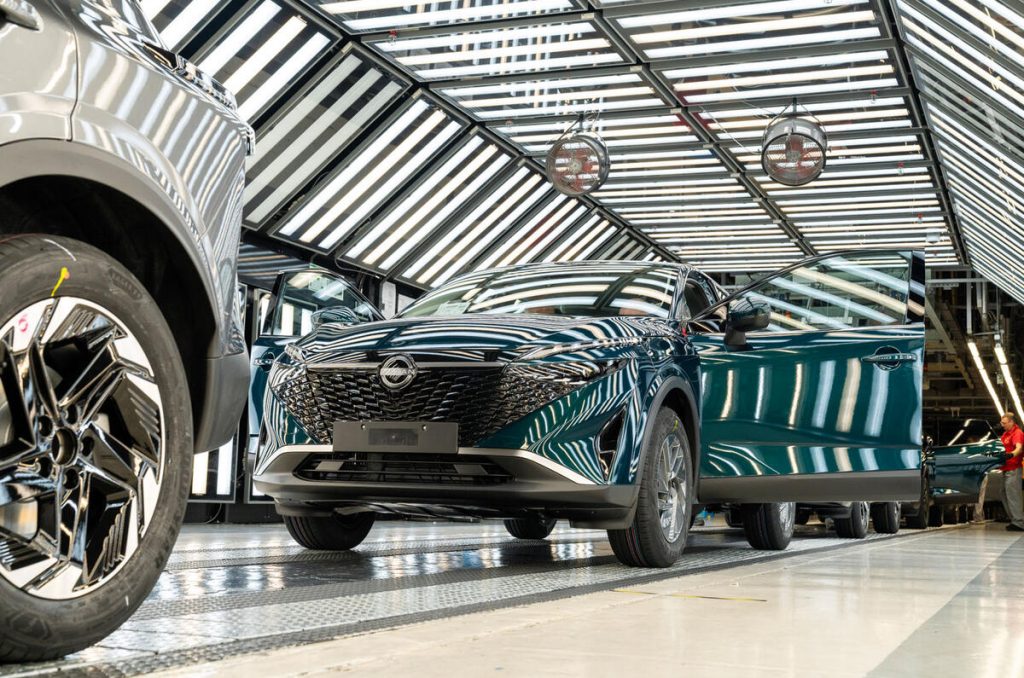
Nissan will find a manufacturing partner to use spare capacity at its Sunderland plant, CEO Ivan Espinosa said this week. The factory closed one production line after output halved. Peak production exceeded 500,000 units.
The move reflects broader capacity sharing agreements as European manufacturers face volatile demand and regulatory pressure. Chinese manufacturers have rejected similar arrangements despite site shortages, according to industry restructuring analysis covering production partnerships across 14 European plants.

Sunderland Plant Consolidation Complete
Nissan shuttered the second production line at its Wearside facility in December following a 12-month output decline. The plant manufactured 247,000 vehicles in 2023, down from its 2016 record of 507,000 units. Staff reductions affected 1,200 workers through voluntary redundancy packages. The remaining line continues building the Qashqai and Juke models for European markets. Espinosa confirmed the consolidation during a manufacturing summit in Newcastle on Tuesday. The closed line previously handled Leaf electric vehicle assembly before production moved to Japan in early 2023.
Partnership Search Underway
"I'm sure we can find another manufacturer to share the facility," Espinosa told delegates at the Manufacturing North East conference. The CEO outlined plans to approach European and Asian brands seeking UK production access post-Brexit. Nissan operates similar partnerships at its Barcelona plant, where Renault shares assembly capacity for commercial vehicles. The Sunderland facility spans 580 acres with annual capacity rated at 600,000 units across both lines. Contract manufacturing agreements typically run 5-7 years with shared tooling costs. Espinosa declined to name specific companies in discussions but confirmed talks involve "established volume manufacturers."
Factory Utilization Drops to 41%
Current production utilizes 247,000 units of the plant's 600,000 annual capacity, representing 41% utilization. Industry standard efficiency requires 75-80% capacity use for profitable operations. The math shows Nissan needs 450,000 units minimum to justify both production lines. Partner manufacturing could add 150,000-200,000 vehicles annually, bringing total output to 397,000-447,000 units. This would achieve 66-75% utilization, approaching viable thresholds. Fixed costs per vehicle drop from £2,400 at current volumes to approximately £1,600 at 450,000 units. The 247,000 current output represents the lowest annual production since the plant opened in 1986.
UK Manufacturing Partnerships Gain Traction
The partnership approach contrasts with Honda's strategy in North America, where the company maintains dedicated single-brand facilities despite capacity challenges. Jaguar Land Rover operates contract manufacturing for external brands at its Halewood plant, building Range Rover Evoque alongside potential partner vehicles from 2025. Toyota's Burnaston facility rejected partnership proposals in 2023, citing quality control concerns. Nissan's Sunderland arrangement would mark the first major Japanese-European manufacturing share in the UK. Similar partnerships in Germany include BMW producing vehicles for other manufacturers at its Leipzig plant, generating €340 million additional revenue annually.
Brexit Complications Drive Demand
European manufacturers face increased costs accessing UK markets through new trade barriers that make local production attractive. Import duties on passenger cars reached 10% in 2024, adding £2,000-4,000 to vehicle costs. Stellantis relocated Vauxhall Astra production from Ellesmere Port to Germany, creating precedent for production shifts. The Sunderland partnership could appeal to brands like Skoda or SEAT seeking UK manufacturing without major capital investment. Local content requirements for post-Brexit trade deals favor domestic assembly over imports. Nissan's established supply chain includes 40 local suppliers within 50 miles of Sunderland, reducing logistics costs for potential partners.
Nissan invested £1.2 billion in the Sunderland plant between 2013-2019, including £100 million for electric vehicle preparation that remains underutilized. The facility employs 6,000 direct workers, down from 8,200 in 2016. Partner agreements could stabilize employment levels through 2030. The complete Nissan model history and specifications are catalogued in the Global Auto Index manufacturer database.
