


A roadside mechanic measured 3mm of pad material and told his customer to drive another 5,000 miles first.
A dealership flagged the brakes. The customer walked. Then an independent shop put a gauge on the pads and came back with a different answer. Front pads measured roughly 3mm. Rears had more. The independent technician said: drive on.
The episode is a snapshot of a structural tension inside the U.S. service market. According to AAA's consumer vehicle service research, published February 2024, brake pad replacement runs $150 to $350 per axle — meaning a full four-corner job can reach $700 before rotors are touched. That cost gap between 'do it now' and 'do it next visit' is where trust erodes fastest, particularly at franchised dealerships where service revenue offsets thinning new-vehicle margins.
What Happened in the Bay
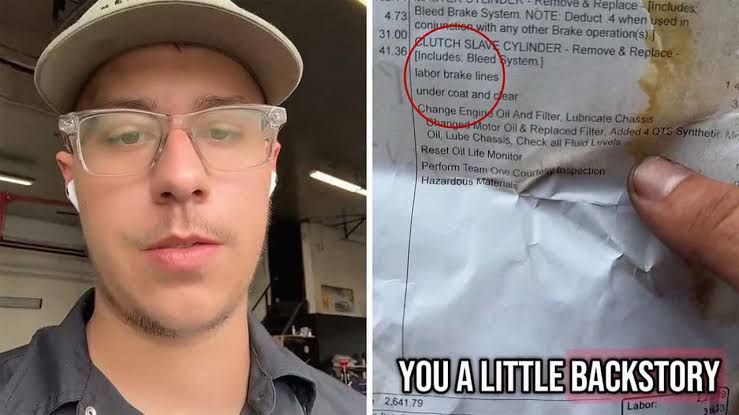
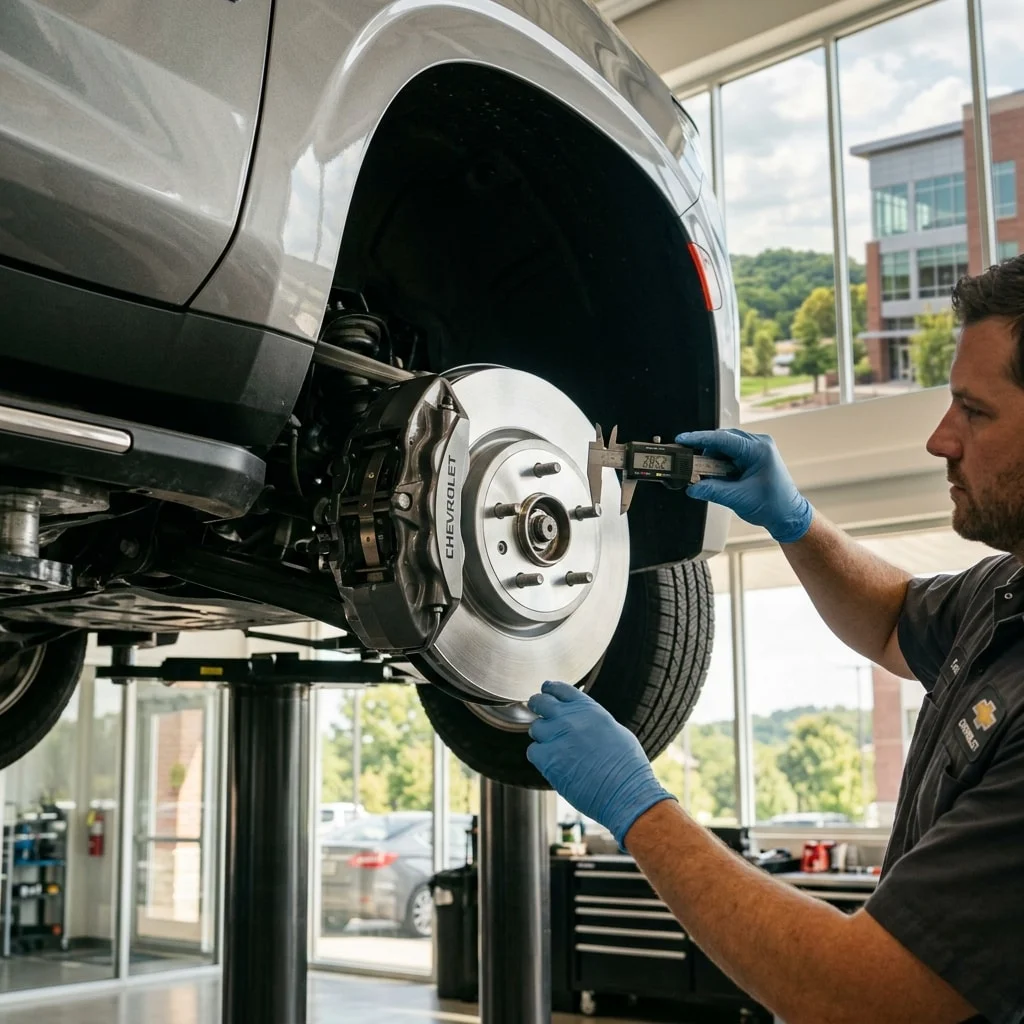
Jason Miura, lead technician at Jason's Auto Repair, posted the inspection to his shop's social account in late September. A customer brought the car in after a dealership, visited for warranty work, told them the brakes needed replacing. Miura pulled the wheels. He measured the rear pads first — he said they had plenty of material remaining and required no action. He moved to the fronts. His estimate: approximately 3mm on both sides. He said the rears were fine. He said the fronts could run another 5,000 miles, roughly one oil-change interval. His on-camera advice to the customer was to wait. In the post caption, he added a recommendation that applies to any service visit: ask the shop to send photos and video of any component they say needs replacing before authorising the work. The video drew tens of thousands of views within days. This type of dispute sits at the centre of industry restructuring debates in 2026, as dealership service departments face renewed scrutiny over revenue practices.
The Numbers Behind a Brake Decision
Pad thickness at replacement varies by manufacturer, but most engineers treat 2mm as the functional minimum — below that, braking performance degrades and rotor damage accelerates. At 3mm, the margin to that threshold is 1mm. According to AutoZone's brake service reference data, updated Q3 2024, most drivers extract 30,000 to 40,000 miles from a set of pads under mixed conditions. Heavy stop-and-go city use can cut that to fewer than 20,000 miles; highway-dominant driving can push it past 60,000. The spread is 3:1. If a pad set has covered 25,000 miles and sits at 3mm, the remaining proportion of usable life can be estimated as follows: assuming 4mm of usable material from new (a common mid-range spec) to the 2mm floor, 3mm represents 50% of that range consumed, leaving 50% — or roughly 12,500 to 20,000 miles on an average duty cycle. Miura's 5,000-mile estimate is therefore conservative. The $150-to-$350 per-axle cost cited by AAA means a two-axle job runs $300 to $700. Replacing pads at 3mm rather than 2mm costs the customer between $300 and $700 in avoidable spend — at minimum.
The Pushback From the Other Side of the Pit
Not every technician who watched the video agreed with Miura's call. One commenter with a service background posted a rebuttal that circulated widely beneath the original clip: "Most people get their cars serviced two to three times a year. This car will need brakes before its next oil change most likely, so yes I'm recommending we do it now. It's in the shop now. Why wait if it needs to be done? Also braking capacity and distance dissipates as the pads get worn down." That argument has legitimate engineering support. Stopping distances increase as pad material thins and heat management worsens. The counter-position, held by Miura and several commenters, is that the customer deserves the measured data and the right to decide. "Let the customer decide," one viewer wrote. Another added: "There's no way I'm changing those. They have a lot of mileage left." The divide is less about the brakes and more about who owns the decision.
Why the Rear Brakes Rarely Enter This Conversation
One commenter disclosed owning a 2012 Toyota Tacoma with 150,000 miles on the odometer and claimed never to have changed the rear brakes, adding a question about whether rear brakes serve only as parking brakes. They do not. The parking brake is a mechanically separate system on virtually every modern vehicle. Rear service brakes carry a meaningful share of total stopping force — typically 30 to 40 percent on a front-biased platform, more on rear-biased or all-wheel-drive layouts. The misunderstanding matters because it shapes how customers respond when a dealership or independent shop flags rear pad wear. If a customer believes rear brakes are optional, they will resist any recommendation to replace them — including legitimate ones. That perception gap is arguably as consequential as the upsell problem Miura's video was trying to address. Neither AAA nor AutoZone's published consumer guidance, reviewed for this article, addresses the rear-brake misconception directly in their pad-wear explainers. That absence is a gap worth noting. Separately, Chevrolet's C8 Corvette brake-related sales halt earlier this year illustrated how differently braking system failures register when the manufacturer is the source of the problem rather than the customer's service shop.
What the Trust Deficit Costs the Franchised Network
The immediate consequence for the customer in Miura's video is straightforward: he kept his money. The broader consequence for franchised dealerships is harder to quantify but easier to observe. According to the National Automobile Dealers Association's 2024 annual financial profile, published January 2025, fixed operations — service, parts, and body shop — generated an average of $1.07 million in gross profit per dealership in 2023, accounting for roughly 44 percent of total dealership gross. Service upsells, including brake work flagged during oil changes or warranty visits, are a documented component of that revenue line. When a customer declines a $400 brake job and posts a video explaining why, the reputational effect reaches an audience the dealership's own service advertising cannot easily counter. Jason's Auto Repair is a single independent shop. But the dynamic it illustrated — independent technician versus franchised network on a routine wear item — maps directly onto the broader service trust questions that have accompanied the shift toward longer-interval electric vehicle maintenance schedules, where service revenue per vehicle is already under structural pressure.
Pad material type adds another variable the customer rarely controls: organic compounds typically last 20,000 to 30,000 miles, semi-metallic compounds extend that range under hard use, and ceramic pads can exceed 50,000 miles under light daily driving — a spread of 2.5:1 that no single dealership recommendation accounts for. AAA's brake replacement cost estimate has not been revised since its February 2024 publication. The complete brake system and service interval specifications for 1,700-plus models are catalogued in the Global Auto Index manufacturer database.
