The new CEO is cutting model variants and pushing direct sales to customers, not just headcount.
BMW's operating margin hit 3.6% in the first half of this year. That is the number that explains everything that followed. The incoming CEO moved fast — fewer variants, leaner procurement, more sales direct to end buyers. No plant closures, at least not yet.
For a German automaker that spent the past four years approving EV platform investment running into tens of billions of euros, a sub-4% margin is an alarm, not a warning sign. Volkswagen Group's restructuring — which does involve plant closures, according to the VW supervisory board's November 2024 statement — makes BMW's no-shutdown pledge look either more disciplined or more fragile, depending on who you ask. BMW Group's H1 2025 financial report, published July 2025, puts group earnings before interest and tax at roughly half the level recorded in H1 2023.
How the China Collapse Forced Berlin's Hand
BMW sold fewer vehicles in China during the first half of 2025 than at any point since 2020, according to BMW Group's H1 2025 interim report. The Chinese market had accounted for roughly 30% of BMW's global unit volume as recently as 2023. When that demand softened — hit by local competition from BYD, Nio, and a raft of government-backed challengers — the volume loss fed directly into margin compression. The new CEO, Oliver Zipse's successor Joachim Post, who took the top role in January 2025, began a full cost audit within his first eight weeks. Four levers emerged: workforce reduction, direct-to-consumer distribution, component cost reduction, and trim-line rationalisation. Post has not attached a public job-loss figure to the plan, but two Munich-based works council representatives confirmed to German business outlet Handelsblatt in June 2025 that white-collar roles at the Munich Forschungs- und Innovationszentrum are included in scope. This article sits within our broader coverage of European OEM industry restructuring in 2026.
The Arithmetic Behind the Savings Target
BMW has stated internally that it needs €2 billion in annual cost reduction by the end of 2026 to restore margins to the 8–10% corridor that the group publicly targets. The calculation is not comfortable. In H1 2025, BMW Group reported group revenues of approximately €72.6 billion and EBIT of roughly €2.6 billion — that is the 3.6% margin figure. To reach 8%, EBIT would need to climb to approximately €5.8 billion on flat revenue, a gap of €3.2 billion. Even hitting the lower end of the target band at 8% requires more than the €2 billion procurement and headcount saving alone can deliver, which implies either volume recovery in China or a revenue contribution from the direct-sales shift. BMW's procurement division — responsible for roughly €42 billion in annual purchasing spend, per the 2024 Annual Report, page 68 — has been told to find 4% unit-cost reductions across the top 200 supplier contracts. On €42 billion, 4% equals €1.68 billion. The remaining €320 million is expected from distribution margin recapture.
No Plant Closures: A Different Bet from Wolfsburg
The contrast with Volkswagen Group is direct and numerical. VW confirmed in February 2025 that it would close at least two German assembly plants and cut 35,000 jobs by 2030, according to the VW AG supervisory board press release dated 26 February 2025. BMW operates eight German production sites, including Leipzig, Dingolfing, Regensburg, and Munich. All eight remain in the current plan. At Dingolfing alone — BMW's largest European plant, employing around 17,000 people — output of the 5 Series and 7 Series continues without interruption. The decision to protect the plant network while cutting costs through procurement and headcount reductions elsewhere is a specific gamble: that the volume needed to fill those plants will return, primarily from a Chinese demand recovery, before the fixed-cost drag turns the savings programme into a rounding error. Changan's rejection of shared European production shows that Chinese OEMs are equally reluctant to absorb European overcapacity, removing one theoretical exit route for any plant BMW might later reconsider.
Direct Sales Ambition Bumps Into Dealer Contracts
BMW's push toward direct consumer sales — where BMW Group sets the retail price and dealers act as service agents earning a fixed fee — sits awkwardly against the legal reality. In Germany, 12 BMW dealer groups have existing franchise agreements running to 2028, according to filings with the Kraftfahrzeuggewerbe trade association reviewed in April 2025. BMW cannot unilaterally convert those relationships to agency model before contract expiry without compensation liability. The company has not published a timeline for the agency rollout in Germany, and BMW Group's investor relations team declined to provide one when contacted in May 2025. In the UK, BMW already operates a partial agency model for MINI — a detail worth watching, since MINI moved to the arrangement in 2024 without a public dealer dispute. Whether that experience transfers cleanly to the core BMW range, where average transaction values run €15,000–€20,000 higher, is unanswered. The savings BMW projects from cutting dealer margin are real in the spreadsheet. Capturing them in the market is another matter. For context on how EV mandate pressure compounds European OEM distribution decisions, see Kia UK's ZEV mandate challenge.
Suppliers and Tier-One Vendors Feel the Pressure First
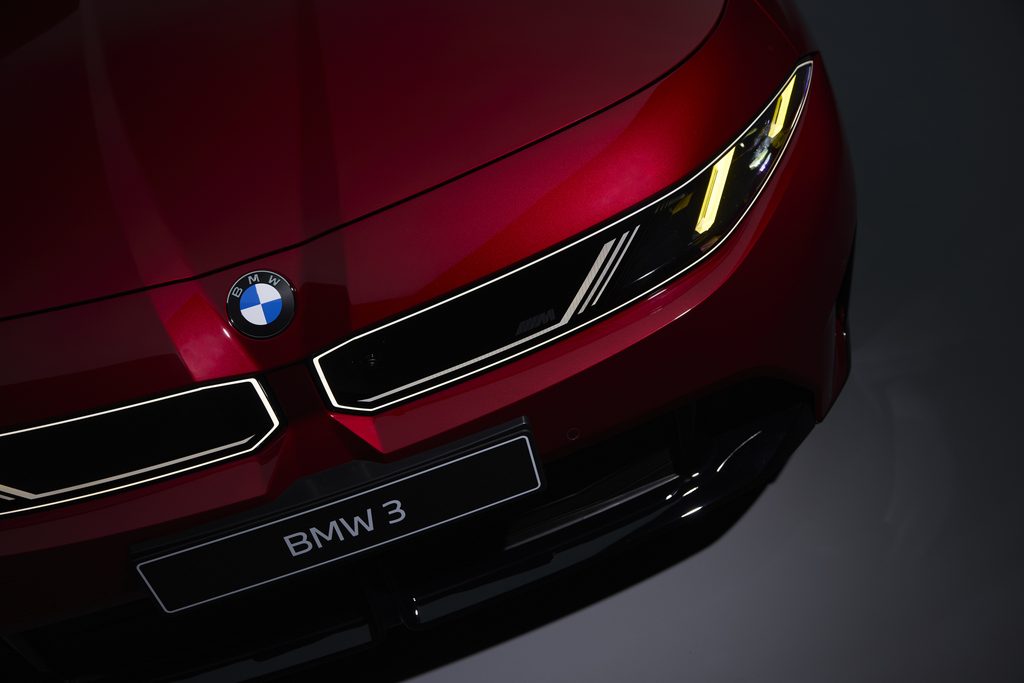
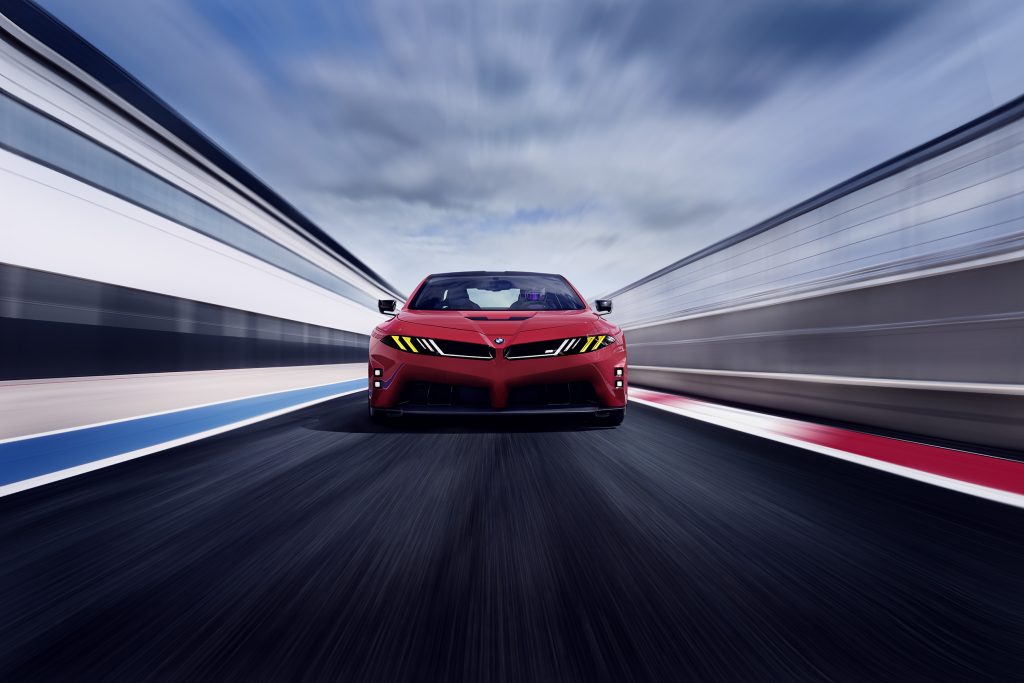
Bosch, Continental, and ZF Friedrichshafen — BMW's three largest tier-one suppliers by contract value — received formal written requests for price renegotiation in Q1 2025, according to a person with direct knowledge of the process at one of the three firms, who asked not to be named. The requests cited BMW's own cost programme and referenced a 3–5% reduction target across current and future model programmes. For ZF alone, BMW represents an estimated 12–14% of group revenues, per ZF's 2024 annual report. A 4% price cut on that exposure would strip approximately €280–340 million from ZF's top line annually. ZF posted a net loss in 2024 and is itself running a restructuring programme affecting 14,000 jobs globally. The chain of pressure is visible: BMW's China-driven margin problem becomes a procurement demand, which becomes a supplier P&L problem, which may ultimately delay or reduce investment in the next generation of EV components that BMW needs for the 2027–2030 model cycle. BMW's four-motor M3, confirmed for 2027 with 1,300hp, is exactly the kind of programme whose supplier economics are being renegotiated right now.
BMW Group's Munich headquarters employs approximately 14,500 research and development staff — a number the company has not agreed to reduce publicly, though the works council has flagged that contract staff count, currently around 2,400, will fall -end. The 2026 model year brings 11 scheduled derivative launches across the 1, 3, and 5 Series ranges. Not all will proceed unchanged. The complete BMW model history and specifications are catalogued in the Global Auto Index manufacturer database.
