GM's joint ventures will keep Chinese plants open, redirecting output to export markets across Africa, the Middle East, and South America.
One car. June 2026. That was Chevrolet's entire Chinese retail month. General Motors confirmed it will end new-vehicle sales in mainland China, closing a consumer chapter that opened in the mid-2000s and once rivalled North America in volume.
The numbers tell the story bluntly. According to Automobilwoche, cited their August 2026 reporting, Chevrolet's annual sales fell from 767,000 units in 2014 to fewer than 9,000 by 2025 — a 98.8 percent contraction over eleven years. For comparison, BYD alone sold more vehicles in a single week of June 2026 than Chevrolet moved in all of mainland China across the first half of the year.
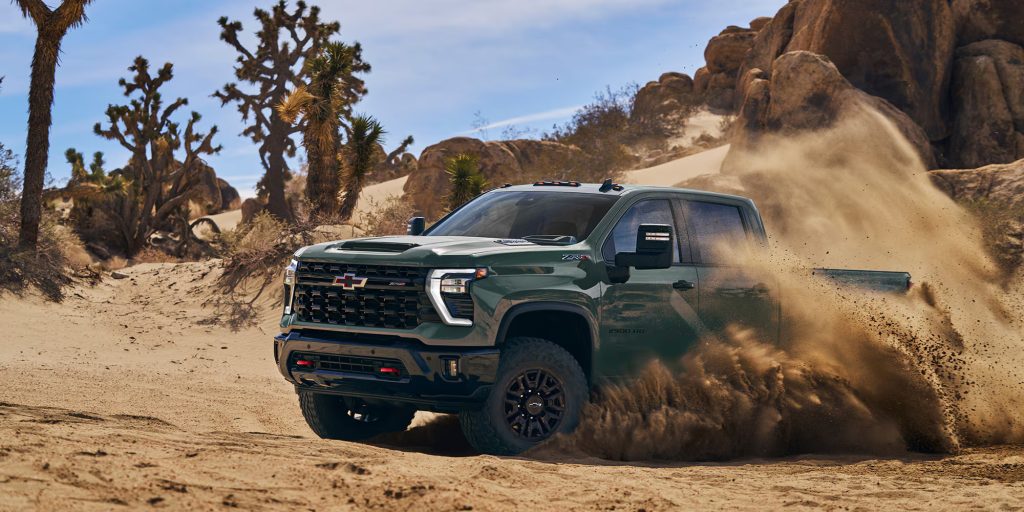
Two Decades of Retail, Ended in a Single Statement
General Motors entered mainland China's passenger-car market in earnest around 2004 through its SAIC-GM joint venture. Chevrolet followed, planting dealerships across Beijing, Chongqing, Hubei, and beyond. By 2014 the brand was moving well over 700,000 units annually — a figure that made China one of Chevrolet's two largest markets on earth. Then domestic competition accelerated. BYD, Geely, Changan, and a wave of EV-native brands undercut both price and technology. Chevrolet dealers began closing. Showroom traffic dried up province by province. By early 2026, entire regions had no active Chevrolet retail point. GM's formal confirmation of the exit did not shock anyone inside the industry who had watched floor traffic data. It simply made official what the sales ledger had been saying for three years. For readers tracking the broader GM global portfolio repositioning since the 2000s, the China exit is the sharpest data point yet in a decade-long contraction of Western volume brands across Asia.
The Arithmetic of a Market Lost
Chevrolet's China volume peaked at approximately 767,000 units in 2014. By 2025 that figure had fallen to under 9,000. The on-page calculation: 767,000 minus 9,000 equals a loss of 758,000 annual units, representing a 98.8 percent decline across eleven years — or roughly 68,900 units shed per year on average. In June 2026 alone, the brand recorded a single Equinox sale across all of mainland China. First-half 2026 volumes totalled a few dozen vehicles, meaning the annualised run-rate at that point was below 100 units. At the 2014 peak, Chevrolet was averaging roughly 63,900 units per month. June 2026's single-unit result represents a monthly decline of approximately 99.998 percent against that baseline. SAIC-GM's joint venture had capacity to produce hundreds of thousands of vehicles per year. Running those lines at a fraction of one percent utilisation for domestic retail was, by any production-economics measure, unsustainable.
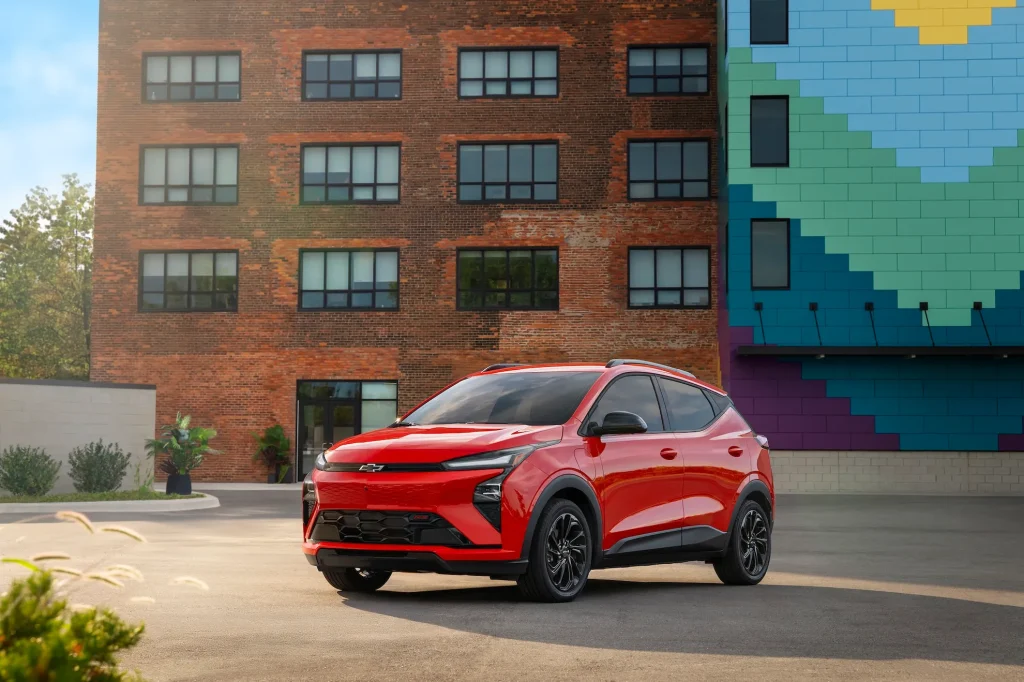
Buick Holds, Cadillac Climbs — Chevrolet Exits
Not every GM badge in China collapsed at the same rate. Buick, which has carried cultural resonance with Chinese consumers since the 1930s when the brand was favoured by government officials, maintained meaningful volume well into the 2020s. Cadillac, positioned in the 300,000–600,000 yuan segment, saw demand erode more slowly as aspirational foreign badges retained partial appeal among upper-income buyers longer than mass-market ones. Chevrolet, by contrast, competed directly against domestic brands at price points where Chinese manufacturers had decisive cost and technology advantages — particularly in electrification. The split outcome inside a single corporate portfolio is worth examining: three brands, one joint-venture structure, three entirely different trajectory lines. This divergence mirrors what happened to Changan's own multi-brand calculus as it pressed outward into Europe while consolidating domestically — domestic winners and foreign losers are often sharing the same factory floor.
The Factory Stays Open. That Doesn't Quite Add Up.
Here is what requires scrutiny. GM has confirmed that SAIC-GM joint-venture plants will continue building Chevrolet-badged vehicles in China for export to the Middle East, Africa, South America, Mexico, and parts of Asia-Pacific. Export volumes from those facilities reportedly reached tens of thousands of units over the past two years. On paper this is logical: sunk fixed costs in plant and tooling, cheap yuan-denominated labour, and existing supply chains make Chinese production economically attractive even without a domestic retail market. But the logic has friction points GM has not publicly answered. First, the United States explicitly excludes itself from the receiving list, meaning the 25 percent U.S. truck tariff environment and broader trade restrictions wall off Chevrolet's home market from its Chinese production base entirely. Second, the export markets named — Africa, South America, the Middle East — are also contested by Chinese domestic brands expanding abroad at aggressive price points. Chevrolet, built in China, would compete against Chinese brands in third markets. Whether that export pivot absorbs meaningful capacity, or merely delays a fuller plant restructuring, is a question GM's communications team has not addressed directly. Michael Robinson, director of GM China communications, had not responded to a request for clarification on export volume targets as of publication.
Existing Owners, Expiring Dealers, and a 20-Year JV Promise
For the estimated hundreds of thousands of Chinese consumers who purchased Chevrolet vehicles over the past decade — Trailblazers, Equinoxes, Malibus, Camaros — the retail exit creates a legitimate service question. GM has stated that aftersales support, including parts supply and workshop access, will continue through SAIC-GM and its remaining joint-venture infrastructure. That commitment is anchored partly by the renewed 20-year joint-venture agreement GM signed with SAIC, which extends the partnership's operating mandate well into the 2040s regardless of the retail situation. The warranty and parts obligations represent a minimum floor of activity. However, independent dealer groups that built businesses around Chevrolet new-car sales have no equivalent guarantee. In provinces where Chevrolet showrooms have already closed — Beijing among them — the transition from new-car retail to service-only operation had already happened organically before the formal announcement. Whether remaining dealers convert to service centres, fold entirely, or migrate to other brands in the SAIC-GM portfolio is a decision each operator now faces individually. The Chevrolet brand's broader retail network pressures are not confined to China, but the China case is the most acute example of what happens when volume evaporates faster than dealer agreements can be restructured.
Chevrolet's Chinese retail history spans roughly 21 years, from the first SAIC-GM Chevrolet showrooms opening around 2004 to the 2026 confirmation of exit. The brand sold its one-millionth China-market vehicle in 2012 — four years before the decline began in earnest. Skoda completed a comparable retreat earlier, and Ford's China volumes dropped below 400,000 units annually by 2023 from a peak above 1.2 million. Western mass-market brands are exiting in sequence. The complete Chevrolet model history and specifications are catalogued in the Global Auto Index manufacturer database.
