







Rival Volvo says its newest electric models already match internal-combustion margins — Porsche cannot say the same.
The numbers don't lie. Porsche built its EV cost base around sales forecasts that never materialised, and it is paying for that now. Every Taycan and Macan EV sold today moves at a margin below its petrol equivalent. No fix is coming this product cycle.
The admission matters because Porsche occupies the upper end of the Volkswagen Group's price ladder, where margins are expected to subsidise platform development elsewhere in the group. According to Porsche AG's full-year 2024 earnings presentation, published February 2025, the company's return on sales fell to 14.4 percent — down from 18.0 percent in 2022. That two-year compression, four percentage points wide, is directly linked to EV cost absorption at volumes well below original planning assumptions.
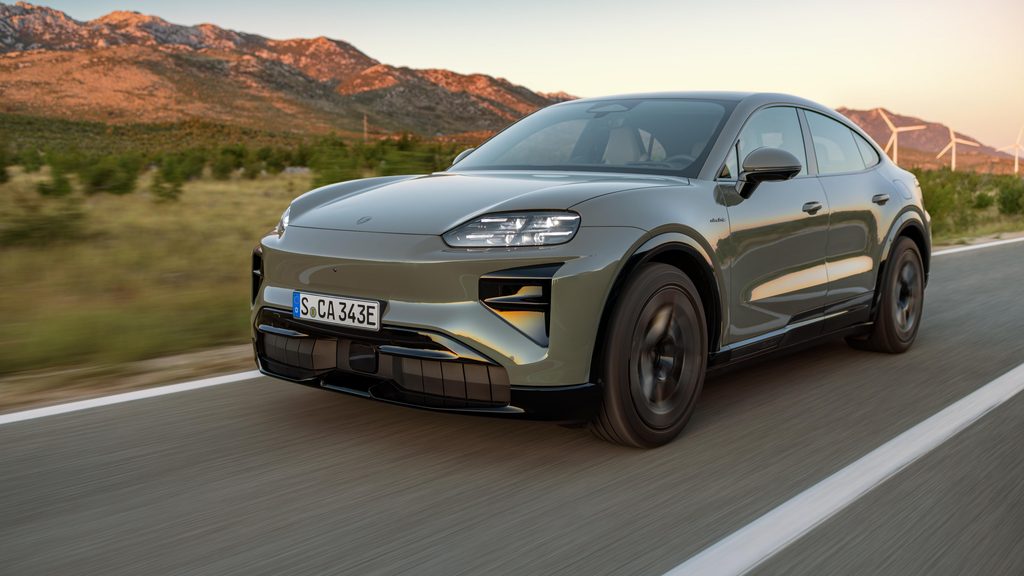
How the Forecasting Error Compounded
Porsche's EV planning crisis traces back to decisions taken between 2020 and 2022, when the company publicly aligned with Volkswagen Group projections that assumed EV demand would surge through the mid-decade. Porsche's financial planning team sized tooling commitments, battery-supply contracts, and factory conversion costs at Zuffenhausen and Leipzig against those volume targets. When European EV registrations slowed sharply in 2023 and held flat through much of 2024 — according to the European Automobile Manufacturers' Association's registration bulletin, published January 2025 — Porsche was left carrying fixed cost structures designed for a larger denominator. Fewer vehicles sold means each one absorbs a larger slice of that fixed spend. The company did not revise its EV cost architecture mid-cycle. That decision, or absence of one, is what separates Porsche's current situation from manufacturers that entered EV production later with leaner initial commitments. For context on how the broader performance-brand EV transition is unfolding across the segment, the Global Auto Index topic cluster tracks parallel developments at competing marques.
The Margin Arithmetic Behind the Admission
Porsche reported full-year 2024 revenue of €40.1 billion and operating profit of approximately €5.8 billion, yielding the 14.4 percent return on sales figure cited in its February 2025 earnings release. In 2022, operating profit was €6.8 billion on €37.6 billion in revenue — an 18.0 percent margin. The difference: €1.0 billion in absolute operating profit on €2.5 billion more revenue. Expressed differently, Porsche generated €2.5 billion more top-line income in 2024 than in 2022 yet banked €1.0 billion less at the operating line. That €3.5 billion swing (additional revenue minus lost profit, compared against a flat-margin scenario) represents the approximate cost of the EV investment overhang. On a per-unit basis, Porsche delivered around 310,000 vehicles in 2024 versus 309,884 in 2022 — volumes nearly identical. The margin collapse is therefore not a volume story. It is a cost-per-unit story, and EV model mix is the single variable that changed most over that window. The on-page calculation: 18.0% − 14.4% = 3.6 percentage points of margin lost on a revenue base of roughly €40 billion equals approximately €1.44 billion in foregone annual operating income.
Volvo's Diverging Trajectory
The contrast with Volvo Cars is pointed. Jim Rowan, Volvo Cars' chief executive, stated in the company's Q4 2024 earnings call, published February 2025, that its newest fully electric models — specifically the EX90 seven-seat SUV — were reaching margin parity with equivalent internal-combustion vehicles ahead of internal schedule. Volvo entered EV production at a different cost basis partly because it committed to the Geely SEA platform later, negotiating supply terms after the initial battery cost spike of 2021–2022 had partially corrected. Porsche had no equivalent late-entry advantage; the Taycan entered production in 2019, locking in a cost structure at a point when EV bill-of-materials costs were substantially higher than today. By 2024, the average lithium-ion battery pack cost tracked by BloombergNEF had fallen to approximately $149 per kWh — down from around $321 per kWh in 2019. Porsche's contracted supply costs for the current Taycan cycle do not fully reflect that decline. Volvo's newer programmes do.
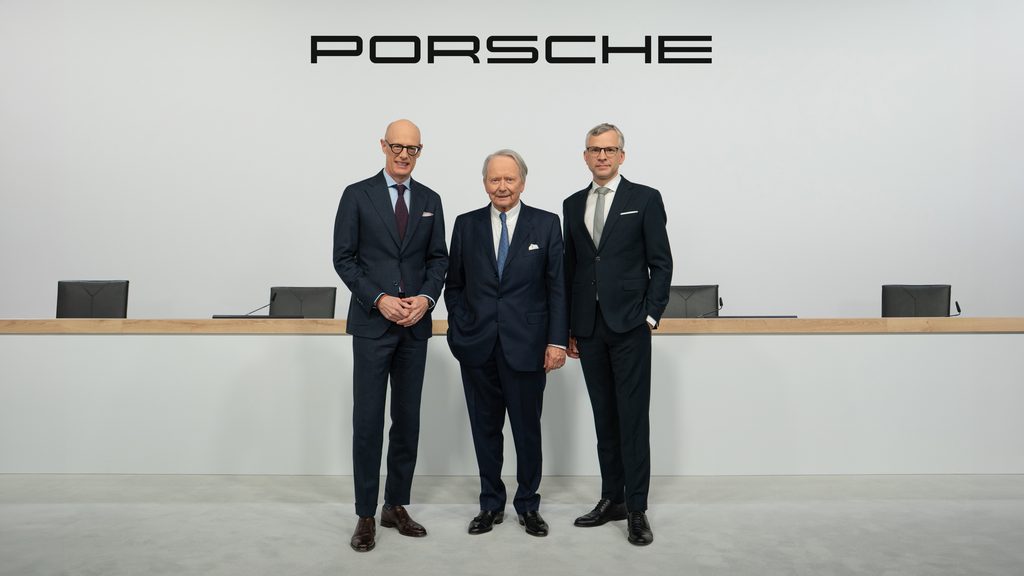
The Odd Position: High Prices, Low EV Profit
Here is what does not add up. The Taycan GTS starts above €130,000 in Germany. The Macan Electric opens near €68,000. These are not thin-margin commodity vehicles. Yet Porsche's own finance chief, Lutz Meschke, confirmed at the February 2025 earnings call that EV variants remain below the margin profile of petrol equivalents on a like-for-like basis. That is an anomaly. Higher transaction prices should, in theory, provide more room to absorb elevated unit costs. The explanation lies in fixed-cost allocation. Porsche's EV-specific investment — battery R&D, the J1 platform underlying the Taycan, the PPE platform shared with Audi for the electric Macan — was sized for volumes that did not arrive. When Porsche sold roughly 40,309 Taycans in 2024, down from 44,723 in 2022 according to its own annual delivery data, the fixed cost per unit rose even as the retail price held. No public statement from Porsche has quantified the exact per-unit cost gap. That figure has not been disclosed in any filing reviewed for this article.
Next-Cycle Relief — But Not Before 2027
Porsche has told investors that margin recovery on EVs depends on the next product generation, which the company has not formally dated but which industry planning cycles place no earlier than 2027 for the Taycan successor. Until that vehicle reaches production at volume, the current cost structure persists. The specific effect on Volkswagen Group is measurable: Porsche's royalty and dividend payments to VW AG are sized against Porsche AG profitability. A sustained 3–4 percentage point margin shortfall at Porsche flows directly into group-level cash available for Volkswagen's own restructuring programme, which VW AG announced in late 2024 includes plant rationalisation affecting up to 35,000 positions in Germany. Oliver Blume, who serves simultaneously as chief executive of both Porsche AG and Volkswagen Group, faces the structural tension of managing a prestige brand whose EV transition costs are arriving at precisely the moment the parent group needs upstream cash flow. That dual role has no equivalent among Porsche's direct competitors.
Porsche produced its one-millionth vehicle at the Zuffenhausen plant in 2017 — a white 911 — and the site now also assembles the Taycan. Taycan production capacity at Zuffenhausen was expanded to 40,000 units annually at a cost Porsche has not publicly disaggregated from its broader €6 billion electrification spend announced in 2021. The next model cycle is Porsche's clearest path back to 2022 margins. That path is at least two years long. The complete Porsche model history and specifications are catalogued in the Global Auto Index manufacturer database.
