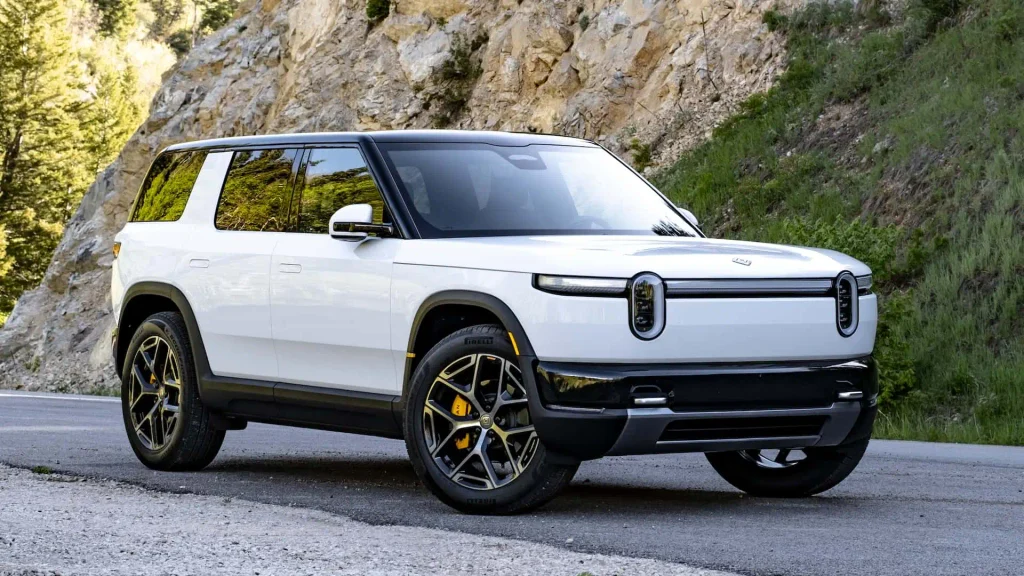
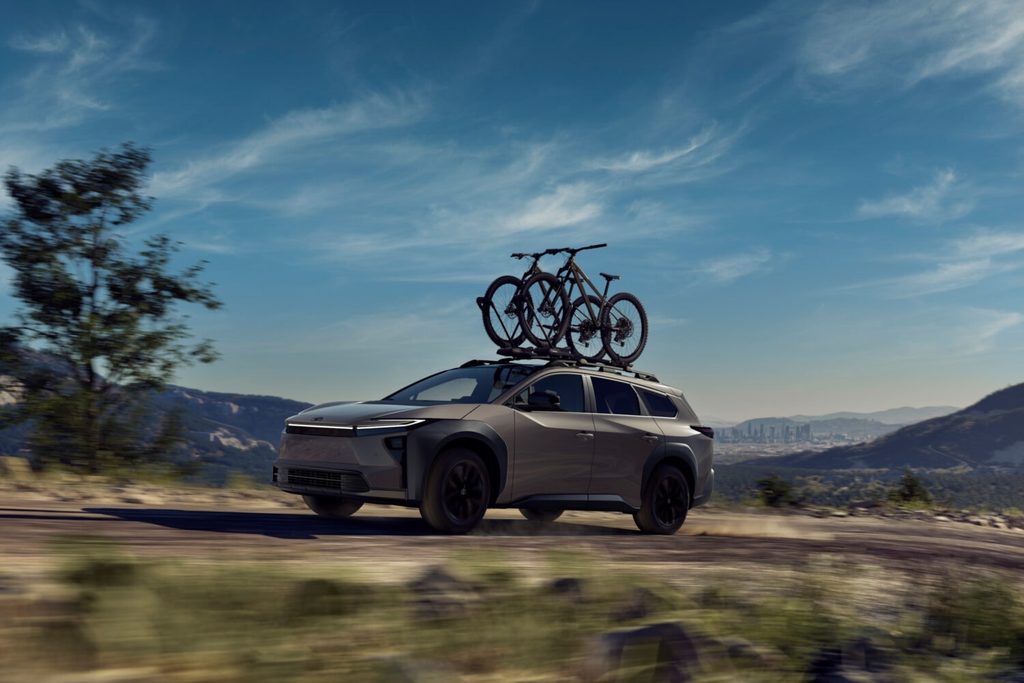
The larger van rides E-GMP.S architecture and sits above the PV5 in Kia's Platform Beyond Vehicle lineup.
Kia released teaser images of the PV7 on 2 September 2026. The van is bigger than the PV5. It debuts in twelve days. Hannover gets the world premiere — and European emissions deadlines give it urgency.
The PV7 is Kia's second dedicated Platform Beyond Vehicle model and its first electric van sized for the core light commercial segment above 3.5 tonnes gross vehicle weight consideration. European CO₂ targets for vans tighten to 50 g/km by 2030 under EU Regulation 2019/631, according to the European Commission's regulatory text, amended February 2023 — a threshold that makes a credible large-van EV entry commercially necessary for any OEM selling volume in Europe.
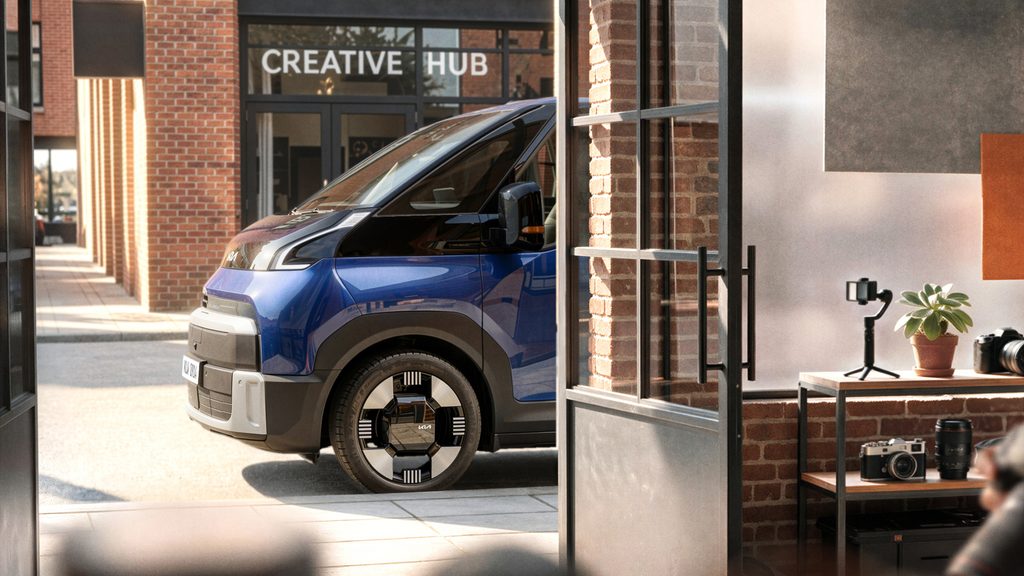
One-Box Body, Black Pillars, and a September Stage
Kia's teaser pack dropped Tuesday morning, 2 September 2026, showing the PV7 in at least three settings: a delivery context, a leisure configuration, and a static three-quarter front shot. The body follows a strict one-box profile — no stepped roofline, no pronounced hood rake. Pillar and hood trim run in gloss black, cutting against the body colour in a contrast pattern already used on the EV6 and EV9. Front and rear lighting signatures mirror the PV5's horizontal lamp clusters. The van is shown without interior images. No powertrain figures appeared in the release. The world premiere is fixed for Sunday, 14 September 2026, at IAA Transportation in Hannover's Messegelände. Alongside the PV7, Kia will display PV5 Crew Van and PV5 Chassis Cab derivatives at the same stand — broadening the picture of what the Korean OEM's global commercial EV expansion looks like in practice.
Where the PV7 Sits in the Market Arithmetic
Europe's electric light commercial vehicle market reached 94,300 units in 2024, according to the ACEA's Commercial Vehicle Registrations report, published February 2025 — up from 71,400 in 2023, a year-on-year gain of 32 percent (94,300 ÷ 71,400 = 1.32). The PV5 targets the compact segment around 5.5 m overall length. The PV7 is expected to run closer to 5.9–6.1 m, the slot occupied by Ford Transit and Stellantis' Citroën ë-Jumper. Battery capacity for the Transit Custom PHEV sits at 11.8 kWh; the Citroën ë-Jumper's largest pack is 79 kWh offering 420 km WLTP range. If Kia prices the PV7 within 10 percent of those figures — a reasonable assumption given PV5 positioning in the €35,000–€45,000 band reported at its 2025 launch — the total addressable market for a van this size in the EU27 plus Norway was 41,200 units in 2024, per the same ACEA document.
E-GMP.S: What the Platform Charter Actually Covers
Hyundai Motor Group filed platform documentation for E-GMP.S with the Korean Ministry of Land, Infrastructure and Transport under vehicle type approval reference KR-EV-PBV-2024-003, disclosed in the Group's 2024 Sustainability Report, Section 4.2, published April 2025. The document describes E-GMP.S as a skateboard-type electric architecture with a flat floor optimised for cargo volume, variable wheelbase between 3,000 mm and 3,600 mm, and structural battery integration rated at up to 100 kWh usable capacity. That wheelbase range is wider than the standard E-GMP used in the IONIQ 5 and EV6 — which runs a fixed 3,000 mm — giving body engineers more room to accommodate long-wheelbase van proportions. Kia confirmed the PV7 sits on E-GMP.S in the same teaser release. What the company did not confirm: motor output, towing rating, or the number of body variants planned at launch. Those gaps matter: the Volkswagen ID.Buzz Cargo, a direct rival, lists 150 kW rear motor and 1,000 kg payload in its European specification sheet.

PV7 Against the Field — and Kia's Own ZEV Record
Kia's electric van ambitions arrive against a mixed commercial backdrop. Kia UK crossed 100,000 cumulative EV sales earlier in 2026 while simultaneously calling the ZEV mandate's pace unrealistic — a tension that underscores how commercial volumes and regulatory timelines are pulling in opposite directions. In the large electric van segment specifically, Mercedes-Benz eSprinter recorded 8,400 European registrations in 2024 versus Volkswagen's ID.Buzz Cargo at 4,100, per ACEA's February 2025 data — meaning the top two incumbents together hold roughly 30 percent of a 41,200-unit pool. Kia sold zero purpose-built electric large vans in that period. A credible PV7 entry — assuming 5,000 units annually by year two, a figure in line with Renault Master E-Tech's 2024 ramp — would give Kia approximately 12 percent of the current segment total. Trade tariff uncertainty adds another variable: U.S. truck tariffs at 25 percent and European IVA tightening discussions are reshaping commercial vehicle cost structures across the board.
The Platform Is Confirmed. The Powertrain Isn't.
Here is what Kia has not said. No kilowatt figure for the motor. No battery size beyond the platform ceiling of 100 kWh. No payload number, which is the single figure commercial buyers check first when comparing vans at point of tender. No confirmed pricing band, no market launch date beyond an implied 2027 production start inferred from the model year designation in teaser metadata. The omissions are deliberate — IAA press conferences are the venue for numbers — but they leave a gap. Rivals have not been silent. Mercedes-Benz published full eSprinter specifications fifteen months before customer deliveries began. Volkswagen released ID.Buzz Cargo payload and range data at reveal. Kia's phased disclosure approach worked for the EV9, where design teasers preceded full specs by four months. For a commercial vehicle, where procurement cycles run 12–18 months and fleet tender deadlines are fixed, late specification release can cost order share before the van turns a wheel. Max Holst, head of commercial vehicle procurement at DSV Road A/S, said in a March 2026 interview with Transport Intelligence that his team requires firm payload and range data 'no later than six months before order book opening' to include a model in a competitive tender. Kia has not confirmed when the PV7 order book opens.
Kia's PBV roadmap reportedly extends to a PV9 above the PV7 — a full-size electric van segment where no Korean OEM currently holds volume in Europe. IAA Transportation in Hannover runs 16–21 September 2026, giving Kia seven days of show-floor exposure to commercial operators across 130 countries. The complete Kia model history and specifications are catalogued in the Global Auto Index manufacturer database.
