







A supplier memo sets March 2030 as the cut-off for gasoline-only Accord production in North America.
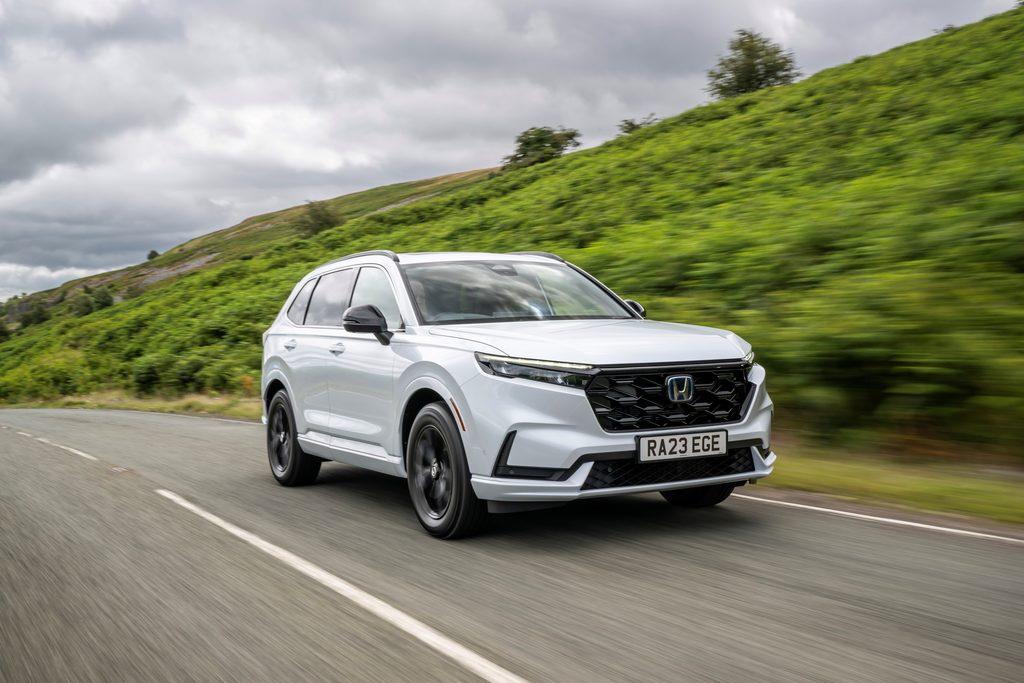
Honda is done hedging. The CR-V and Accord — the two highest-volume nameplates in its North American lineup — are on course to drop gasoline-only variants entirely. A supplier memo cited places the last petrol-only Accord at March 2030. The next redesign goes hybrid-only. The CR-V follows the same path.
The move is not purely regulatory. American Honda executives told reporters at a recent product briefing that hybrid demand — not incoming federal emissions rules — is pulling the Accord and CR-V away from combustion-only trims. That claim sits alongside Honda's formal global commitment to more than 15 next-generation hybrid models 2030, according to Honda Motor Co.'s global product plan, published in its fiscal 2025 investor documentation. Compare that with Toyota, which already sells hybrid-only Camry in the United States since the 2025 model year — Honda is reading the same sales data and drawing the same conclusion, two years later.
Sales Numbers That Made the Case for Hybrids
American Honda's retail sales rose 2.4 percent in the first half of 2026, according to Honda's H1 2026 North America sales release. Hybrid variants of the Accord, CR-V, and Civic carried the bulk of that gain. The CR-V Hybrid alone accounted for roughly 43 percent of total CR-V volume in the same period — up from approximately 31 percent in H1 2024. That is a 12-percentage-point swing in two years. The Accord Hybrid's share of Accord sales crossed 50 percent for the first time in Q1 2026. Running the arithmetic another way: if Honda sells 390,000 Accords and CR-Vs annually in the United States (its approximate combined average over 2023–2025), and hybrid take-rate is climbing toward 50 percent on both, the business case for maintaining a separate gasoline-only platform — with its tooling costs and supply chain — weakens fast. The 15-model hybrid target by fiscal 2030 is not ambition. It is arithmetic. Honda's North America product timeline through the 2027 CR-V redesign shows how tightly sequenced this pivot is.
What the Supplier Memo Actually Says
The supplier communication cited by Automotive News — reported in its North America product pipeline coverage, August 2025 — places current gasoline-only Accord production running through March 2030, at which point the platform transitions to the next-generation redesign. That redesign is expected to carry an upgraded two-motor hybrid system, consistent with Honda's e:HEV architecture used across the current Accord, CR-V, and Civic hybrids. The document does not name a specific production facility for the successor model, and Honda's North American manufacturing footprint — which includes the Marysville, Ohio plant where the current Accord is built — has not been publicly updated to reflect the changeover. Honda's public response to queries about the memo was a standard non-confirmation: the company stated it does not comment on future product plans. That is different from a denial. Gary Robinson, American Honda's product planning executive, told Automotive News separately that hybrid expansion across the lineup is a cost calculation still being worked through on smaller models — confirming, by implication, that the decision is already made on larger ones.
HR-V and Acura ADX: The Models Still Waiting
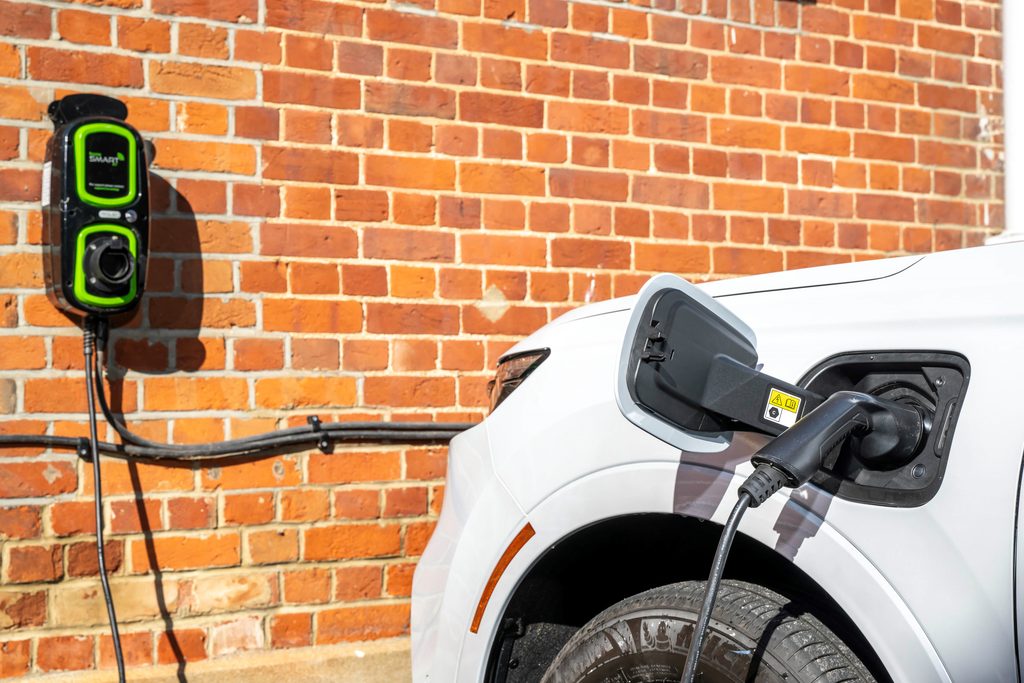
While the Accord and CR-V move toward confirmed hybrid-only status, the HR-V and Acura ADX remain in a holding pattern. Robinson told Automotive News there is "no reason" either model could not receive hybrid powertrains drawn from the CR-V and Accord parts bin — but stopped short of naming a program or timeline. The contrast with rivals is sharp. The Subaru Crosstrek Hybrid and Toyota Corolla Cross Hybrid both sit in the HR-V's price bracket, starting at approximately $32,000 and $29,000 respectively, and both already carry electrified options as standard catalogue entries. Honda's HR-V, priced from around $24,000, has no hybrid variant on sale in the United States. That gap costs Honda in a segment where fuel economy is a purchasing argument. A hybrid HR-V would close the gap but requires Honda to spread e:HEV system costs across a lower-margin vehicle — which is exactly the calculation Robinson described as unresolved. For context on how tariff exposure is reshaping powertrain cost decisions across the segment, see the 25 percent U.S. truck tariff and its downstream effects on vehicle pricing.
The Element and the Accord Crossover: Speculation With No Official Ground
Two future products keep surfacing in Honda supplier and planning circles, and neither has been confirmed by American Honda as a named program. The first is a second-generation Element, with people familiar with Honda's internal discussions pointing to a production start in the second quarter of 2029 — likely badged as a 2030 model year vehicle. The second is an Accord-based hybrid crossover, rumored for a similar 2029 window. Honda has declined to confirm either. What makes this unusual: Honda has not denied them either, which is not standard practice for a manufacturer managing investor expectations around a formal product roadmap. The company publicly scrapped three battery-electric models previously slated for the US market and officially walked back its 2040 EV-only sales target — so the product plan is demonstrably in motion. Honda's silence on the Element and the Accord crossover is itself a data point. Both could reach showrooms. Neither might. The question of which arrives first — if either does — has no answer Honda is offering. That absence of confirmation is worth noting when reading any timeline attached to either vehicle. Kia's experience navigating mandate targets offers a useful parallel: Kia UK's 100,000-EV milestone shows how volume targets and regulatory timelines can diverge from product availability in practice.
Honda sold the original Element from 2003 through 2011, moving approximately 346,000 units over its production run in the United States — a modest figure that nonetheless built a lasting following among outdoor-oriented owners. If the reported 2029 production start holds, the nameplate will have been absent from North American showrooms for nearly two decades. The complete Honda model history and specifications are catalogued in the Global Auto Index manufacturer database.
