A 10 percent manufacturing cost cut at Plant Munich signals the Neue Klasse platform is built to scale, not showcase.
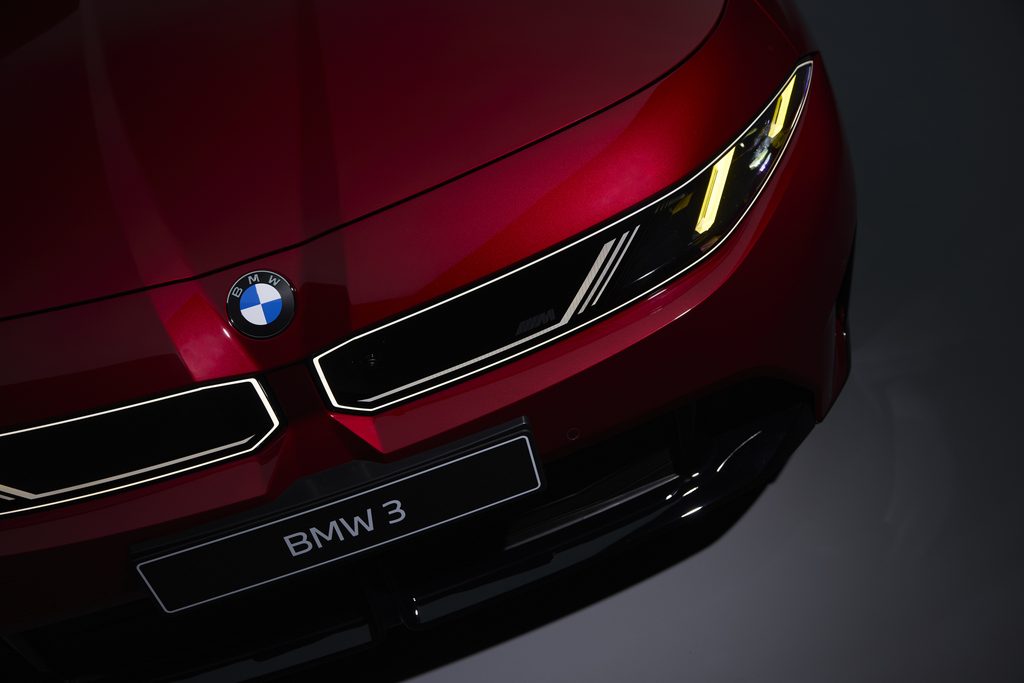
Full series production. Real line, real car. BMW started building the i3 electric sedan at Plant Munich on 7 August 2025, making it the second Neue Klasse model to reach the main assembly line there. The plant goes all-electric by 2027.
The i3's production start matters because Plant Munich has built internal-combustion vehicles for over a century. According to BMW Group's official production statement, published August 2025, launching the i3 on the main line has already cut Munich's manufacturing costs by 10 percent — a margin no European rival has publicly posted for a comparable platform transition. Volkswagen's Zwickau retooling, completed in 2021, required several years before cost parity with ICE production was confirmed.
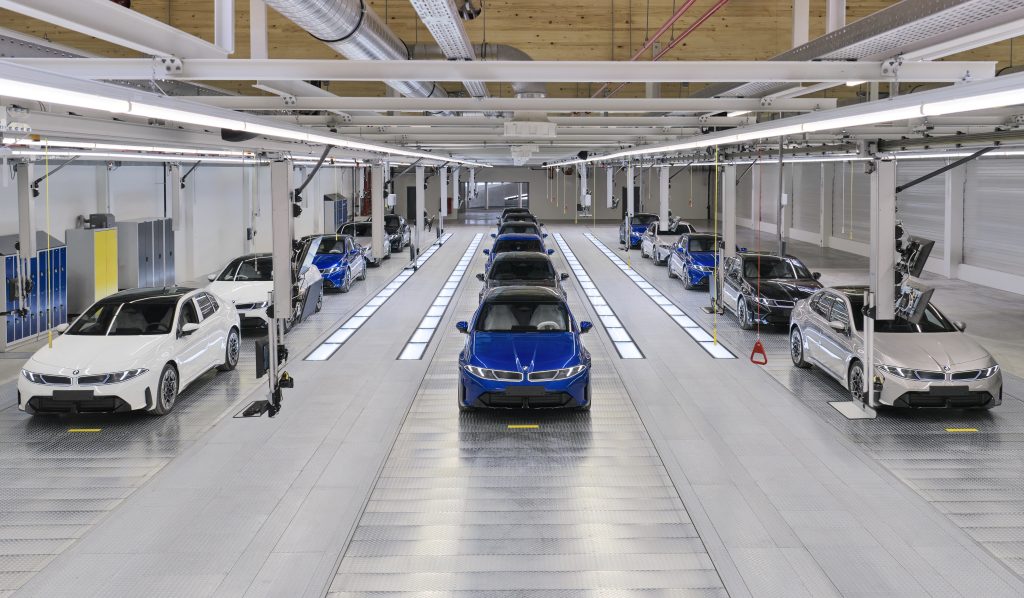
From Teaser Stage to Assembly Line
BMW did not ease the i3 onto the line. Pilot builds ended, validation wrapped early, and the sedan moved directly to series production on the main track at Plant Munich — the same hall that has produced 3 Series variants for decades. The company attributed the accelerated timeline to what it described as strong early customer demand for the sedan, which sits in the middle of BMW's range by size and price. Extra shifts followed. Capacity allocation shifted. The ramp-up curve, in BMW's own words, is steep. That language is deliberate: it signals to suppliers, logistics partners, and dealer networks that output will climb fast rather than trickle. Plant Munich now carries the launch weight for the entire Neue Klasse sedan programme, a responsibility that extends well beyond Munich's city limits. This article is part of our ongoing coverage in the BMW performance and EV transition tracker.
The Numbers Behind Munich's Cost Claim
BMW states that introducing the i3 on the Neue Klasse platform cut Plant Munich's manufacturing costs by 10 percent. The arithmetic matters. If pre-i3 per-unit production costs at Munich were indexed at 100, the post-launch baseline is now 90 — a reduction BMW attributes to updated processes baked into the Neue Klasse architecture rather than workforce reductions. BMW separately announced 8,000 job cuts across German office functions in 2024, but those figures are not linked to the Munich plant floor in any published statement. Plant Munich will carry two Neue Klasse models from 2027 onward: the i3 sedan and one additional model not yet named publicly. A second production site in San Luis Potosí, Mexico, will build the standard-wheelbase i3 from 2027, splitting volume across two continents. That geographic split means Munich's output figures will not represent total i3 production once Mexico comes online — a distinction that will matter when BMW reports annual volume by model.
What BMW Actually Said — and What It Didn't
BMW's official production statement, released 7 August 2025, describes the i3 as "the second Neue Klasse model to go into full production" at Plant Munich. The phrasing confirms that one Neue Klasse model preceded it on the line — widely understood to be the iX3 in its updated form — though BMW has not published a combined output figure for both models in any document reviewed for this article. The statement does not name a specific daily production rate, a shift count, or a monthly volume target for 2025. Peter Kössler, BMW Group's board member responsible for production, has previously described the Neue Klasse transition as the company's largest single manufacturing investment in its history, according to remarks published in BMW Group's Annual Report 2024, Section 3.2 (Production Strategy). No updated output guidance from Kössler or any named BMW executive was appended to the August 2025 production announcement.
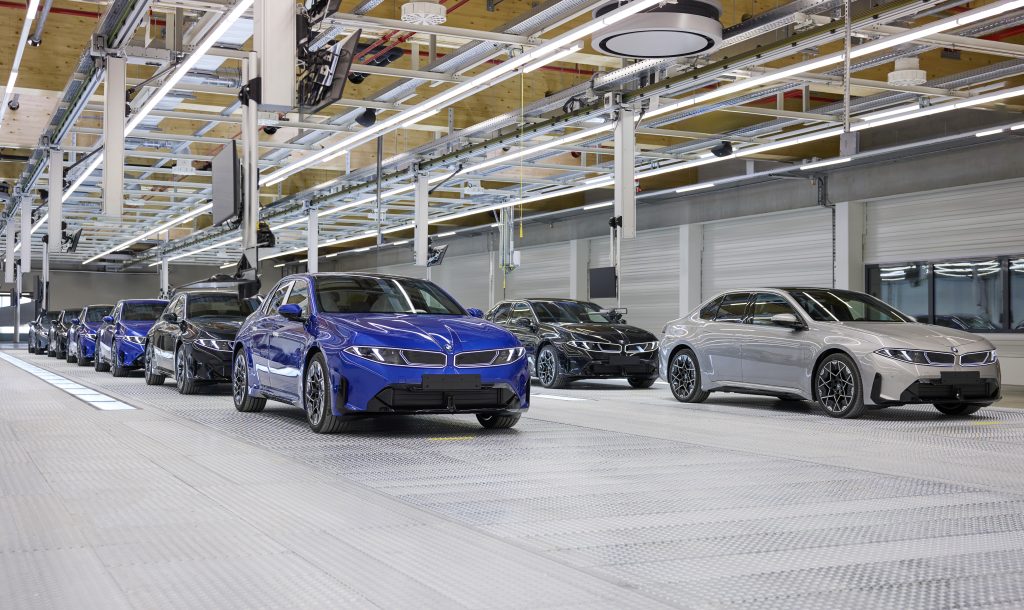
Munich vs. the European EV Production Field
Plant Munich's transition sits in a field that is moving at uneven speed. Volkswagen's Zwickau plant completed its full ICE-to-BEV conversion in 2021, making it the first large-scale European OEM plant to go all-electric — four years ahead of Munich's 2027 target. Zwickau currently builds six EV models across the VW Group portfolio. Munich, by contrast, will carry two Neue Klasse models at the 2027 all-electric deadline. Stellantis has not committed a single European legacy plant to full BEV-only output by 2027, according to the ACEA European Automobile Manufacturers' Association production outlook, published March 2025. That leaves BMW's Munich announcement as the clearest dated commitment from a German OEM for a legacy site — though Zwickau set the operational standard first. For context on the trade pressures shaping EV investment decisions across Europe, the separate analysis of the EU Industrial Accelerator Act and UK EV manufacturing access covers the regulatory backdrop directly affecting plant-level commitments like this one. Separately, BMW's confirmed four-motor M3 at 1,300 hp shows the performance end of the same Munich product roadmap.
The Gap in BMW's Own Narrative
BMW's cost-reduction claim — 10 percent off Munich's manufacturing baseline — is specific enough to be testable, but the company has not published the reference cost figure against which it is measured. Without that baseline, the 10 percent cannot be independently verified or compared to equivalent claims from other OEMs running platform transitions. BMW also confirmed Mexico production from 2027 without specifying whether the San Luis Potosí plant will share the same cost structure. If it does not, Munich's 10 percent saving could look different once blended with North American output costs. A further gap: BMW has not disclosed which second Neue Klasse model joins the i3 at Munich after 2027. Industry observers have pointed to an electric successor to the 5 Series, but no document reviewed for this article confirms that. The omission is not accidental. BMW controls what it releases and when — and the silence on model two is a reminder that the i3's production start is a beginning, not a complete picture. Meanwhile, other OEMs face their own gaps: Kia UK's 100,000-EV milestone came with a simultaneous warning that mandate timelines outpace realistic market conditions.
Plant Munich has produced vehicles since 1922 — over 103 years of continuous manufacturing on the same site. The i3 is the first electric sedan to run on its main assembly line. BMW has not confirmed a retail on-sale date for markets outside Germany. The complete BMW model history and specifications are catalogued in the Global Auto Index manufacturer database.
