







Frank van Meel ruled out the iM3 badge at Goodwood, ending months of speculation about a naming split.
The electric M3 will be called M3. That's it. BMW M chief Frank van Meel said so directly at the Goodwood Festival of Speed, shutting down iM3 badge speculation that had circulated since BMW announced the electric performance sedan's existence.
The naming decision matters because it signals how BMW intends to manage badge identity across its transition away from combustion-only performance cars. According to Bimmer Today's interview published July 2025, van Meel confirmed the M3 name has survived four powertrain generations — four-cylinder, six-cylinder, V8, and M xDrive — without change. The 2027 electric car simply becomes the fifth configuration. Mercedes-AMG, , has split its EV performance identity under the EQ sub-brand, giving BMW's choice a distinct commercial logic.
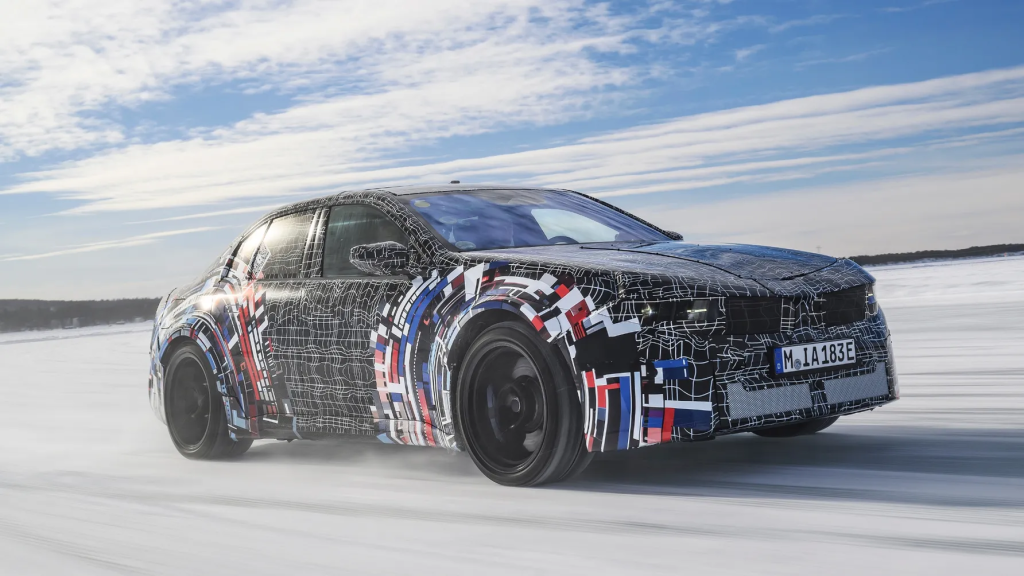
Van Meel Closes the Debate at Goodwood
Speaking to Bimmer Today during an interview conducted at the Goodwood Festival of Speed on the weekend of July 12–13, 2025, Frank van Meel, CEO of BMW M GmbH, left no room for ambiguity. His words: 'Of course it's called M3. An M3 was always an M3. Whether it was a four-cylinder, six-cylinder, V8, or had M xDrive, it simply said M3 on it. That doesn't change even if it's electric.' The statement directly refuted a wave of reports claiming the car would adopt the iM3 designation to align it visually with BMW's broader 'i' electric vehicle family. Van Meel did not address why the iM3 label gained such traction internally or in press speculation — that question went unanswered at Goodwood. The electric M3 is due to break cover in 2027 as the production realisation of the M Concept Neue Klasse shown in 2026.
One Name, Four Decades, Five Powertrains
The M3 nameplate turns 40 in 2025, first appearing on the E30 homologation special introduced in 1985 for the 1986 model year. That original car used a 2.3-litre four-cylinder producing around 195 hp. The S58-engined G80 generation, the car the electric M3 will temporarily replace, produces 503 hp in Competition xDrive trim. That is a 158% increase in output across four decades: (503 − 195) ÷ 195 × 100 = 158.5%. The 2027 electric M3 is confirmed at 1,300 hp across four motors, which would represent a further 158% jump over the G80 Competition xDrive figure — a numerical coincidence that the M division has not commented on. Five distinct powertrain configurations will have shared the same three characters on the bootlid by the time the four-motor car reaches customers.
A Year With No Combustion M3 — And No Official Explanation
Here is the gap BMW has not clearly addressed. The current G80 M3 exits production sometime in 2027. The next inline-six M3 — internally referenced as the G84 — is not expected until late 2028. That leaves a window of roughly 12 months during which the electric car will be the only M3 on sale. BMW M has not published a formal statement explaining how it will handle customer communications, pricing continuity, or allocation during that period. Van Meel confirmed the overlap situation during the same Bimmer Today interview but offered no specifics on the transition timeline. The absence of detail is notable given that the ZEV mandate pressure on European dealers — highlighted in analyses such as Kia UK's public criticism of ZEV mandate pace — makes the sales gap commercially sensitive. Whether BMW's German dealer network receives bridging support during that window has not been confirmed.
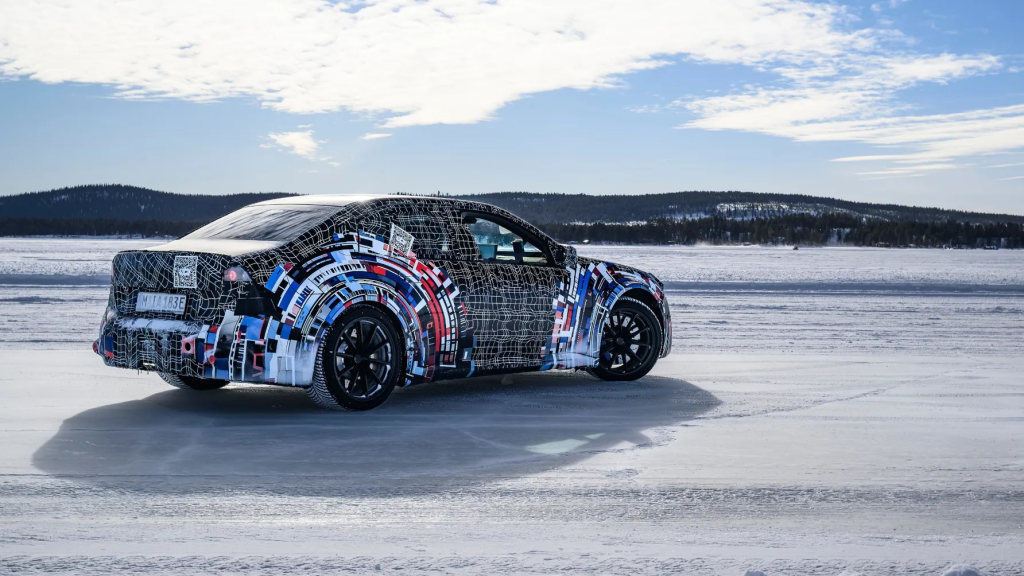
How BMW's Badge Choice Diverges From Its Rivals
BMW's refusal to prefix the electric M3 with 'i' separates it from the approach taken by two direct competitors. Mercedes-AMG routes its electric performance vehicles through the EQ sub-brand — the AMG EQS 53 4MATIC+ carries a starting price of approximately €149,000 in Germany, and its naming keeps combustion AMG models visually distinct. Porsche has maintained the 911 name regardless of powertrain across its product range but has not yet produced a fully electric 911, so the comparison is partial. BMW itself applies the 'i' prefix to mass-market electric models — i4, i5, i7 — but van Meel's statement makes clear the M division considers performance heritage to outweigh naming consistency with the broader EV line. That distinction has a precedent inside the M portfolio: the M2 has never carried an 'iM2' designation despite the wider 2 Series receiving the i2 variant in several markets. BMW has not published a written naming-policy document covering M-badged EVs as of July 2025.
What the Naming Lock-In Means for the M Performance Tier
Van Meel's Goodwood statement carries a consequence beyond the M3 itself. He confirmed during the same interview that the next-generation 3 Series will receive M Performance treatment with a combustion engine — the M350 xDrive, which appeared inadvertently on BMW USA's website earlier in 2025 before being removed. He also indicated the likelihood of an electric M Performance variant, expected to wear an i3 M60 xDrive badge, sitting below the full electric M3 in the hierarchy. That gives the 3 Series family potentially four distinct M-adjacent variants simultaneously: the electric M3, the G84 inline-six M3 arriving in 2028, the M350 xDrive, and the electric i3 M60 xDrive. Dealers in markets facing import tariff exposure — see the 25% U.S. truck tariff and European IVA discussions — will need to navigate a four-car configuration matrix for a single model line, a complexity BMW has not addressed in any published retail guidance.
The M3 name has appeared on six distinct body generations since 1986, spanning E30, E36, E46, E90, F80, and G80 platforms. BMW M has not confirmed whether the electric car will introduce a new internal platform code or share architecture with the Neue Klasse passenger car series underpinning the i3. Production of the G80 is scheduled to conclude at BMW's Regensburg plant, which has built every M3 generation since the E46. The complete BMW model history and specifications are catalogued in the Global Auto Index manufacturer database.
