







Four German plants — Emden, Hanover, Zwickau, Neckarsulm — face unconfirmed futures past 2030, the document states.
A memo circulated inside Volkswagen Group puts 100,000 total job cuts on the table. Reuters saw it. The company has not denied it exists. CEO Oliver Blume told staff costs run 20 percent above comparable rivals — and the current plan isn't fixing that.
The existing programme already targeted 50,000 redundancies and a one-million-unit reduction in annual production. Doubling the job figure would make this the deepest single-group restructuring in European automotive history since General Motors wound down Opel's Antwerp plant in 2010. According to Reuters reporting published July 2025, the memo frames the additional 50,000 as 'theoretical' but explicitly unresolved. Volkswagen Group has not issued a formal denial.
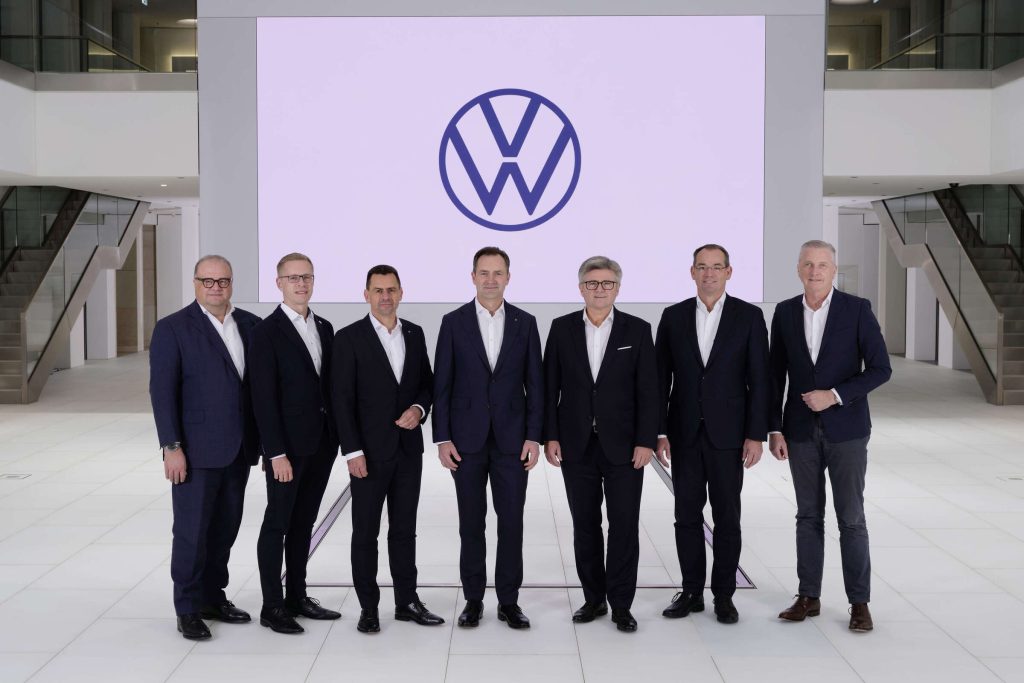
What the Memo Says — and Doesn't
The internal document, described by Reuters in its July 2025 dispatch, contains a phrase that has since travelled through German media: a "theoretical deduction" of an additional 50,000 positions across the Group's brands and production network. The memo does not specify which divisions absorb those losses, nor does it set a timeline. Section language quoted by Reuters stops short of authorising cuts — Blume's own framing to employees, according to the same report, acknowledged the expanded plan has not been "fully fleshed out." That hedge matters. A theoretical figure in an internal document is not a board resolution. But internal memos at this level rarely circulate without sanction, and the absence of a formal correction from Wolfsburg since the story broke is telling. Volkswagen Group's press office had not responded to a request for clarification as of the time of publication. Our coverage of European automotive industry restructuring in 2026 tracks this and related developments across the sector.
The Arithmetic of the Crisis
Start with the numbers Blume confirmed publicly. The Group already announced 50,000 job cuts. The memo adds a further 50,000 theoretical positions: 50,000 + 50,000 = 100,000 total. Volkswagen Group employed approximately 684,000 people worldwide as of its most recent annual report. A 100,000-person reduction represents 14.6 percent of that workforce — roughly one in seven employees. On production, the Group planned to cut one million units from annual output. For context, one million vehicles equals roughly the entire yearly production capacity of Audi globally. The cost gap Blume cited — 20 percent above comparable-sized manufacturers — translates to a structural disadvantage that grows with volume: at 9 million units per year, even a €500-per-vehicle cost premium compounds to €4.5 billion annually. The Group's China sales fell 25.9 percent in the first half of 2026, according to Motor1's reporting of VW Group figures, removing the margin buffer that absorbed European inefficiency for a decade.
Blume's Public Statement vs. the Internal Picture
Days before the memo surfaced, Oliver Blume released a statement that read, in part: "We are making the Volkswagen Group faster, more resilient and more competitive: through less complexity, focused technologies, an even stronger alignment of products, development and production with regional markets, the reduction of overcapacities, a streamlined equity portfolio and significantly leaner structures." Read against the memo, that language takes on a harder edge. "Reduction of overcapacities" now maps directly onto four named German facilities. "Leaner structures" aligns with the theoretical 50,000 figure. Blume has said publicly he opposes plant closures. The memo, however, contains a passage that Reuters characterised as an admission: "As of today, we still cannot confirm competitive use cases for the plants of Emden, Hanover, Zwickau, and Neckarsulm in the 2030s." Opposing closures while being unable to justify a plant's future use is a position that cannot hold indefinitely — and the Group's works council, IG Metall, will read that sentence the same way.
The Plants That Build the EVs VW Is Banking On
Here is the contradiction embedded in the four-plant warning. Emden assembles the ID.4, ID.7, and ID.7 Tourer — three of the Group's active battery-electric products. Zwickau builds the ID.3, ID.4, ID.5, Audi Q4 E-Tron, Q4 Sportback E-Tron, and the Cupra Born. Both facilities were converted at significant capital cost specifically to produce the electric vehicles the Group told investors represented its future. Writing off their 2030s viability now implies either that EV demand has not materialised at the volumes those conversion investments assumed, or that manufacturing costs at those sites remain uncompetitive even after the transition spend. Neither reading is comfortable. Hanover, which builds the ID. Buzz alongside the Transporter range, was cited in ACEA production data as one of Germany's highest-volume commercial-vehicle facilities as recently as Q4 2024. Neckarsulm — Audi's plant — carries the A6, A8, and E-Tron GT. The E-Tron GT's production volumes have never approached the facility's rated capacity. That gap has been visible since 2022. The spare capacity problem is not unique to Volkswagen Group among European manufacturers.
What Happens to the Golf, the Models, and the Workers
The Group has already confirmed Golf production moves to Mexico from 2027, a decision that removes Wolfsburg's most symbolically weighted product from German soil for the first time. Separately, Volkswagen Group is reported to be eliminating up to half of its model variants and cutting available options by 75 percent — a rationalisation that affects every brand from Volkswagen to Porsche. For IG Metall, Germany's largest industrial union, a doubling of the redundancy target breaks the ceiling set in agreements reached during 2024 negotiations. Hans-Jürgen Hartung, head of the VW works council's Emden delegation, had not commented publicly on the new memo figure by press time — but the union's position since late 2024 has been that any site closures require 24 months' notice minimum and full social plan funding. The Group's Brussels plant, which closed in 2025 along with Dresden's ID.3 line, consumed several months of legal and union proceedings before final shutdown. Multiplying that process across four facilities simultaneously would tie management in negotiations well into the 2027 product cycle. For comparison, U.S. tariff pressure on European truck exports is adding a parallel cost burden that compounds Wolfsburg's options math.
Volkswagen Group reported a net profit of €10.6 billion for full-year 2023 — its last comfortable annual result before the China volume collapse and European EV demand shortfall hit simultaneously in 2024. The Brussels closure in 2025 marked the first full European factory shutdown in the Group's post-Dieselgate era. Two more followed in Dresden. The complete Volkswagen Group model history and specifications are catalogued in the Global Auto Index manufacturer database.
