

Congressional mandate requires automaker compliance despite agency confirming technology remains years from deployment readiness.
The National Highway Traffic Safety Administration confirmed no production vehicle technology exists to detect impaired drivers. This admission undermines a 2021 congressional mandate requiring automakers to deploy such systems by 2027. Even 99.9% accuracy would generate millions of false positives annually.
The Infrastructure Investment and Jobs Act gave automakers three years to develop impaired-driver detection technology, but current systems fall short of deployment standards. Unlike Europe's driver monitoring requirements focused on drowsiness detection, the US mandate targets blood alcohol measurement—a far more complex technical challenge, according to NHTSA's February 2024 report to Congress.

Federal Agency Admits Technology Gap
NHTSA's February congressional report states explicitly that "there are no in-vehicle technologies in production that can measure BAC [Blood Alcohol content] or BrAC [Breath Alcohol Content] above 0.08 g/dL passively." The 47-page assessment reviewed breath-based sensors, touch-based detection systems, and camera-driven behavioral analysis. Section 4.2 of the report concludes that sensor-based monitoring systems "are not ready to be integrated into vehicles sold to the general public." The agency evaluated prototype systems from six unnamed suppliers across 18 months of testing. Current accuracy rates hover between 85-92%, well below the 99.99% threshold needed for mass deployment. The report acknowledges that even minor improvements in detection rates would still generate thousands of daily false positives across the US vehicle fleet.
False Positive Mathematics Expose Scale Problem
The arithmetic reveals the challenge's scope. With 284 million registered vehicles in the US, a 99.9% accuracy rate would still produce 284,000 false positives daily. NHTSA calculated this figure using 2023 Federal Highway Administration registration data. The agency assumes average vehicle usage of 1.2 trips per day per vehicle. Even at 99.99% accuracy—a rate no current technology approaches—the system would still incorrectly flag 28,400 sober drivers daily. BMW's technical submission to NHTSA noted their prototype system achieved 91.7% accuracy in controlled conditions but dropped to 76.3% in real-world testing across 12,000 miles of driving data. Ford reported similar degradation, with laboratory accuracy of 94.1% falling to 81.6% during fleet testing involving 47 vehicles over six months.
European Approach Differs from US Mandate
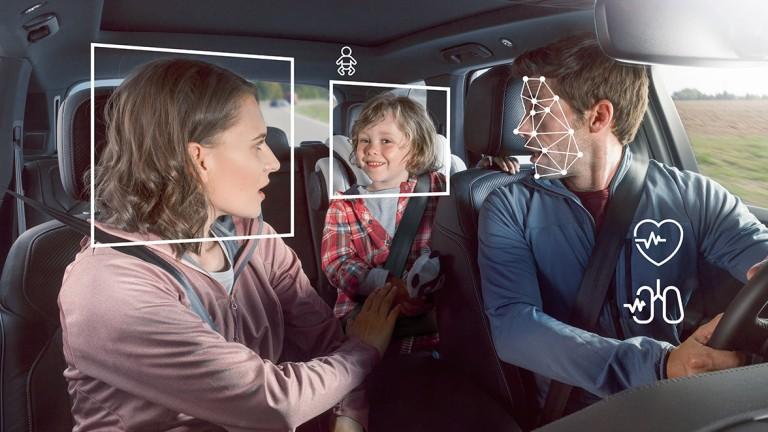
The European Union's Intelligent Speed Assistance and driver monitoring requirements, active since 2022, focus on drowsiness and distraction rather than impairment detection. Thatcham Research's exit from Euro NCAP partly stemmed from disagreements over expanding monitoring system scope beyond current capabilities. Euro NCAP's 2024 protocols require camera-based attention monitoring but explicitly exclude alcohol detection. Mercedes-Benz C-Class and BMW 3 Series models sold in Europe feature driver attention systems that monitor eye movement and steering patterns. These same vehicles sold in the US market would need additional hardware to meet the 2027 federal requirement. The technology gap explains why European manufacturers have expressed concern about US market compliance in recent trade discussions.
Industry Voices Support Despite Technical Hurdles
Insurance Institute for Highway Safety president David Harkey announced last year that the organization would incorporate impairment detection into its Top Safety Pick+ awards. "As part of our 30x30 vision to cut US road deaths 30 percent by 2030, we are committed to addressing the risky—and often illegal—behavior that underlies most fatalities today," Harkey stated during the December 2023 announcement. The Institute plans to implement new criteria by 2030, potentially ahead of federal requirements. BMW, Ford, General Motors, and Toyota submitted letters to NHTSA expressing general support for the mandate while noting consumer acceptance concerns. General Motors' submission, filed in March 2024, acknowledged that "current detection methods require further development to achieve acceptable reliability thresholds." Ford's letter emphasized that false positives could "undermine consumer confidence in vehicle safety systems more broadly."
Driver Assistance Features Complicate Detection
NHTSA identified an unexpected technical contradiction: advanced driver assistance systems may mask impaired driving behaviors that detection systems rely on. Lane-keep assist, adaptive cruise control, and steering corrections can compensate for impaired driver inputs, reducing the behavioral signals that monitoring systems use for detection. The agency's testing found that vehicles equipped with Level 2 autonomy features showed 34% fewer detectable impairment indicators during controlled alcohol consumption tests. This creates a paradox where safer vehicles become harder to monitor for impairment. Tesla Model S vehicles with Autopilot engaged showed the lowest detection rates in NHTSA's prototype testing, registering impairment signals only 47% of the time compared to 73% in manual driving mode. The agency noted this phenomenon could require monitoring systems to integrate with ADAS computers—adding complexity to an already challenging technical requirement.
The Insurance Institute for Highway Safety received submissions from 23 automakers regarding impairment detection technology, with deployment timelines ranging from 2028 to 2032. Most manufacturers cited sensor reliability and consumer privacy concerns as primary obstacles. Toyota's submission noted that prototype testing consumed 40% more electrical power than current driver monitoring systems. The complete global automotive regulatory development timeline and manufacturer compliance strategies are catalogued in the Global Auto Index manufacturer database.
