







Blue Oval argues forced electric transition could make drivers keep older, dirtier cars longer
Ford Europe warns that accelerating electric vehicle mandates could produce the opposite environmental effect. Consumers might keep older cars longer. The company's market share fell to 2.8 percent in Q1 2026 as it dropped core models.
The warning comes as Ford faces massive strategic shifts in Europe, where EV registrations reached 20.6 percent in Q1 2026 versus 19.5 percent for all of 2025, according to the European Automobile Manufacturers' Association monthly report published April 2026. Ford abandoned its 2030 combustion phase-out pledge amid slower-than-expected adoption rates.
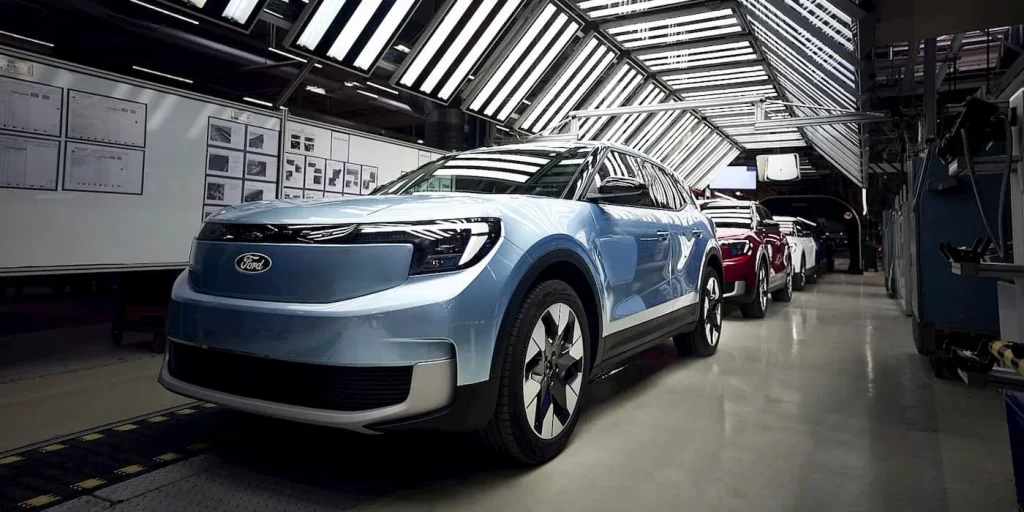
Market Reality Check
Ford Europe President Jim Baumbick frames the challenge in terms of consumer behavior rather than technology readiness. "CO2 targets must reflect actual consumer demand and infrastructure reality," according to Ford's position statement issued this month. "Forcing a transition faster than the market can move risks slowing the vehicle renewal rate – a critical factor in reducing emissions." The company argues that buyers deterred by EV prices or charging concerns will simply defer purchases entirely. This leaves higher-emission older vehicles on roads longer than planned under EU climate models. Kia UK recently echoed similar concerns about mandate timing versus infrastructure readiness.
Penalty Mathematics
The financial stakes mount rapidly under current EU rules. Automakers face 55 percent CO2 reduction targets by 2030 versus 2021 levels, followed by 90 percent cuts by 2035. Volkswagen Group already projects €1.5 billion in fines for the 2025-2027 period alone. Ford's registrations dropped 14.6 percent to 100,056 units in Q1 2026, falling below Fiat by nearly 2,000 vehicles. The company's passenger car market share sits at just 2.8 percent, down from higher levels before discontinuing the Fiesta, Focus, Mondeo and Galaxy. Each percentage point of market share represents roughly 58,000 annual unit sales across Europe's 11.6 million passenger car market. Missing CO2 targets triggers penalties of €95 per gram per vehicle sold.
Hybrid Pathway Push
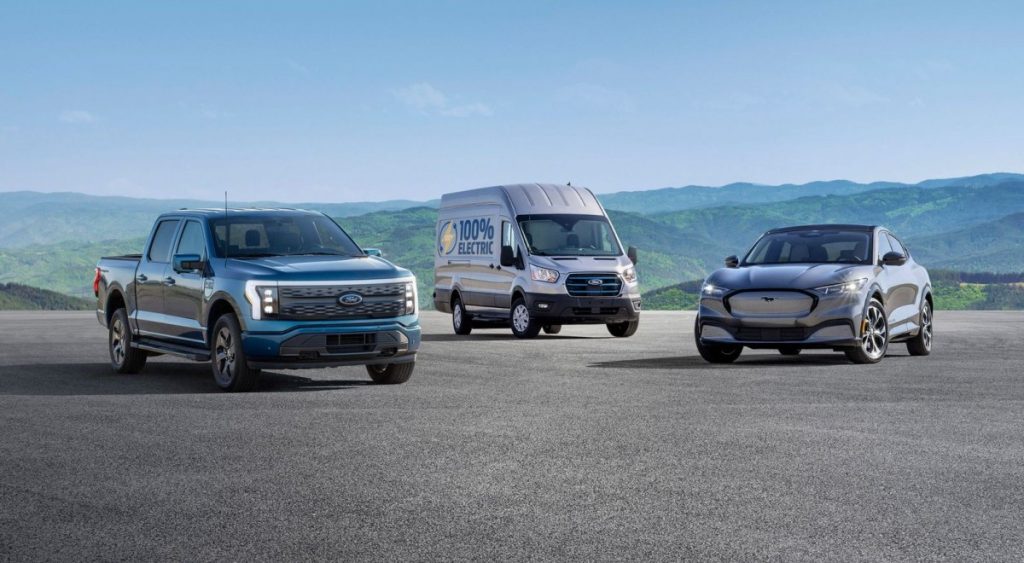
Ford advocates regulatory changes supporting plug-in hybrids and extended-range electric vehicles as interim solutions. The company plans three multi-energy powertrain models among five new European launches by 2029, including a region-specific Bronco and two rally-inspired crossovers. Only two vehicles will be fully electric – a hatchbook likely replacing the Fiesta and a small SUV. Renault will develop and manufacture both pure EVs under their partnership agreement. This mixed approach reflects Ford's belief that hybrid technology can deliver immediate emissions reductions while EV infrastructure catches up. The EU Industrial Accelerator Act adds complexity by targeting manufacturing access for non-EU brands. Extended-range EVs use combustion engines purely as battery generators, avoiding direct wheel connection while maintaining electric drive benefits.
European Divergence
Ford's European strategy contrasts sharply with its North American approach, where the company maintains stronger ICE commitments and faces different regulatory timelines. European EV adoption at 20.6 percent significantly trails Norway's 94 percent market share but exceeds the US rate of 11.3 percent through Q1 2026. Ford Europe's 2.8 percent market share compares poorly to Germany (7.1 percent), France (4.2 percent) and even struggling UK operations (5.9 percent). The company's European passenger car portfolio shrank from eight models in 2020 to just three by early 2026 after discontinuing volume sellers. Meanwhile, Chinese brands like Jaecoo achieved monthly UK sales leadership with aggressive EV pricing. Ford's European factories operate at 67 percent capacity versus 89 percent in North America.
Ford's European turnaround plan includes launching seven new vehicles by 2029, with production starting at the Cologne facility in Q3 2026. The company expects to invest €2.8 billion in European operations through 2028. Market share recovery remains challenging given intensified Chinese competition. The complete Ford model history and specifications are catalogued in the Global Auto Index manufacturer database.
