







Horse Powertrain's 536hp turbocharged unit powers updated Emira arriving in weeks
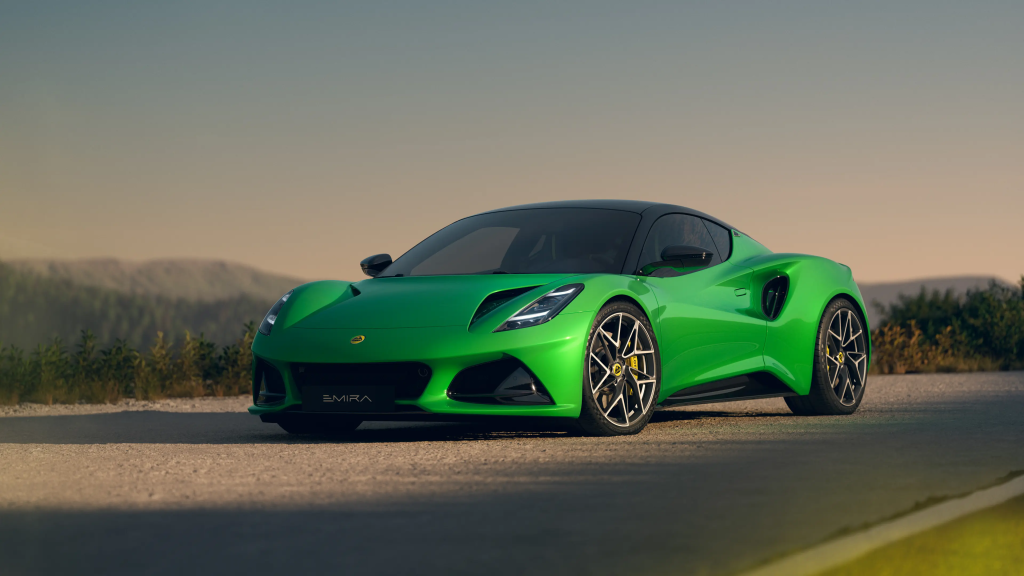
Lotus will abandon Mercedes-AMG and Toyota engines across its combustion lineup. The updated Emira sports car switches to a turbocharged V6 developed . It arrives in weeks.
The shift reflects broader consolidation of engine development resources across global OEMs, with parent companies favoring in-house powertrains over supplier relationships. Geely bought its controlling stake in Lotus nine years ago but only recently began integrating Chinese-developed engines, according to statements from Lotus CEO Feng Qingfeng published May 2024.
V6 specs reveal weight advantage
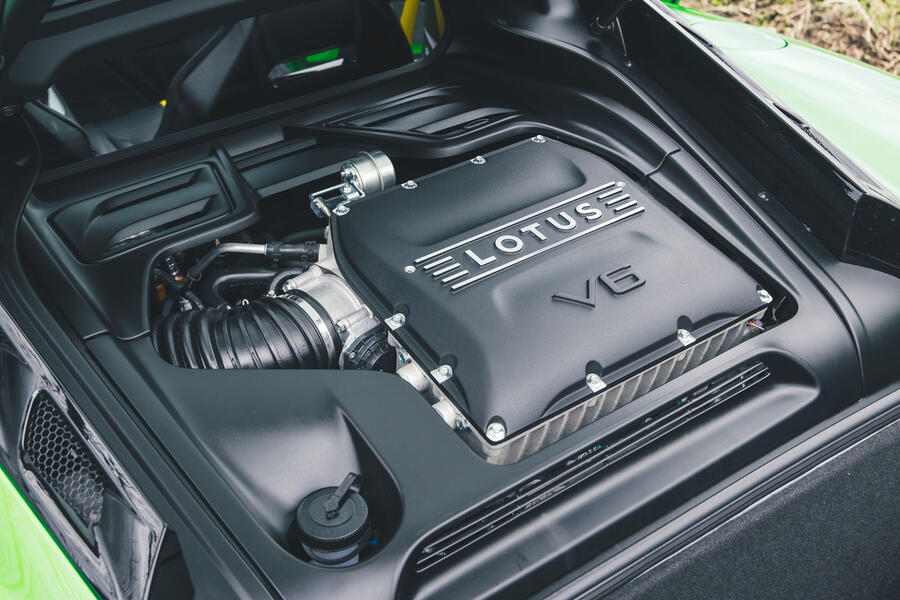
Horse Powertrain's W30 engine weighs 353 pounds, making it 22 pounds lighter than competing V6 units currently in production. The 3.0-liter displacement generates up to 536 horsepower and 516 pound-feet of torque. Combined with Horse's 4LDHT four-speed hybrid transmission at 439 pounds, the complete powertrain package totals 792 pounds. This compares favorably to the outgoing Emira's Toyota-sourced supercharged 3.5-liter V6, which produces 400hp in current specification. The new system adds 136hp while supporting mild-hybrid, full-hybrid, and plug-in hybrid configurations.
V8 supercar targets 2028 launch
Horse will scale the V6 architecture into a larger V8 for what Lotus describes as its "first supercar" due in 2028. The flagship model expects to revive the Esprit name last used when Lotus stopped building V8-powered cars in 2004. Production specifications target "over 1,000 horsepower from a V8 working in conjunction with at least one electric motor," according to company statements. The European production site shortage hasn't affected Lotus plans, with the supercar "expected to be manufactured in Europe." The UK's Hethel facility operates at 2,000 units annually against its 10,000-unit capacity.
Joint venture model spreads across OEMs
Horse Powertrain represents the 50:50 Renault-Geely partnership launched to share engine development costs across both companies' model ranges. The arrangement mirrors similar collaborations emerging as OEMs face electrification pressures while maintaining combustion engine portfolios. BMW's transition to four-motor electric performance systems contrasts with Lotus maintaining hybrid combustion for sports cars through 2028. Renault benefits from Geely's manufacturing scale while Geely gains access to European powertrain engineering expertise. The V6's modular design allows both partners to deploy variants across SUVs, sedans, and performance models without separate development programs.
Hethel production secures UK operations
The powertrain switch secures production at Lotus's Norfolk facility despite earlier speculation about potential closure. Hethel will build both the updated Emira with Horse V6 power and the planned V8 supercar through the decade. The site's current 2,000-unit annual output leaves substantial capacity for expansion as new models arrive. Local suppliers previously serving the Mercedes-AMG 2.0-liter four-cylinder and Toyota 3.5-liter V6 programs face contract losses as Lotus consolidates sourcing through the Renault-Geely partnership. Engine components will ship from Horse facilities rather than German or Japanese sources, changing the supply chain geography for UK sports car production.
Horse Powertrain debuted the W30 engine at April 2024's Beijing Auto Show, where it claimed the title of world's smallest V6 in current production. The joint venture targets deployment across 15 different model applications by 2026. Lotus previously used V8 engines from 1996 through 2004 in the original Esprit lineup. The complete Lotus model history and specifications are catalogued in the Global Auto Index manufacturer database.
