Six of the thirteen cars will be developed exclusively for China, with Geely platform-sharing cutting parts costs.
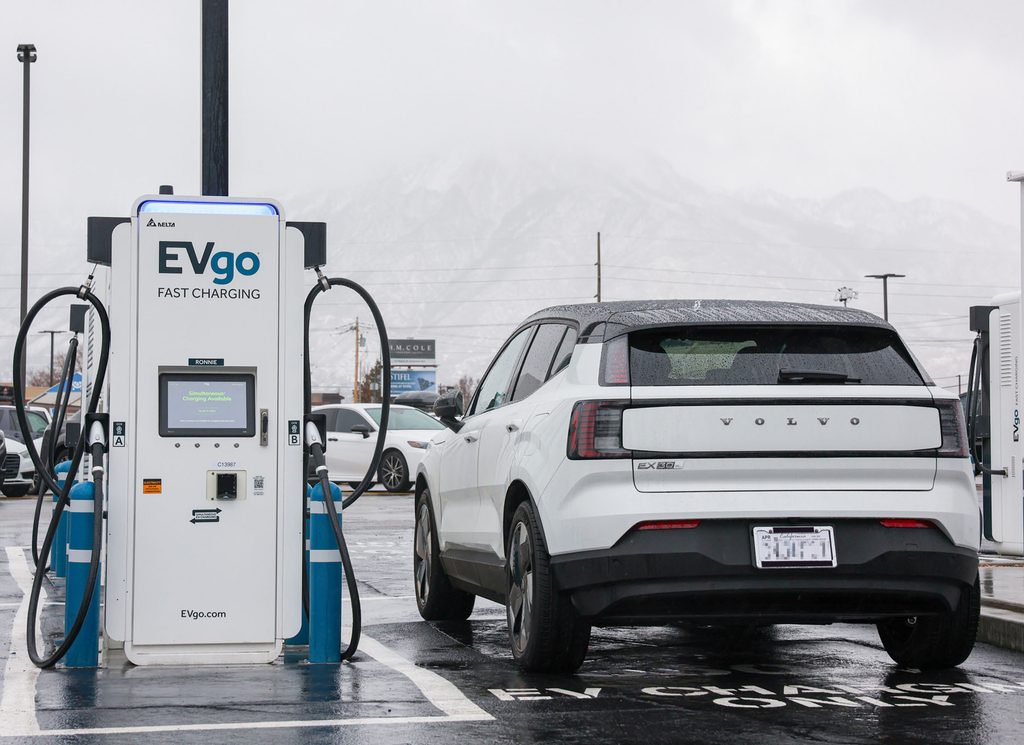
Volvo will launch 13 all-new cars before the end of 2030. Seven target Western markets. Six are China-exclusive. The Swedish brand, owned 2010, confirmed the plan includes both battery-electric vehicles and a third generation of plug-in hybrids — a direct retreat from its earlier all-EV pledge.
The announcement matters because European ZEV compliance timelines are tightening. The EU's 2035 combustion-engine phase-out means Volvo's hybrid retention is a calculated hedge, not an indefinite delay. According to Volvo's official product announcement, published September 2025, the brand's stated goal is to double its global market share. That puts it in direct competition with BMW and Mercedes-Benz, each already operating multi-architecture EV and hybrid lineups through 2030.
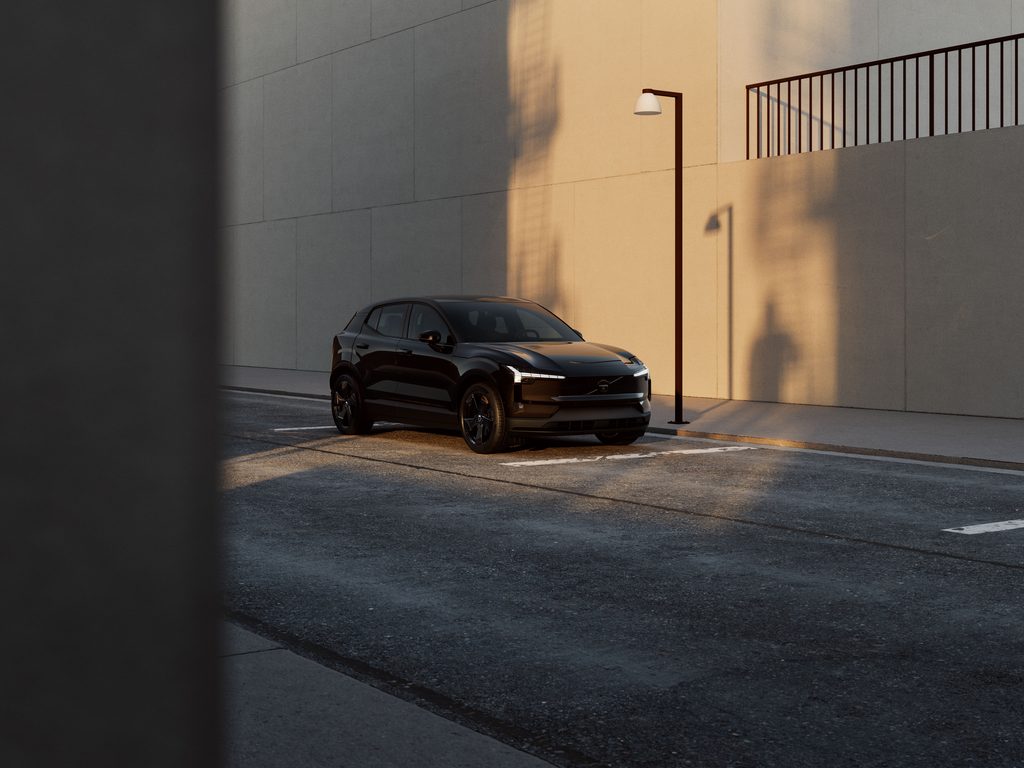
Thirteen Models, Two Architectures, One Parts Target
Volvo's plan rests on hard numbers. Thirteen cars, seven Western-market variants, six for China. Western models will use two platforms: SPA2, already underpinning the current XC90 and XC60, and the newer SPA3. The China vehicles will run on shared Geely architectures. The cost logic is explicit: Volvo is targeting 30 percent commonality in parts across its lineup — three times the current figure of roughly 10 percent. If the current fleet runs at 10 percent shared-part penetration and the target is 30 percent, that is a 20 percentage-point shift across what will be 13 distinct nameplates. At volume, that scale of commonality typically reduces per-unit procurement costs by 8 to 15 percent, according to supply-chain analysis published by the European Automobile Manufacturers' Association (ACEA) in its 2024 Annual Report. Volvo has not confirmed which specific nameplates fill each of the 13 slots, and the company has not published a timeline for individual model reveals beyond the XC60 and XC90 updates already debuted.
CEO Sets 2030 Showroom Benchmark
Håkan Samuelsson, Chief Executive Officer of Volvo Cars, framed the offensive in unusually concrete visual terms. In the company's September 2025 product announcement, Samuelsson stated: 'Our showrooms will look very different in 2030.' The full quote continues: 'This is our strongest product pipeline ever, tailored to regional needs, and emphasizes our ambition to be the leading premium car brand.' The ambition to lead the premium segment above €50,000 is measurable — Volvo's 2024 global sales of approximately 763,000 units placed it behind BMW's 2.45 million and Mercedes-Benz's 2.04 million. Doubling market share, Samuelsson's stated end goal, would require Volvo to add roughly 760,000 annual units — a figure that demands the 13-model offensive to succeed commercially, not just industrially. The declaration also arrives at a moment when the European European premium segment expansion is being contested more aggressively than at any point in the past decade.
The EV Reversal Volvo Has Not Formally Acknowledged
In 2021, Volvo announced it would sell only battery-electric cars globally by 2030. That pledge was widely reported and used by Volvo's own communications teams as a differentiator against rivals still committed to hybrid development. The September 2025 product plan does not contain an equivalent public retraction. Volvo instead describes the inclusion of third-generation plug-in hybrids as a response to 'customers still reluctant to go fully electric' — without naming the 2021 commitment or marking it as superseded. No revised electrification target date appears in the September announcement. Volvo Cars has not published an updated version of its 2021 EV-commitment document, according to a review of the company's investor relations archive conducted for this article. The omission is relevant to ZEV mandate compliance tracking: Kia UK's experience reaching 100,000 EVs while calling mandate pace unrealistic illustrates how even volume-committed brands are recalibrating expectations against regulatory timelines.
Western and China Splits Reflect Diverging Demand Curves
The 7-to-6 model split between Western markets and China is not a symmetric hedge. China's EV adoption rate reached 35 percent of new-car sales in 2024, according to the China Passenger Car Association's December 2024 monthly report, compared with roughly 14 percent across the EU in the same period (European Environment Agency, Vehicle Registration Statistics, Q4 2024). Volvo's China-only models will share Geely platforms, enabling faster development cycles and local-content compliance — both increasingly important under China's evolving purchase-incentive rules. Western models, by contrast, face a different regulatory clock: the EU's 2035 fossil-fuel phase-out and the bloc's interim 2030 CO₂ fleet targets. The EU Industrial Accelerator Act's push for UK EV manufacturing access adds further complexity for Volvo's Ghent, Belgium plant, which builds XC40 and EX40 variants for European distribution. BMW faces a comparable architecture fork; BMW's four-motor M3, confirmed for 2027 at 1,300 hp, signals that German rivals are not waiting for Volvo to set the pace.
What the Pipeline Means for the XC60, Wagons, and Dealer Stock
Two immediate consequences follow from the thirteen-model commitment. First, the XC60 — Volvo's highest-volume global nameplate, with roughly 250,000 units sold annually — will receive a successor built on SPA3. The 2028 XC60 T8 plug-in hybrid has already debuted, confirming the platform transition is active. Second, the V-series wagon question remains unanswered. The V90 has been discontinued. The V60 received no update at the September reveal. Volvo's promise to 'enter new segments' technically leaves room for a wagon revival, but the company has not named one. That negative space is meaningful to European estate-car buyers, a group historically loyal to Volvo and currently without a next-generation product commitment. On the retail side, Volvo separately confirmed it will introduce a simplified commercial model with transparent pricing and special versions designed for faster delivery — an acknowledgment that current lead times have become a friction point in the buying process.
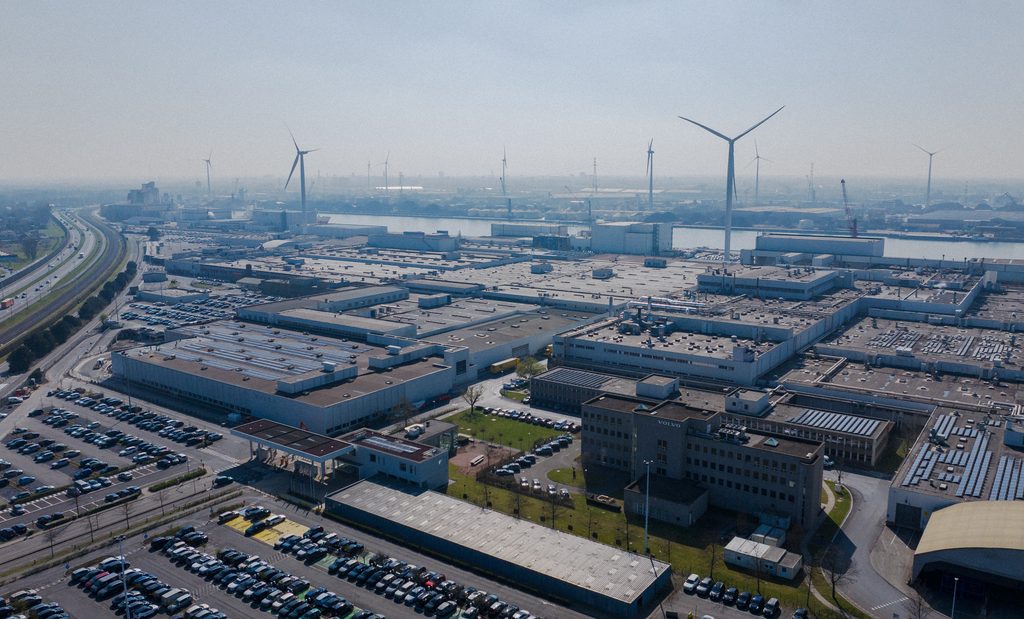
Volvo's Ghent plant, which produced 124,000 vehicles in 2023 according to ACEA's European Production Statistics, has not been named as a confirmed build site for any of the 13 new models. Capacity allocation across Torslanda, Ghent, and Geely's Chinese facilities remains unpublished. That gap will matter to trade unions and regional governments before the first new nameplate reaches a showroom. The complete Volvo model history and specifications are catalogued in the Global Auto Index manufacturer database.
