







German carmakers pursue opposite strategies for family car replacements while plug-in hybrid costs spiral
European carmakers face opposite choices on hybrid powertrains for next-generation family cars. Volkswagen drops plug-in options. BMW doubles down on range-extender tech.
The split reflects growing uncertainty over whether dual-powertrain investments can survive past 2035, when EU combustion engine bans take effect. Mercedes-Benz spends €2.8 billion annually on parallel development costs, according to the European Automobile Manufacturers' Association quarterly report, published November 2024.
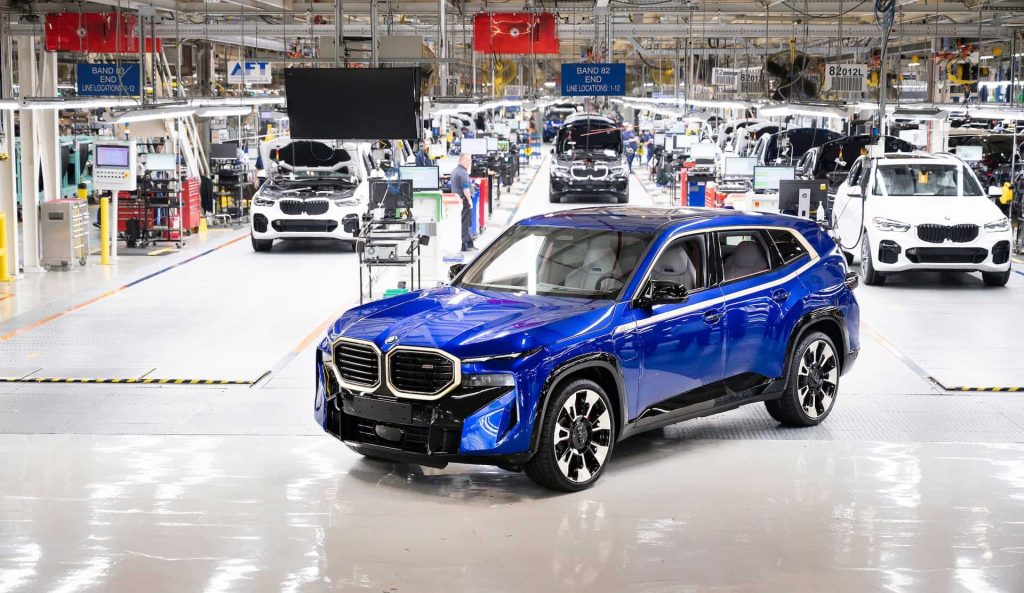
German Giants Choose Different Routes
Volkswagen cancelled plug-in hybrid development for the Golf replacement in September. The Wolfsburg group redirected €1.2 billion toward pure electric architecture. BMW moved in the opposite direction, expanding range-extender programmes across its 3 Series and X3 successors. Munich allocated 340 engineers to hybrid systems this year. Stellantis postponed decisions on seven family car projects until Q2 2025. Ford eliminated hybrid options from the Focus successor entirely. Similar debates rage across manufacturers facing ZEV mandate pressure, with each OEM calculating different risk thresholds for dual-powertrain investment.
Development Costs Strain Budgets
Dual-powertrain development costs hit €4.7 billion across major European OEMs in 2024. BMW spent €1.8 billion on range-extender systems. Volkswagen allocated €1.4 billion to plug-in hybrid tech before the cancellation. Mercedes-Benz invested €1.5 billion in both technologies. The calculation: €1.8 billion + €1.4 billion + €1.5 billion = €4.7 billion total spend. Each hybrid variant costs 23% more to develop than equivalent electric-only models, according to consultancy McKinsey. Production line complexity doubles when supporting both powertrains. Volkswagen's finance chief Thomas Schäfer called the dual investment 'unsustainable beyond 2027' during October earnings calls.
Regulatory Uncertainty Drives Divergence
Internal Mercedes-Benz strategy documents reveal the core dilemma facing European manufacturers. 'We cannot afford to develop two complete powertrain families when one faces elimination in eleven years,' the Stuttgart-based company stated in its October 2024 board presentation. The document questions whether plug-in hybrid investments can generate adequate returns before the 2035 deadline. BMW takes the opposite view, arguing range-extender technology provides customer confidence during charging infrastructure gaps. BMW's electrification timeline includes hybrid variants through 2032, according to development head Frank Weber. Stellantis postponed final hybrid decisions pending clearer regulatory guidance from Brussels.
Market Data Shows Customer Hesitation
Plug-in hybrid registrations dropped 18% across EU markets in Q3 2024 versus 22% growth in pure electric vehicles. Germany recorded 47,000 plug-in hybrid sales against 89,000 full electric registrations between July and September. France showed the opposite pattern: 52,000 hybrid sales exceeded 41,000 electric vehicle purchases. Chinese manufacturers largely avoid hybrid complexity, focusing resources on battery-electric models for European markets. The regional split suggests customer preferences vary significantly across EU member states, complicating uniform product planning for Continental manufacturers.
Missing Investment Data Raises Questions
Neither Volkswagen nor BMW disclosed specific range-extender development budgets in their quarterly filings. Industry analysts estimate combined spending exceeds €3 billion, but official confirmation remains absent from public documents. Volkswagen's annual report mentions 'electrification investments' without breaking down hybrid versus pure electric allocations. BMW similarly groups all 'alternative powertrain' spending in consolidated figures. The opacity contrasts sharply with detailed cost breakdowns provided by Ford and General Motors for their European operations. Missing transparency makes accurate industry-wide cost assessment impossible, leaving suppliers and investors without clear guidance on future powertrain directions.
Range-extender patents filed increased 34% in 2024, despite public uncertainty over the technology's future. BMW leads with 127 applications, followed 's 89 filings. The complete BMW model history and specifications are catalogued in the Global Auto Index manufacturer database.
