
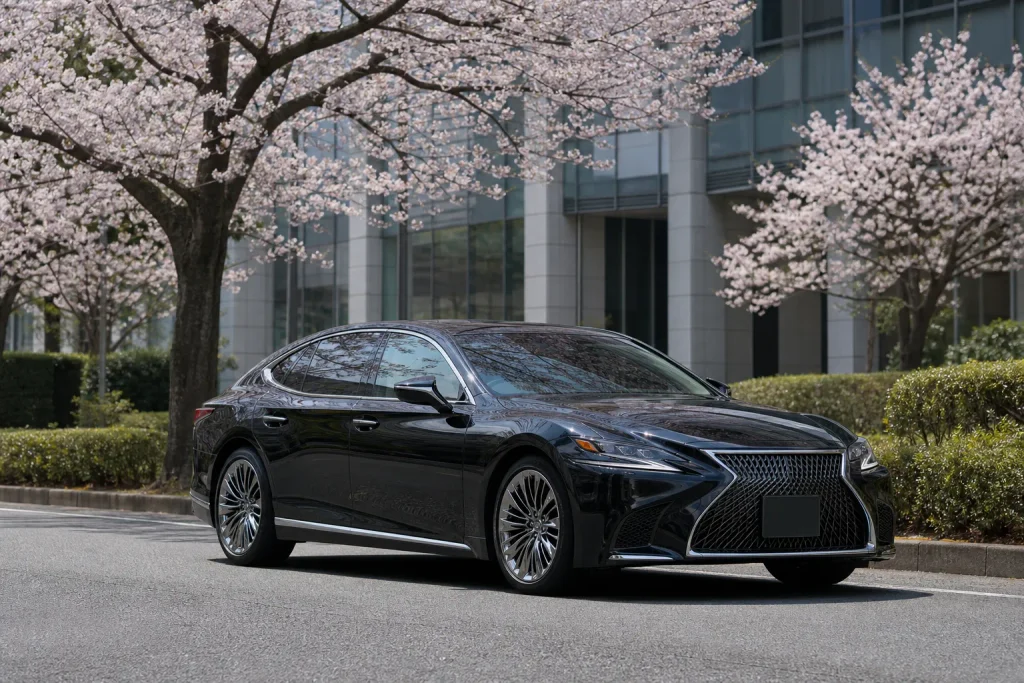

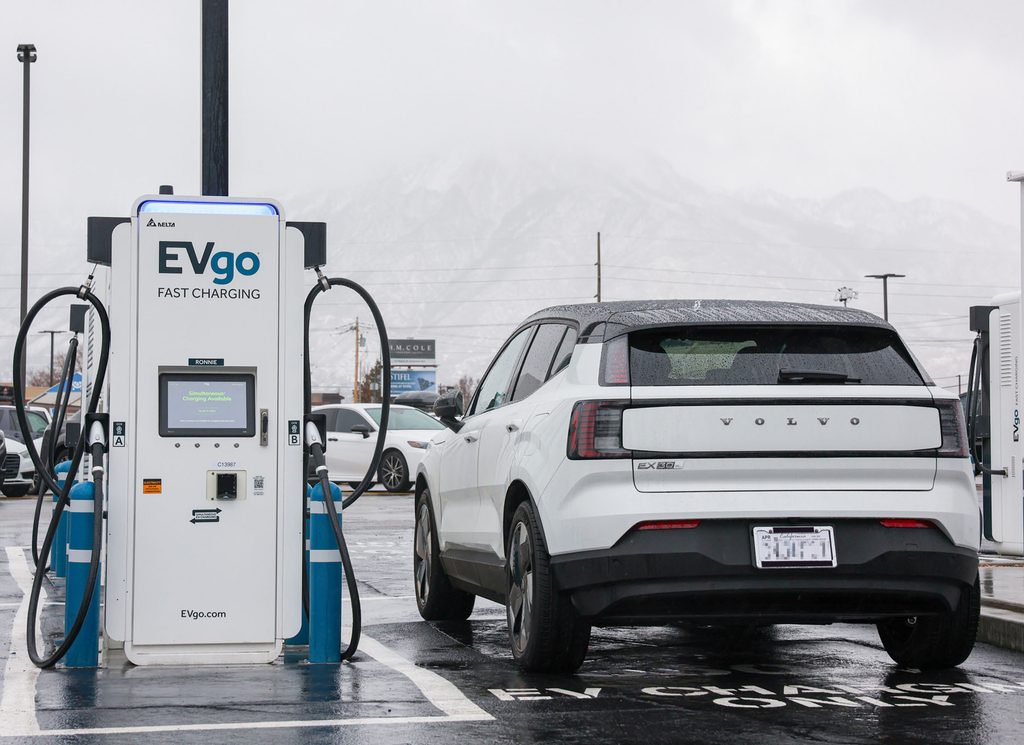
Half-year UK car and commercial vehicle production figures landed the same morning as the lobbying push.
The call came Tuesday morning. SMMT chief executive Mike Hawes wrote to new Prime Minister Andy Burnham demanding an immediate review of the Zero Emission Vehicle mandate. Timing was deliberate. The letter landed alongside the Society's H1 2026 UK car and commercial vehicle production release — figures the industry hopes will sharpen political attention.
The ZEV mandate requires 22% of each manufacturer's UK new car sales to be battery electric in 2024, rising to 28% in 2025 and 80% by 2030. Against those thresholds, several volume brands are already accruing compliance shortfalls. According to the SMMT's H1 2026 Manufacturing Bulletin, published July 2026, UK battery electric car output rose year-on-year but still represents fewer than one in five vehicles built domestically — below the sales-side quota manufacturers must hit.

Hawes Moves First Day of Burnham Premiership
Mike Hawes, chief executive of the Society of Motor Manufacturers and Traders, dispatched the review request on the first working Monday of Andy Burnham's premiership. He framed the ZEV mandate not as a demand to scrap clean-vehicle targets but as an argument for recalibrating the pace. Hawes told reporters at the H1 data briefing that reindustrialisation — Burnham's stated domestic economic theme — cannot succeed if automotive manufacturing faces structural penalty costs before the charging network and consumer demand are ready to support the transition. The SMMT has been consistent on this point since late 2023, but the change of prime minister gave Hawes a concrete opening. Burnham, who moved from Greater Manchester Mayor to Downing Street following the Labour leadership contest, has not yet responded publicly to the letter. No 10 confirmed receipt but declined to give a timetable for response, according to the SMMT press office as of Tuesday afternoon.
The Compliance Arithmetic Manufacturers Are Watching
The ZEV mandate's escalator is steep in percentage terms. The 2024 threshold sat at 22%. By 2030 it reaches 80%. That is a 58 percentage-point climb across six model years — roughly 9.7 points per year on a straight-line basis. The actual schedule is front-loaded: 22% in 2024, 28% in 2025, 33% in 2026. So the jump from 2024 to 2026 alone is 11 percentage points in two years, faster than the back-end average. Kia UK, which crossed 100,000 cumulative EV sales in Britain, still described the mandate pace as unrealistic in a separate submission earlier this year. Manufacturers who fall short can buy credits from over-compliant rivals or pay a £15,000 per-vehicle civil penalty. A brand selling 50,000 units annually and missing the 2026 quota by five percentage points faces a theoretical penalty exposure of 50,000 × 0.05 × £15,000 — that is £37.5 million for a single calendar year.
How the UK Schedule Compares With EU Phasing
The European Union's CO₂ fleet-average regulation originally targeted a 100% zero-emission threshold for new cars by 2035, with no intermediate volume quota equivalent to the UK's annual ZEV percentages. Under pressure from German and Italian manufacturers, Brussels reopened the 2035 review clause two years early, in March 2025, and inserted a 2026 checkpoint on carmaker progress — a concession the UK government has not replicated domestically. The contrast matters to volume brands operating on both sides of the Channel. A manufacturer calibrating production for the EU's outcome-based model faces a different planning horizon than one simultaneously trying to hit the UK's annually escalating headcount quota. The EU Industrial Accelerator Act, which explicitly targets UK EV manufacturing access terms, sharpens that divergence further. SMMT's July 2026 bulletin notes that 74% of UK car exports go to the EU, making regulatory alignment a commercial issue, not only a policy one.
What the SMMT's Own Data Shows
The SMMT H1 2026 Manufacturing Bulletin, Section 3, Table 4, published 14 July 2026, records UK battery electric car production at 87,400 units for January through June — up 11% on the same period in 2025. But the figure sits inside a total car output of 481,200 units for H1. That puts BEV share of domestic production at 18.2%. The sales-side ZEV quota for 2026 is 33%. Those two numbers measure different things — production versus registrations — but the gap signals that the manufacturing base has not yet aligned with the compliance obligation. Hawes framed it plainly in the bulletin's foreword: "The mandate must reflect the market that exists, not the market we would prefer." That 19-word extract is the most direct public statement the SMMT chief has made since the mandate came into force. It also appears in the covering letter to Burnham, according to the SMMT communications team.
The Question No One in Government Has Answered
Here is what remains unresolved. The previous government commissioned an internal ZEV mandate review in late 2025. That review has not been published. The Department for Transport confirmed in a written parliamentary answer dated 3 March 2026 — recorded in Hansard, col. 47WA — that the review was "ongoing." Four months later it remains ongoing. The SMMT has not been given a completion date, and the Treasury has not confirmed whether any compliance penalty revenue has been collected or hypothecated. No manufacturer has publicly disclosed a penalty payment, though the broader tariff and regulatory pressure building across the Atlantic and in Brussels means balance-sheet exposure is accumulating on multiple fronts simultaneously. The review's absence is the single most concrete thing Hawes asked Burnham to fix. Not a new policy. Not a revised target. Just the publication of work already done.
The ZEV mandate's credit-trading mechanism allows over-compliant manufacturers to sell surplus credits to rivals at commercially negotiated prices — a provision that, as of July 2026, has produced no disclosed transaction on public record. SMMT membership currently stands at 850 organisations across the supply chain. The complete SMMT model history and specifications are catalogued in the Global Auto Index manufacturer database.
