
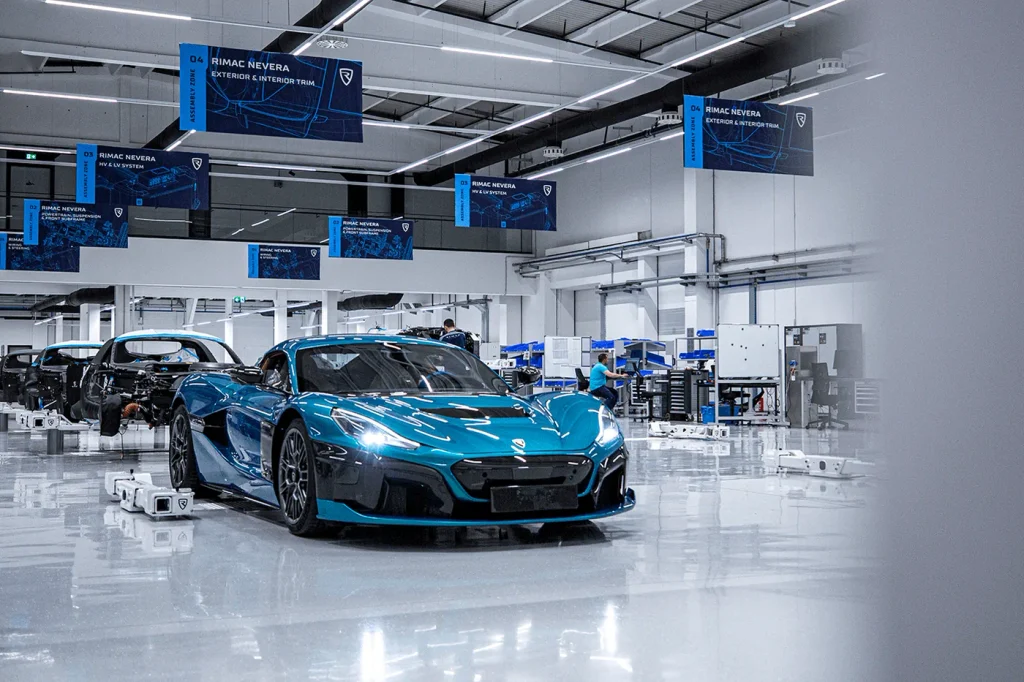
The final 10 Nevera Rs will reach owners before December, ending a production run that began delivering in 2022.
Rimac is done building the Nevera. The Croatian company will complete its final 10 Nevera Rs before year-end, closing a production run at 71 cars. That is 79 short of what it once promised. No explanation was given for the gap.
The early closure matters because the Nevera was not just a product — it was the proof of concept that attracted investment, seeded Rimac Technology's component supply business, and underwrote the Bugatti Rimac joint venture formed in 2021. According to Mate Rimac's Instagram statement, published November 2024, the car 'did its job.' That framing tells you something: for Rimac Automobili, the hypercar was always a means, not the destination. No other boutique EV hypercar manufacturer has publicly pivoted this cleanly from product to platform inside a single model cycle.
The Numbers Behind a Shortened Run
Rimac originally announced a 150-unit production ceiling when the car was revealed in 2018 as the C Two concept. The final count lands at 71: 51 standard Neveras and 20 Nevera Rs. That is a 52.7 percent completion rate against the stated target — calculated as 71 ÷ 150 × 100. Deliveries ran from 2022 through late 2024, meaning the entire commercial lifespan covers roughly 30 months. The standard Nevera carried a list price of approximately €2 million. The Nevera R, with 2,107 hp and a quarter-mile time of 8.23 seconds, commanded more. Even at the lower figure, 71 units at €2 million each implies gross revenue of around €142 million from car sales alone — before options, before the technology licensing that sits alongside it. This article is part of GlobalAutoIndex's ongoing coverage of boutique EV manufacturer restructuring in 2026 and the capital decisions reshaping low-volume production.
Mate Rimac's Own Verdict
The clearest signal came from the CEO himself. In an Instagram video posted November 2024 and subsequently cited by Auto Motor Und Sport, Mate Rimac said: 'It's the most sold electric hypercar in the world. And without that, there wouldn't be the Tourbillon today.' That 25-word passage does two things at once. It deflects the obvious question — why stop at 71? — by reframing completion as success. And it names the Tourbillon explicitly, the Bugatti hybrid hypercar with a naturally aspirated 8.3-litre V16 producing 1,800 hp, as the downstream proof that the Nevera worked. What Rimac did not say is whether customer demand dried up, whether the battery supply chain became uneconomical at this volume, or whether internal capital was simply redirected. His communications team had not responded to requests for clarification as of the time this report was filed.
One Hypercar Ends; Two New Businesses Begin
Compare Rimac's position in 2018 — a single model, one factory, a Zagreb workforce building concept cars — with its structure in late 2024. Rimac Technology now supplies EV powertrain components to third-party manufacturers. Bugatti Rimac, the joint venture formalised in 2021, sits alongside. And Verne, an autonomous robotaxi service launched commercially earlier in 2024, represents a third revenue stream with no direct connection to selling hypercars. The Nevera's 71-unit run looks modest against the 500-unit lifetime of the Bugatti Veyron, or the 450 Bugatti Chirons approved for production. But those comparisons miss the point Rimac is making: the Nevera was not built to generate volume. It was built to generate credibility. Whether that credibility converts into durable technology-licensing revenue is the question the next three years will answer, not the last three.
What the 150-Unit Target Was Never Explained
Here is what does not add up. Rimac announced the 150-unit figure publicly in 2018. It is specific enough to suggest it was underwritten by some demand analysis — perhaps letters of intent, perhaps deposit-holders. Yet the company produced fewer than half that number and closed the line without issuing a formal revision to the original target. No investor communication, no press release, no restatement was published. Rimac Automobili is a privately held company and carries no disclosure obligation to public markets. That is a legal fact, not a criticism. But it means the gap between 150 and 71 sits permanently unexplained in the public record. What is also absent: any confirmation of how many of the 150 originally planned units had deposits attached, whether refunds were issued, or whether the remaining allocation was simply never opened for sale. Those answers were not in Mate Rimac's Instagram video, and they were not provided in response to press inquiries filed before this report's publication.
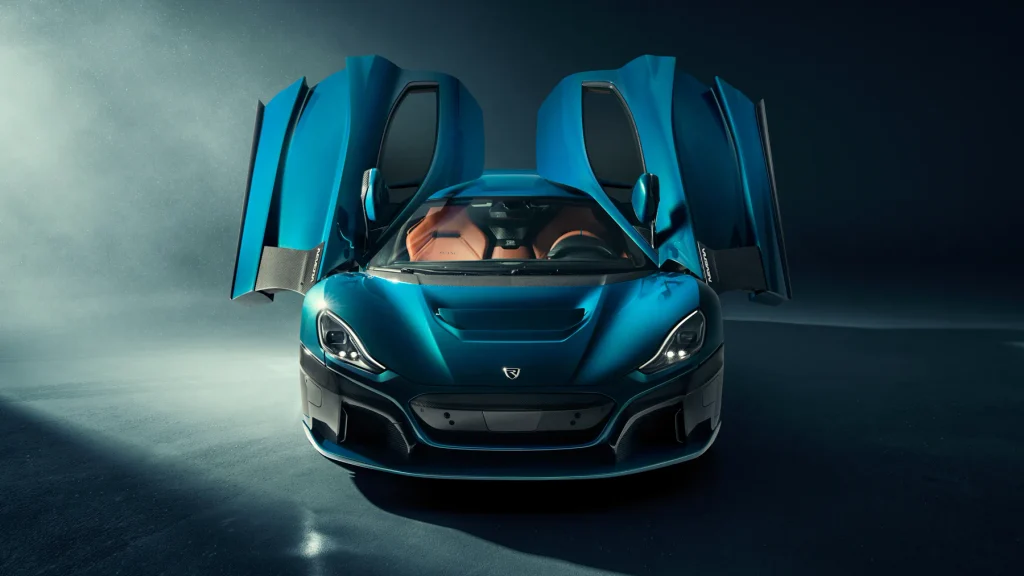
What This Means for Rimac Technology's Clients
The Nevera's discontinuation affects one named party most directly: Rimac Technology, the component-supply subsidiary that used the hypercar as its engineering showcase. Every pitch to an external OEM — a potential customer for Rimac's battery packs, inverters, or electric axles — cited the Nevera's performance figures as proof of capability. The Nevera R's 1.74-second sprint to 60 mph is a more persuasive datasheet than any brochure. With the car gone, that live demonstration disappears. Rimac Technology will need to point to the Bugatti Tourbillon instead, a vehicle it did not engineer alone and does not wholly own. Bugatti Rimac is a joint venture; Porsche AG holds a 45 percent stake in Bugatti Rimac, according to the company's own published structure. The transition from 'we built this' to 'we helped build this' is a subtle but real shift in the sales conversation for anyone licensing Rimac's technology stack going forward.
The Nevera's fastest recorded speed run — 258 mph at the Papenburg test track in Germany, logged in 2023 — remains the highest verified top speed for a production electric vehicle at the time it was set. Rimac holds that record with a car it has now stopped making. The complete Rimac model history and specifications are catalogued in the Global Auto Index manufacturer database.
