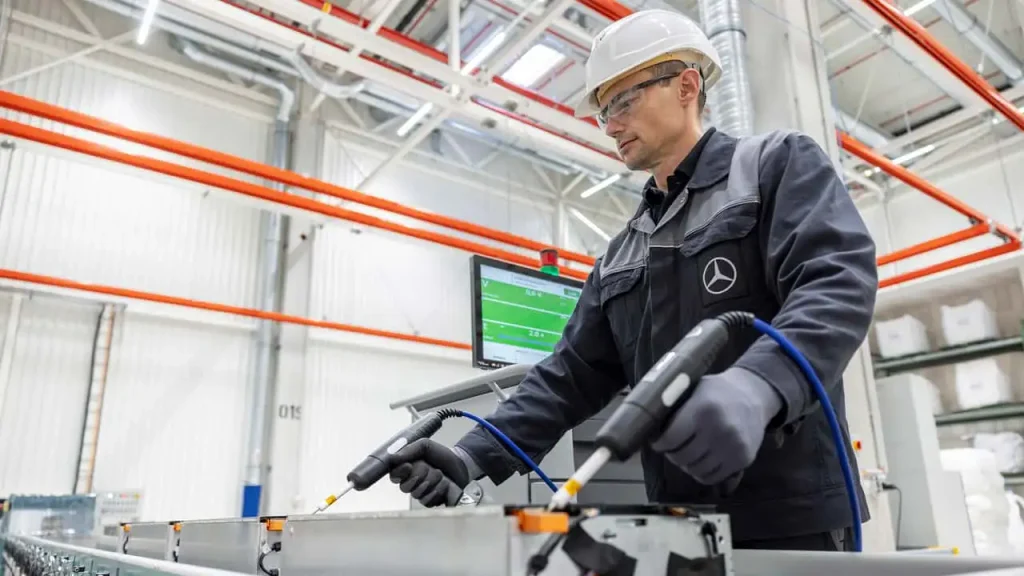

Production chief Michael Schiebe named one assembly site and one powertrain plant as conditional closure risks during an employee meeting in Sindelfingen.
Mercedes-Benz has put two German plants on notice. One assembly facility and one powertrain site face possible closure if labour costs do not fall. No locations were named. No timetable was set. The warning is conditional — but it is now official.
The statement matters because it converts a long-running internal argument about German competitiveness into a public ultimatum. According to Reuters reporting on the Sindelfingen employee meeting, Mercedes-Benz production chief Michael Schiebe delivered the warning directly to workers in late September 2024. Volkswagen issued a comparable restructuring signal earlier the same year; Audi flagged similar closure risk at its Neckarsulm plant. Germany's cost problem is no longer theoretical.
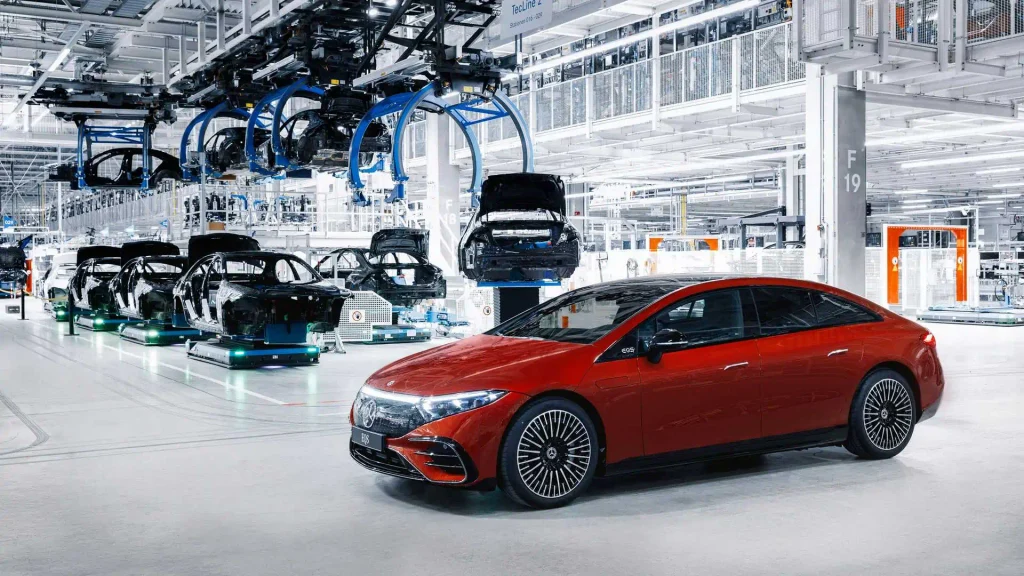
Schiebe Delivers the Warning Inside Sindelfingen
Michael Schiebe, Mercedes-Benz's production chief, addressed workers at the Sindelfingen facility and told them that retaining every German plant is not assured. He described two categories of site at risk: a body-shop plant responsible for final vehicle assembly, and a separate powertrain plant producing engines, transmissions, or electric drive units. Neither was identified by name. Schiebe framed the situation as a choice between achieving mutually acceptable cost savings and losing capacity altogether. A Mercedes-Benz spokesman later confirmed Schiebe's remarks to Reuters but declined to specify when any formal decision would be made. That confirmation closes one door — the company can no longer claim the warning was informal or overstated. It stays open on every other detail. This article is part of GlobalAutoIndex's coverage of European industry restructuring in 2026, tracking OEM cost pressure across German and Central European production networks.
The Hungary Gap: 70% and What It Means in Practice
Mercedes-Benz's own figure is the sharpest number in the story. The company says production costs at its Kecskemét plant in Hungary run 70 percent below its German sites. If a German operation carries an indexed cost of 100, Kecskemét runs at 30 — a gap of 70 points on every comparable unit of output. That differential has already altered production decisions: small-car manufacturing and G-Class volume have both shifted toward Hungary. Mercedes operates three German final-assembly plants — Sindelfingen, Rastatt, and Bremen — plus seven powertrain sites: Untertürkheim, Affalterbach, Berlin, Hamburg, Kamenz, Kölleda, and Arnstadt. That is ten facilities potentially exposed to the cost argument, though Schiebe identified only two as active closure candidates. At 70 percent lower costs, even modest volume transfers to Kecskemét generate nine-figure savings at scale. The arithmetic does not require optimistic assumptions to produce a persuasive case for relocation.
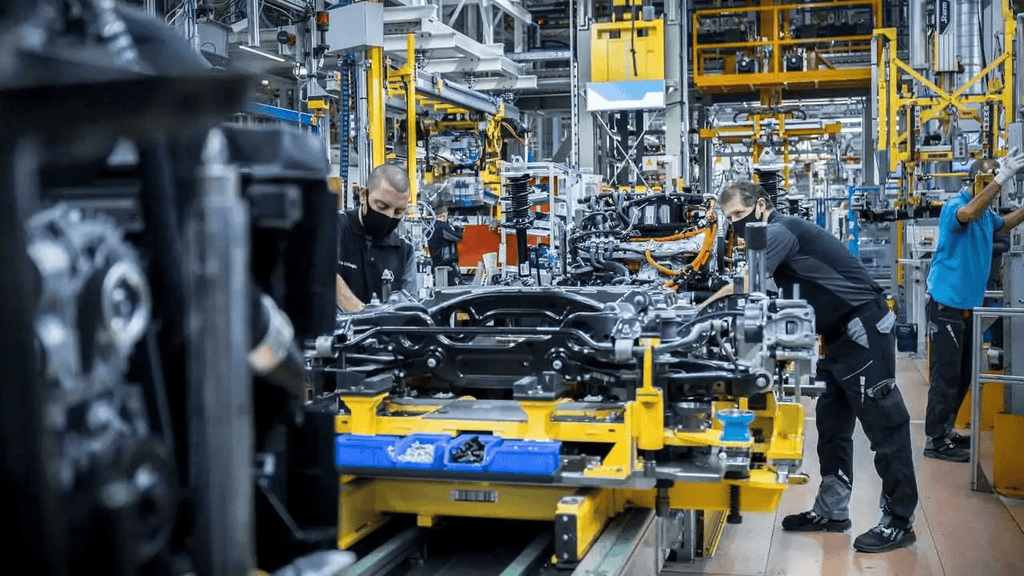
Volkswagen and Audi Face the Same Equation
Mercedes-Benz is not working through this problem alone. Volkswagen Group issued a profit warning earlier in 2024 and subsequently began a restructuring that included discussions over German plant viability — a process that produced public confrontation between management and the IG Metall union. Audi separately flagged closure risk at its Neckarsulm site, citing the same structural cost argument: German wages and energy prices relative to Central and Eastern European alternatives. The pattern across three of Germany's four largest passenger-car manufacturers suggests the pressure is systemic rather than company-specific. What differs is pace and specificity. Volkswagen named sites and set headcount targets. Mercedes has so far named only functions. That gap in specificity is either a negotiating tactic or a sign that internal modelling has not yet resolved which plant goes first — possibly both. For context on how tariff and trade variables feed into these calculations, see the 25% U.S. truck tariff and European IVA tightening debate.
What Mercedes Has Not Said — and Why That Matters
The warning carries real weight, but its deliberate vagueness creates its own set of questions. Mercedes-Benz has not ranked any of its ten German sites by closure risk, has not published a cost-reduction threshold that would make closure unnecessary, and has not confirmed whether the two at-risk plants are among those already running at reduced utilisation. The company also did not release any document — no internal review, no board presentation, no restructuring roadmap — to accompany Schiebe's remarks. Workers at Rastatt, Bremen, and each of the seven powertrain locations are now in the same position: told that two colleagues will lose their facilities, not told whether they are among them. That is effective pressure. It is also, as IG Metall and works council representatives will likely argue, an incomplete disclosure. No formal closure announcement has been filed with Germany's Federal Employment Agency, and Mercedes has not confirmed whether the company's supervisory board has voted on any site-specific decision.
Suppliers and Local Economies Absorb the Risk
Every Mercedes-Benz assembly plant anchors a regional supply chain. Sindelfingen alone employs roughly 35,000 people on-site; surrounding tier-one and tier-two suppliers add significantly to that local labour dependency. A closure would not stop at the factory gate. Baden-Württemberg's state government, which has previously intervened in automotive restructuring discussions, has not yet issued a formal response to Schiebe's remarks as of the date of this report. The powertrain sites carry a different exposure. Kamenz, for example, produces high-voltage battery systems — a function that cannot be mothballed without affecting electric-vehicle output across the broader Mercedes product range. Arnstadt and Kölleda serve similar specialised roles. Closing either would require either transferring that production to another site or sourcing externally, both of which carry lead times measured in years. The 70-percent cost gap with Hungary is real. The cost of unwinding a specialised German powertrain facility is also real, and Mercedes has not published that figure. Changan's rejection of shared European production illustrates how difficult it is to repurpose or redistribute manufacturing capacity under cost pressure, even when the commercial logic appears obvious.
Mercedes-Benz reported a 19.7-percent drop in net profit for the first half of 2024, falling to €6.97 billion from €8.66 billion in the same period a year earlier, according to the company's H1 2024 earnings release, published July 2024. The EQ-series lineup's weak European take-up contributed directly to that margin compression. Talks with IG Metall over the 2025 wage round remain unresolved. Pressure will not ease before those negotiations close. The complete Mercedes-Benz model history and specifications are catalogued in the Global Auto Index manufacturer database.
