



A Texas engine shop rebuilt the GM V8 until fewer than one-in-five original parts survived.
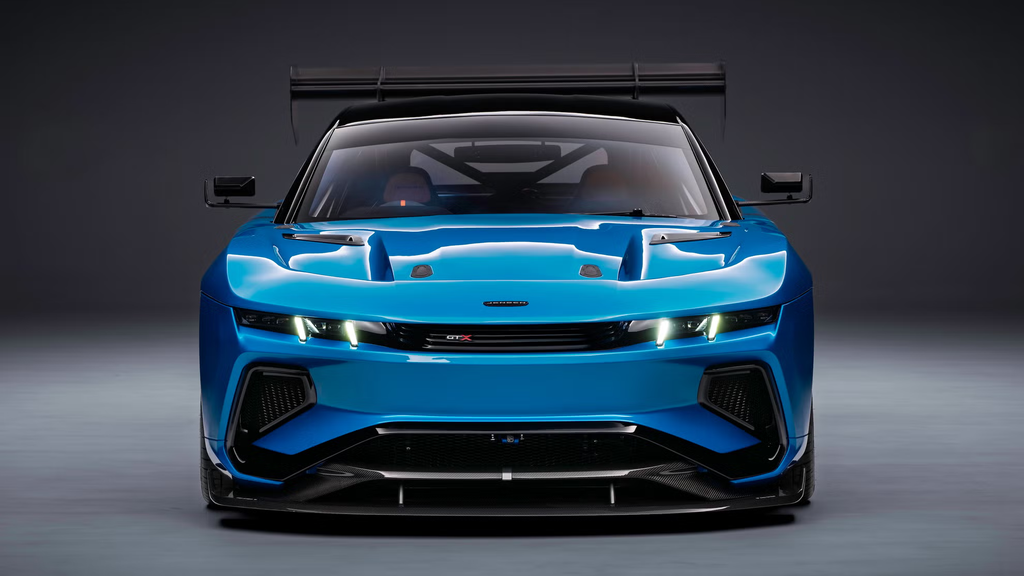
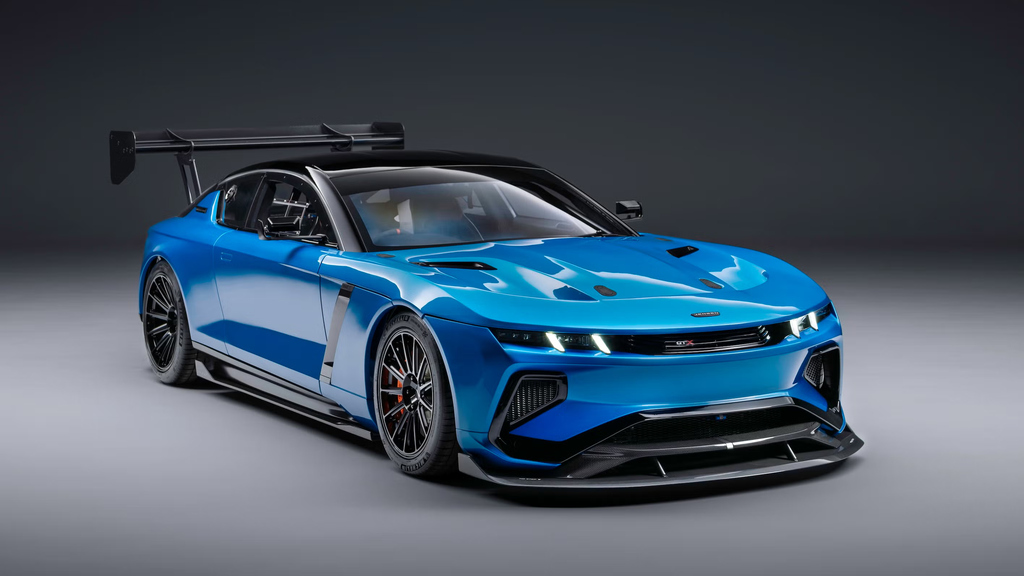
Jensen is back. The British marque pulled the wraps off the Interceptor GTX prototype on 4 September, showing a 960 hp, rear-wheel-drive track car built on an aluminium chassis. Two road versions follow. No production date yet.
The GTX arrives as low-volume British sports-car builders face mounting certification costs and shrinking manual-transmission demand. Against that backdrop, Jensen International Automotive is committing to an H-pattern manual for at least one road derivative — a choice that separates it from most rivals in this output bracket. According to Jensen International Automotive's official press release, published September 2025, the marque plans the high-performance Interceptor GTR and the touring-oriented Interceptor GT as its first retail products.
What the Engine Numbers Actually Mean
The supercharged 6.8-litre V8 originated with General Motors but arrived at Late Model Engine, a specialist workshop in Texas, for a rebuild so thorough that fewer than 20 percent of the original components survive. That means at least 80 percent of the rotating and ancillary hardware is new. In standard trim the unit produces 960 hp. Jensen says a higher state of tune raises that to 1,200 hp, with torque peaking beyond 1,100 lb-ft — a 25 percent power increase over the base figure (960 × 1.25 = 1,200 hp). Drive goes rearward through a Samsonas Motorsport six-speed sequential transaxle with straight-cut dog gears, linked by a carbon-fibre propshaft. A Wavetrac limited-slip differential splits torque at the rear axle. AP Racing supplies the brake package; floating steel discs sit behind custom 20-inch forged aluminium wheels wearing Michelin Pilot Sport rubber. Double-wishbone suspension front and rear, paired with Nitron three-way adjustable dampers, completes the hardware sheet. This cluster of low-volume British performance projects is tracked in the European premium segment expansion coverage on this site.
Duerden Sets Expectations in Writing
Jensen International Automotive's Managing Director, David Duerden, framed the GTX launch carefully in the company's September 2025 press materials. His statement reads: 'the GTX gives a clear indication of where we are heading and marks the beginning of an exciting new era for the marque.' That phrasing does real work. Duerden did not say the road cars are confirmed for a specific model year, did not name a price band, and did not disclose production volumes. The sentence structure — 'an exciting new era' — is aspiration, not contract. What is confirmed: Jensen will run the GTX through a structured test programme before specifying the Interceptor GTR and Interceptor GT. Duerden's organisation has not issued a separate homologation timeline or regulatory filing summary to support the road-car claims. The statement's caution is consistent with a company still measuring customer appetite rather than one ready to open an order book.
A Manual Transmission in a Near-1,000 hp Car — Who Is This For?
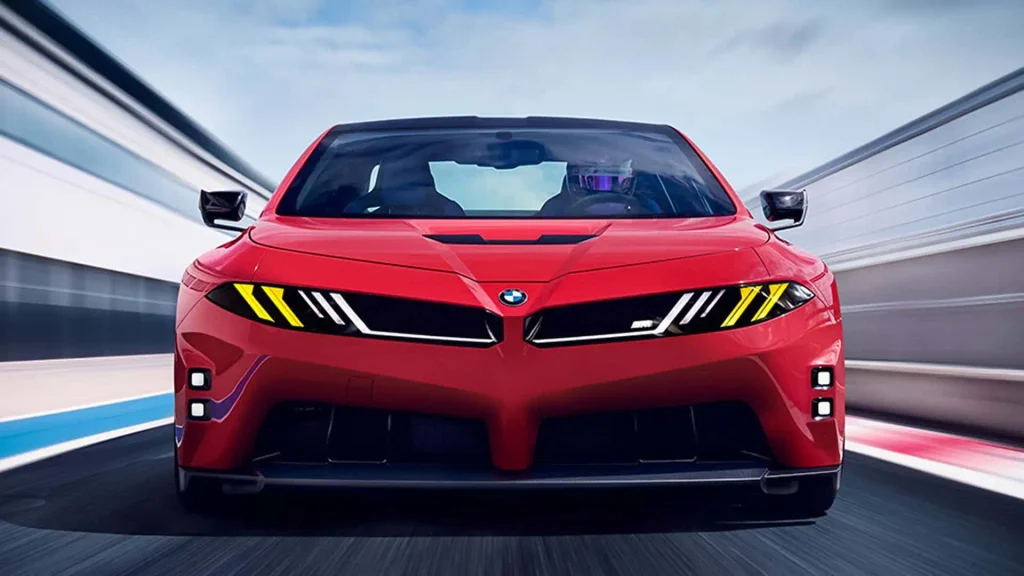
Jensen plans to offer the Interceptor GT with an H-pattern manual gearbox. That decision sits awkwardly against the output figures. At 960 hp in prototype guise — and road versions will almost certainly be de-tuned to meet type-approval limits — the torque load through a manual drivetrain demands engineering solutions that add cost and weight. No production-intent manual has been named. The GTX itself uses a Samsonas sequential unit, which is not the same component family. Jensen has not disclosed which gearbox supplier will provide the H-pattern unit, nor the torque rating it must handle. Compare this with BMW's four-motor M3, confirmed for 2027 at 1,300 hp, where the entire torque management question is resolved by electric motors and a single-speed reduction drive. Jensen's manual choice is a deliberate market signal, but the engineering gap between that signal and a certified road car has not been publicly bridged. That gap is the story beneath the story.
Eighty Percent Carry-Over — How Much Does That Promise?
Jensen states that roughly 80 percent of the GTX's exterior design will transfer to the road cars. The claim covers the slim horizontal lighting signatures, large front air intakes, integrated rear diffuser, and exposed aerodynamic surfaces. The adjustable rear wing generates up to 771 lb of downforce in track configuration. Road cars will not carry that load legally at public speeds, so the wing will almost certainly be a passive or deleted item in GT and GTR form. The aluminium chassis — developed with Avant Design — should carry over more faithfully, because it underpins the road programme financially. The interior package is harder to extrapolate: the GTX features an FIA-spec safety cage, Tillett carbon-fibre competition seats with six-point harnesses, a fire extinguisher, and a MoTeC data display. Orange Alcantara stitching is the sole luxury concession. Road cars will invert that ratio. McLaren's product reveal in summer 2025 — which included both an SUV and new sports cars — showed how differently a scaled operation handles the track-to-road translation. Jensen's announced carry-over figure is generous on paper; the detail is in what the remaining 20 percent must absorb.
No Date, No Price, No Volume — What That Leaves Jensen's Prospective Customers
Jensen International Automotive confirmed it will work with individual customers as development proceeds, rather than publishing a launch date, price, or build-run ceiling. For anyone considering a deposit, that structure requires accepting open-ended development risk with a brand that has been dormant for decades. The company has not published audited accounts, production facility details, or a named type-approval agent. Those omissions matter in the context of rising UK certification costs and evolving emissions legislation — a pressure documented in regulatory filings tracked in the EU Industrial Accelerator Act analysis published on this site. Jensen's customer-led development model mirrors approaches used by other micro-volume British builders, where the first buyers effectively co-finance final engineering. That can work. It has also failed visibly at several British marques over the past fifteen years. What Jensen has not stated: how many GTR or GT units it intends to build, what the floor price is, or which crash-test regime the road cars will pursue.
Jensen's original Interceptor ran from 1966 to 1976, with roughly 6,400 units built across all variants before the West Bromwich factory closed. The current company, Jensen International Automotive, is legally distinct from the original Jensen Motors Ltd. Chassis numbering for the GTX programme has not been disclosed. The complete Jensen model history and specifications are catalogued in the Global Auto Index manufacturer database.
