
The plant targets 200,000 vehicles a year and will not open until the early 2030s.
Four billion dollars. That is what Audi says it will spend on a new factory in Georgia, its first production site on US soil. Construction starts in 2026. The plant will employ 4,500 people and is built around large SUVs aimed squarely at North American demand.
The announcement lands while parent Volkswagen Group is running one of the most public cost-reduction programmes in its history — closing plants in Germany, cutting tens of thousands of positions, and posting a net loss of €1.1 billion for 2024, according to Volkswagen AG's Annual Report, published March 2025. Spending $4 billion on a greenfield US site at that exact moment is not a contradiction most groups would schedule voluntarily.

Georgia Site Selected, Ground Breaks in 2026
Audi confirmed the Georgia location after a multi-state site selection process that ran through much of 2024 and early 2025. The company has not named the city or county, though Georgia's Department of Economic Development issued a statement referencing a major European automotive investment in the state's existing auto corridor — a corridor that already includes a Kia assembly plant in West Point and a Rivian factory under construction near Social Circle. Audi says construction begins next year. The facility is designed from the start for electric and hybrid drivetrains, with the production floor configured to handle battery pack integration rather than retrofit. Early employment ramp-up is projected across three shifts before the line reaches its rated annual capacity of 200,000 vehicles. Georgia offered an undisclosed incentive package; state officials confirmed its existence but declined to publish a figure at the time of the announcement. This article is part of our ongoing coverage of industry restructuring in 2026.
What $4 Billion Buys — and What It Has to Return
The $4 billion headline figure works out to $20,000 per unit of annual capacity (200,000 vehicles ÷ $4,000,000,000 = $20 per unit of capacity, or $20,000 per vehicle if the plant runs at 100% for one year). That ratio sits at the higher end of greenfield automotive construction benchmarks. By comparison, Toyota's $13.9 billion commitment to a battery and vehicle plant in North Carolina — announced in stages between 2021 and 2023, according to Toyota Motor North America press releases — covered a much larger production footprint. Audi's sister brand Volkswagen spent roughly $7 billion building the Chattanooga, Tennessee plant over two phases, reaching 180,000 units of annual capacity by 2022. On a per-unit-of-capacity basis: Chattanooga cost approximately $38,900 per unit; Georgia, at $20,000, looks cheaper on paper. The gap may reflect a narrower initial model range, land cost differences between the two states, or the fact that Audi's figure excludes supplier park investment that typically runs alongside such announcements.
SUVs 'Tailored to North American Customers'
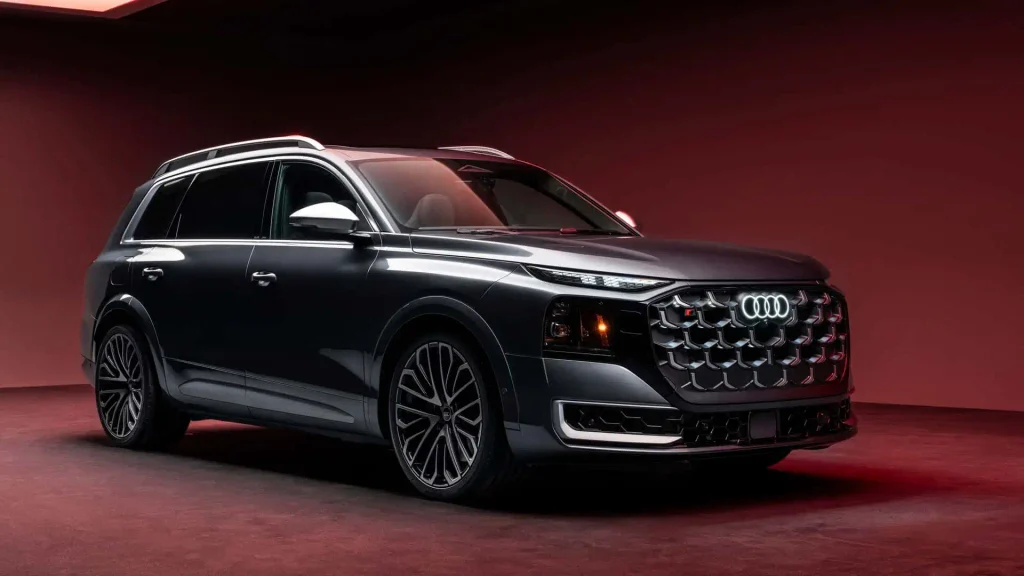
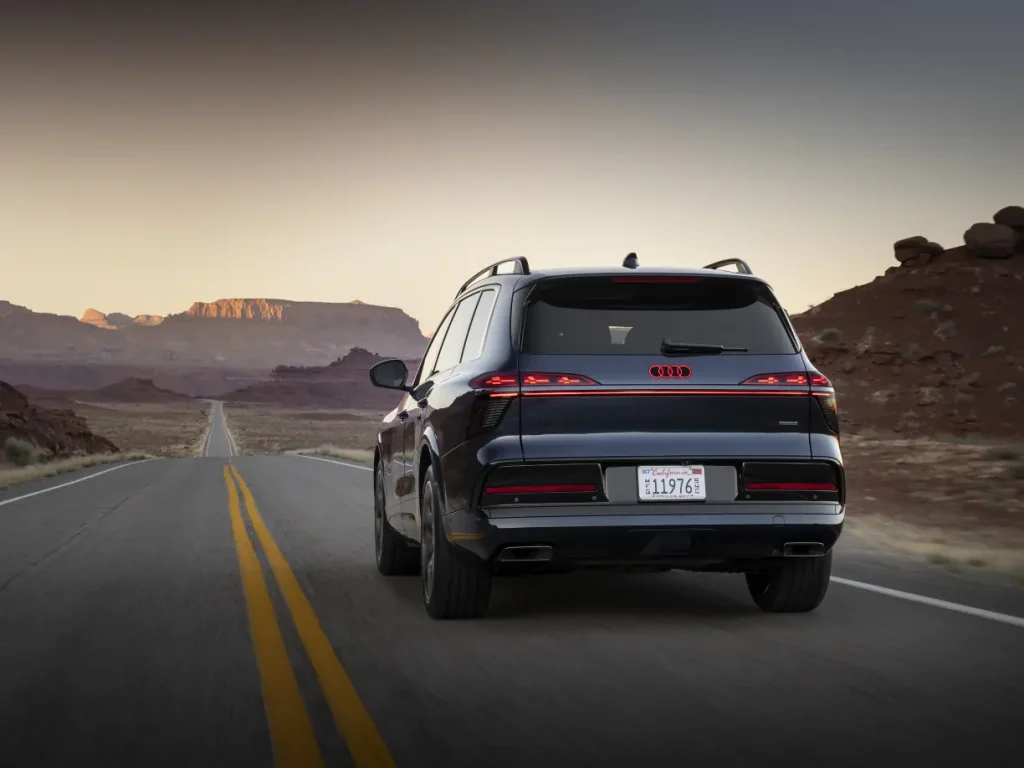
Audi's public statement used a phrase that told reporters almost nothing and everything simultaneously: the Georgia plant will produce "premium SUVs tailored to North American customers," according to the Audi AG press release issued October 25, 2025. The Q7 and the newly revealed Q9 are the obvious candidates. Both were unveiled earlier in 2025, with the Q9 representing the brand's first three-row flagship SUV produced under that nameplate. Until the Georgia plant opens, both models will be assembled at the Bratislava plant in Slovakia — the same facility that currently builds the Q7, Q8, and Porsche Cayenne — before shipping to US dealers. Audi has not confirmed whether the Q8 will also transfer to Georgia, though the brand separately confirmed the Q8 will receive a next-generation model rather than being discontinued. The Q8 shares its MLB Evo platform with the Q7, which makes a common production line architecturally straightforward. The company declined to answer written questions about Q8 production destination.
Two Factories, One Group, 500 Miles Apart
Here is the part that does not resolve cleanly. Volkswagen Group is already building a second US factory — the Scout Motors plant in Blythewood, South Carolina, carrying a $2 billion investment and an identical rated capacity of 200,000 vehicles per year. Scout's own executives said publicly that the Blythewood site could, in principle, manufacture vehicles for other Volkswagen Group brands. That statement has not been retracted. The Georgia and South Carolina sites sit roughly 500 road miles apart. Running two separate greenfield plants in the same region, funded by the same parent group, building similarly sized body-on-frame and monocoque SUVs, while that parent group is simultaneously cutting costs in Europe, is the kind of capital allocation that demands a clearer explanation than Audi has provided so far. The counter-argument — different manufacturing tolerances, different dealer networks, different union structures — is real but has not been formally set out in any document Audi or Volkswagen Group has published. The negative space is loud: no joint-venture or shared-facility option has been officially ruled out in writing.
Bratislava Faces a Slow-Motion Production Transfer
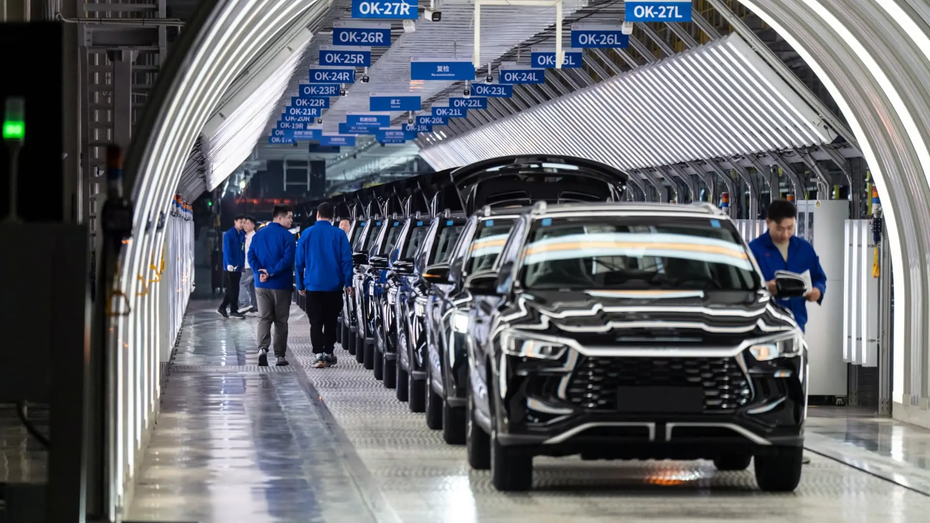
The factory that stands to lose the most is the one nobody is talking about. The Volkswagen plant in Bratislava, Slovakia, currently employs around 11,500 workers and produces the Q7, Q8, Porsche Cayenne, and Volkswagen Touareg, according to the Bratislava plant fact sheet published by Volkswagen SK, January 2025. As Georgia ramps up — likely from 2032 onward — North American-spec Q7 and Q9 volumes will migrate off the Bratislava line. The plant will not close; European and rest-of-world demand for those models continues. But a 200,000-unit annual transfer is not a rounding error for a facility whose total output was approximately 400,000 vehicles in 2023. Martin Chren, the then-Mayor of Bratislava, raised the question of long-term Slovak automotive employment at an EU regional development committee session in April 2025 — the Slovak government has since requested assurances from Volkswagen Group's board that Bratislava output will not fall below 300,000 units annually through 2035. Volkswagen Group has not issued a written response to that request.
Audi's North American sales volume in 2024 stood at 224,169 vehicles, according to Audi of America's full-year sales release, published January 2025 — meaning the Georgia plant, at full capacity, could theoretically cover nearly 90% of that total from domestic production alone. The tariff saving per imported vehicle, at the current 25% passenger-vehicle rate on non-USMCA goods, would run to several thousand dollars per unit. Tariff policy in 2032 is anyone's guess. The complete Audi model history and specifications are catalogued in the Global Auto Index manufacturer database.
