
A $4 billion plant near Macon will run at up to 200,000 units annually, with roughly half destined for US buyers.
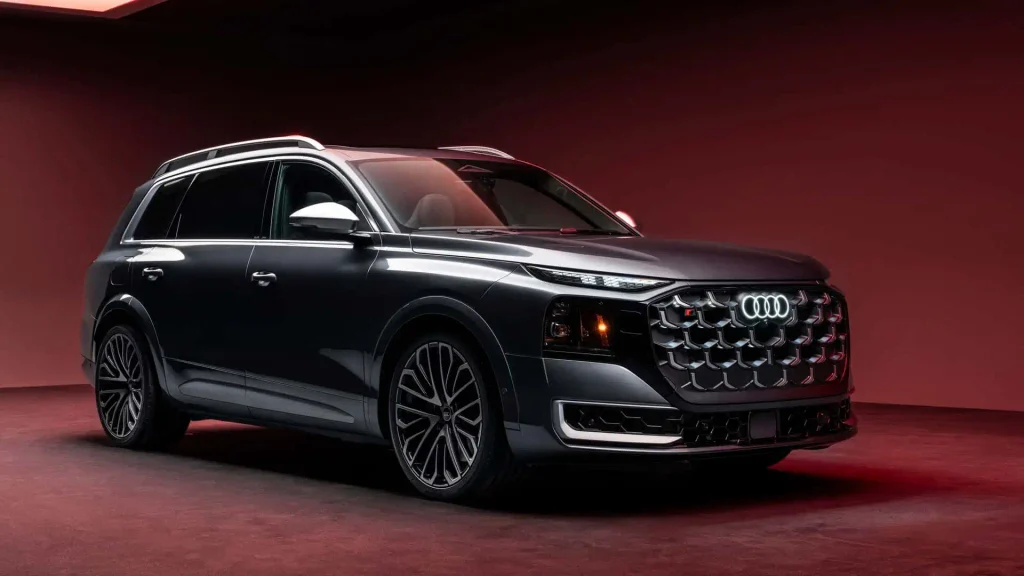
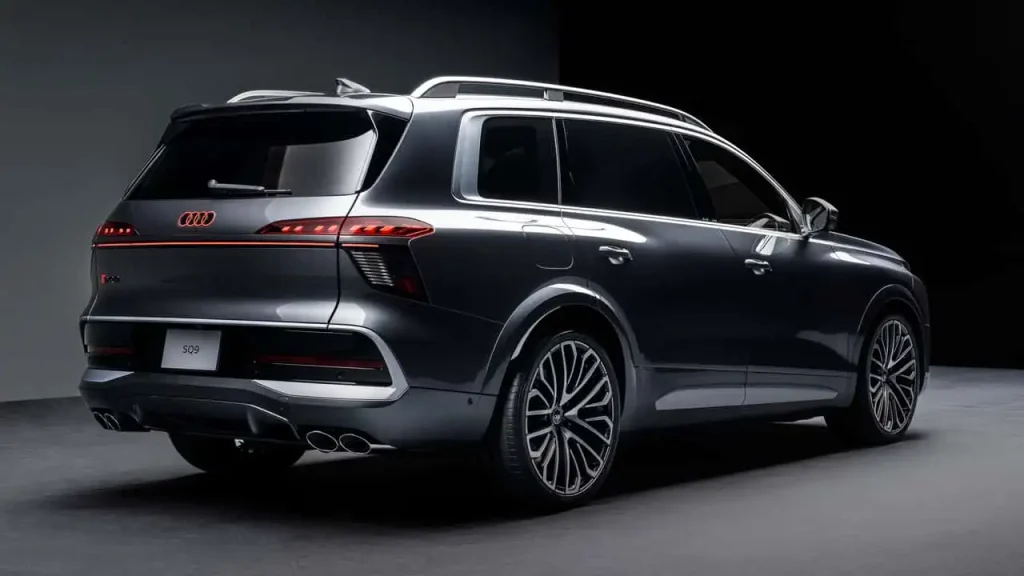
Three Audi SUVs. One $4 billion site. Gernot Döllner, Audi's chief executive, named the Q7, Q8, and Q9 as the Georgia plant's founding lineup in an interview with Automotive News. Construction starts in 2027. The investment still awaits Volkswagen Group supervisory board sign-off.
The announcement lands as import tariffs on finished vehicles have pushed Volkswagen Group's North American cost base sharply higher. Audi currently ships all three models from Volkswagen Group's Bratislava plant in Slovakia, leaving every unit sold in the US exposed to cross-border duties. According to Döllner's interview with Automotive News, published October 2025, local assembly in Georgia is explicitly framed as a tariff-exposure response — a rationale absent from VW Group's earlier Chattanooga expansion in Tennessee.
The Numbers Behind the Georgia Commitment
The plant near Macon, Georgia carries a stated price tag of $4 billion. Capacity is set at up to 200,000 vehicles per year. Döllner told Automotive News that approximately half of output will stay in the United States — call that 100,000 units annually at full run rate. The site is expected to employ roughly 4,500 people directly. On a simple per-job calculation: $4,000,000,000 ÷ 4,500 = approximately $888,888 of capital expenditure per position created, a figure consistent with large-scale automated body-shop investment. Construction is scheduled for 2027; series production is pencilled in for the early 2030s, implying at minimum a three-year build-and-commission window before the first Georgia-built Q7 rolls off the line. For context on how tariff costs are reshaping manufacturing decisions across European brands, see our coverage of EU trade barriers and regulation developments in 2026.
What Döllner Said — and What the Announcement Left Out
The original Audi press release announcing the Georgia site, issued ahead of the Automotive News interview published October 2025, contained no model names — a gap that Döllner subsequently closed on the record. His statement to Automotive News identified the Q7, Q8, and Q9 by name as the Georgia lineup. The document did not confirm powertrain mix beyond combustion and plug-in hybrid variants. It did not specify whether the V6 turbocharged petrol unit shared with the Porsche Cayenne and Bentayga would transfer to US-spec Georgia production unchanged, or whether a revised architecture would underpin the facelift-generation models expected before the 2030s build date. No section of the published statement addressed battery-electric variants for the Georgia site.
Slovakia Now, Georgia Later — a Production Bridge With Risks
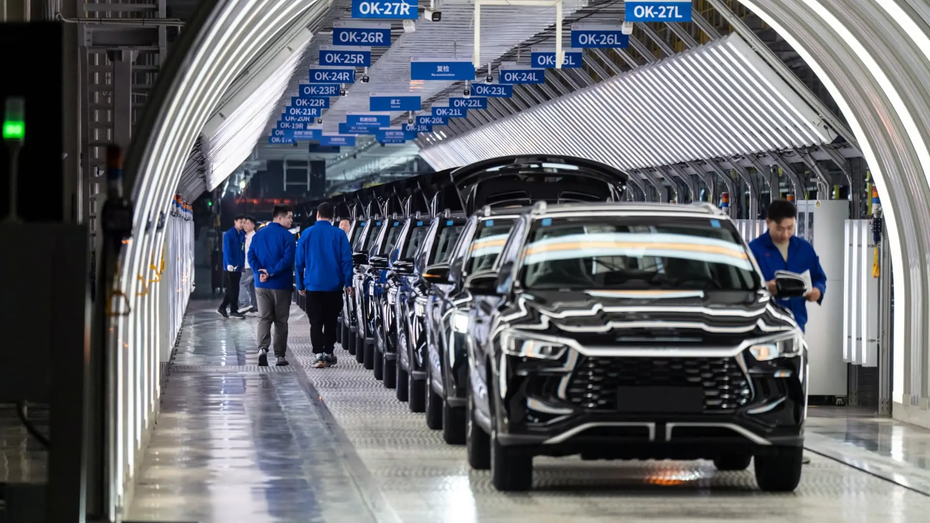
Until the Georgia plant opens, all three models continue rolling out of Volkswagen Group's Bratislava factory in Slovakia. The Bratislava site produced approximately 380,000 vehicles in 2023, according to the Slovak Automotive Industry Association's annual report, published February 2024 — a throughput that dwarfs Georgia's 200,000-unit ceiling. The Q3, meanwhile, stays at Audi's Győr plant in Hungary for the Georgia plant's initial phase; the Q5 remains at San José Chiapa in Mexico. That means Audi's US supply chain will run across four countries simultaneously once Georgia opens: Slovakia, Hungary, Mexico, and the United States. BMW's US plant in Spartanburg, South Carolina — operational since 1994 and currently producing over 400,000 X-series SUVs per year according to BMW Group's 2023 annual report — demonstrates what three decades of American SUV manufacturing can deliver in scale. Georgia at 200,000 units is a fraction of that, at least at opening.
The Q8 Sequel Nobody Was Planning
One detail sits awkwardly alongside the broader announcement. The Q8's inclusion in the Georgia lineup was not originally part of Audi's product plan. Döllner confirmed to Automotive News that a second-generation Q8 was added only after a change in Audi's senior management — meaning the coupe-SUV's survival into the 2030s was a near-miss rather than a foregone conclusion. The replacement model has not been publicly revealed as of October 2025. Döllner said it will break cover in the "nearer future," a phrase that commits to nothing specific. This creates a structural uncertainty: Georgia's capacity plan presumably accounts for Q8 volume, but Audi has not disclosed what proportion of the 200,000-unit ceiling each nameplate will occupy. What was not confirmed: whether Q8 production at Georgia would eventually absorb units currently exported from Bratislava to markets outside the US, or whether the Georgia Q8 is exclusively a North American allocation.
VW Group's Chattanooga Plant Loses Out — For Now
Volkswagen Group already operates a plant in Chattanooga, Tennessee, and Scout Motors is constructing a separate facility in Blythewood, South Carolina. Döllner told Automotive News that both sites were evaluated before management chose to build from scratch in Georgia. That decision has a direct consequence for the Chattanooga operation: it absorbs no incremental Audi volume from this announcement. Chattanooga assembles the VW ID.4 and Atlas for North American buyers. Adding premium Audi Q-series SUVs to a plant already running Volkswagen-branded product would raise brand-separation questions that Audi's management evidently judged too complex. An Audi-exclusive site solves that cleanly. For Chattanooga's 4,000-strong workforce, the outcome is neutral — neither threatened nor expanded by the Georgia decision. The Scout Motors plant in Blythewood, targeting production of the Scout Traveler and Terra from 2027, likewise gains nothing from the Georgia commitment.
Audi has never before assembled a production vehicle on US soil. The brand entered the American market in 1970 with the Audi Super 90 sedan, sold through a Volkswagen dealer network before dedicated Audi franchises existed. If the Georgia plant opens on schedule, it will end a 55-year import-only relationship with the United States. The supervisory board decision is expected before the end of 2025. The complete Audi model history and specifications are catalogued in the Global Auto Index manufacturer database.
